by dynamite | Apr 13, 2026 | Blog
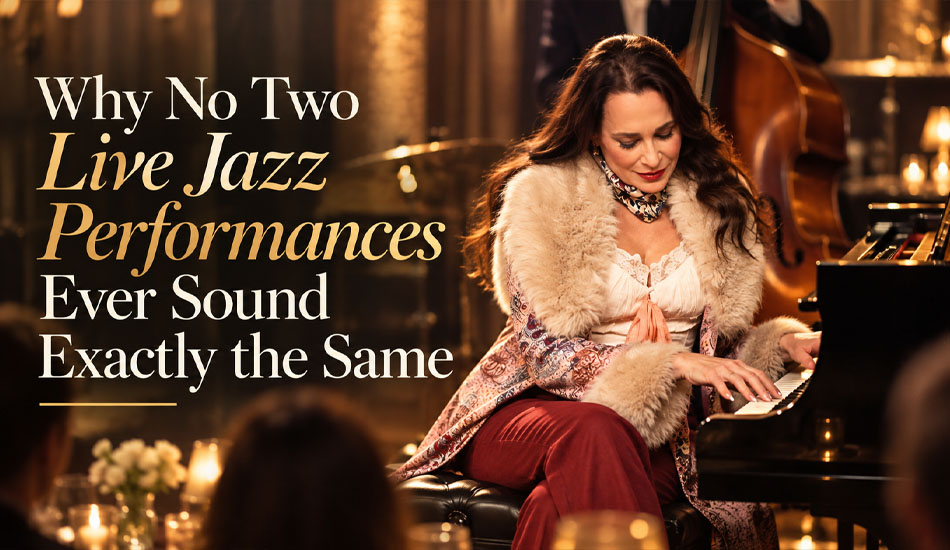
In an era where technology can make music so tidy and orderly that even the smallest details are edited, polished, and perfected, the unexpected is happening; the imperfections audiences once shunned are slowly becoming acceptable in music once again. Nowhere is such a tendency more obvious than in jazz.
There are often unexpected pauses, really long solos, or even mistakes and bloopers in live jazz. And yet, all this disorder is what makes it so gripping.
Comparing live jazz vs studio perfection, it is clear that technical flawlessness is far from being the same as true presence.
Many listeners who explore the best jazz songs often notice this emotional difference immediately.
Jazz reminds us that music isn’t just precision work; it is living emotion and human connection.
Jazz Was Never Meant to Be Perfect
From its earliest days, jazz was based on spontaneity and improvisation.
It was never intended to be made into some sort of perfected thing, but rather experienced in the moment.
Early jazz groups performed in clubs, streets, and informal gatherings. The idea was not to play flawlessly but to express oneself.
This is the platform from which to understand live jazz vs studio perfection.
Jazz was never intended to be a closed form. Rather, it should grow and change, taking as its cue the circumstances in which it was played.
Imperfection Provides Emotional Authenticity
A particularly striking feature of live jazz is its emotional frankness.
When a note goes wrong, or one phrase takes an unexpected twist, the listener is reminded that this music is being composed in real time. This is why many female jazz vocalists embrace imperfection as part of their expression.
Such moments have a unique feeling of authenticity which smooth records often lack. Not only can the listener hear the music, but he is also entering into its unfolding.
This immediacy of feeling is what makes live jazz so absorbing.
The Power of Real-Time Improvisation
Jazz, as a spirit and as a way of creation, is based entirely on improvisation. In a live context, musicians react to one another, the audience, and the moment itself.
A solo may go on longer than planned or change direction in mid-melody. Out of control, these decisions are: they simply come.
Comparing live jazz vs studio perfection, improvisation is a key defining quality. Each performance becomes unique. Each one can never be copied or repeated.
Many iconic moments within the best jazz songs have come directly from such improvisational brilliance.
Studio Perfection and Human Expression
Studio recordings offer precision, clarity, and consistency.
Each take allows musicians to perfect their playing: mistakes are corrected, resulting in a polished final product.
But this also has its drawbacks in that the raw energy, which makes music feel alive, is sometimes left out. On the other hand, live jazz embodies human expression in its purest form.
Artists like Sylvia Brooks, a jazz singer, demonstrate how emotional storytelling in jazz goes far beyond technical perfection.
In contrast, the above contrast has important consequences: while perfection may impress, imperfection connects.
The Magic of Mistakes
In jazz, mistakes are not always wrong. By making a slip of the fingers, new melodic ideas are generated. Timing changes can produce varied rhythmic approaches.
Often, what remains most in people’s memory are these instances when things went wrong or not as planned at all.
Great moments in the best jazz songs have often developed during live performances through such accidental discoveries.
This gift for turning errors into creativity is something essentially different about jazz, and why it attracts so many people.
Contact with the Audience Live jazz is an experience shared
The audience is not simply listening; they are part of the performance.
Their reaction, energy, and presence all influence the musicians in real time.
A responsive audience can spur risk-taking in one sense, creating an exhilarating performance that crackles with life and vitality.
This is another major distinction when comparing live jazz vs studio perfection; the shared energy cannot be recreated artificially.
Imperfections Are A Mirror for Real Life
Therefore, imperfection often mirrors the imperfection seen in life. The background to a jazz song is both magical and flawed, much like life, and from day to day, it is always changing, unpredictable, or emotional.
Jazz comes closer than any other form of music to reflecting this reality.
The pauses, hesitations, and deviations from the expected flow in jazz live reveal the way life unfolds itself. That human feeling is the kernel quality that makes jazz so real.
This is why artists such as Sylvia Brooks, a jazz singer, continue to connect deeply with audiences through authentic expression.
Why Modern Audiences Seek Out Imperfections Once Again
In today’s world, audiences are surrounded by highly processed, edited content.
From social media to pop music production, everything is designed to come out smooth and clean.
These days, such perfection feels thwarting. The result is a trend towards authenticity among modern audiences.
Listeners gravitate to music that feels real, acknowledging its imperfections rather than trying to hide them, something clearly present in performances by female jazz vocalists.
Imperfection as a Creative Advantage
Imperfection can, in fact, be turned into a special weapon instead of representing any disadvantage.
In jazz, it tends to bring a breath of vitality and an openness to new ideas. Musicians are encouraged to experiment, take risks, and discover things available in no other way.
This artistic freedom is particularly apparent among modern female jazz vocalists and performers who are moulding the genre through their own expression.
Just like how an artist such as Sylvia Brooks Jazz Singer can use emotional storytelling and deft performance, to make a deeper connection with listeners.
How Other Genres Are Learning From Jazz
Many modern genres are now drawing some lessons from the imperfection of jazz.
Lo-fi music, for example, makes use of background noise and slight imperfections on purpose in order to create a more relaxed sound.
This influence can also be traced back to the improvisational essence found in the best jazz songs, which continue to inspire new-age music production.
Conclusion
This contrast between live jazz and performance, edited sound or recordings, is not a matter of choosing one way or the other. Both kinds have a place in music history.
However, when we compare live jazz vs studio perfection, it becomes clear that live jazz offers something deeply human and irreplaceable.
So studio recordings can give us listeners clarity. We can play them again and again, and by doing so, come to appreciate their structure.
Live jazz, however, is something else entirely. It offers an entirely different experience, something unmediated for those who are there, at that moment, and alive with immediate feeling.
In embracing imperfection, jazz reminds us that beauty is not just about precision; it is about expression, connection, and authenticity.
FAQs
Why does live jazz sound different every time?
Live jazz thrives on improvisation. So musicians adapt performances according to the prevailing conditions of the age, making every edition special. This is one of the defining aspects of live jazz vs studio perfection
Are mistakes serious in jazz?
Yes. Many defining moments in the best jazz songs come from unexpected improvisation.
Why do people prefer live music to studio recordings?
Because it feels more real and emotionally engaging, especially when performed by female jazz vocalists and expressive artists.
What is unique about jazz improvisation?
Its spontaneity and personal expression are something artists like Sylvia Brooks, a jazz singer, represent beautifully.
by dynamite | Apr 13, 2026 | Blog
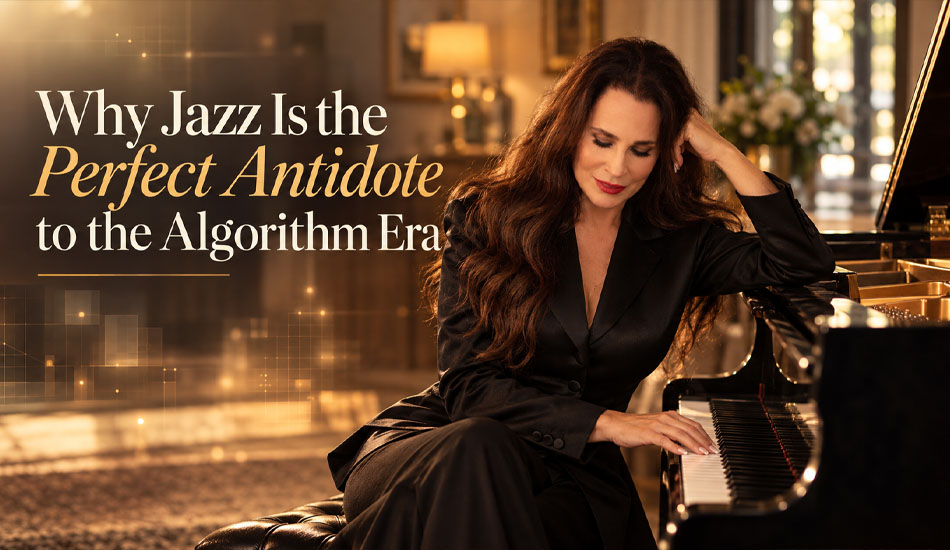
Given the dominance today of quickly produced digital content and trends set by algorithms, one might be forgiven for assuming that jazz might slowly fade into the background; on the contrary, it is fiercely alive.
Not only is jazz surviving, but it is also quietly thriving. From streaming platforms to live performances, from global collaborations in the music industry to film soundtracks, jazz has found new ways to engage audiences.
The conversation about the relevance of modern jazz has been growing louder. Nowhere more than in this world of mechanized production and automation gone crazy do people seek authenticity for themselves.
What sets jazz apart in 2026 is not nostalgia, but its capacity to evolve while remaining essentially human.
Jazz Is The Foundation of Contemporary Music
Much of today’s music has been built on the innovations jazz introduced years ago.
This is true of such basic elements as improvisation, syncopated rhythms, and rich harmonic structures of jazz, which we see echoed in hip-hop, R&B, lo-fi, and electronic music, all permeated by the spirit of jazz. Even the producers of many hot tracks today draw inspiration from jazz progressions and tone colors.
while a modern jazz singer often blends these elements into contemporary vocal styles.
This is an influence that is subtle but strong. It guarantees that jazz will continue to penetrate modern sound environments, thereby preserving more of its contemporary relevance even after six or more decades.
Digital & Streaming Culture Raise Jazz
Jazz has been transformed by streaming. Now offers a whole new independence to jazz. The likes of Apple Music, Spotify, or YouTube are open for everyone with an internet connection to listen to and enjoy even the best recorded jazz music.
Curated playlists and recommendation engines have offered jazz to listeners younger than ever before; some of them might never have heard the music had it not been for these new media. On these platforms, many new jazz releases are finding recognition right now and simultaneously being pushed out towards all listeners abroad.
Beyond discovery, new jazz releases are now shaping listener habits, making jazz a regular part of everyday playlists rather than an occasional genre.
This has helped make jazz move from an old-fashioned thing that people do into a habit people just enjoy listening to the music.
Jazz and the AI Revolution
Artificial intelligence is reshaping music production, and it brings out something else about jazz: why, although pattern-duplicating things with formal logic, AI can scarcely capture real feelings. Jazz, rooted in improvisation and human expression, thrives on spontaneity and imperfection.
This polarisation between traditional formality and artificial imitation has been increasingly significant. As music becomes more computerised, listeners are flocking to genres that feel genuine and expressive, which is also reflected in many new jazz releases gaining attention for their authenticity.
Jazz, with its tentacles of creativity that machines are unable to imitate, has been further emboldened in the brave modern jazz era.
Jazz Thrives In A Young and World Culture
Jazz is no longer the preserve of a particular audience. Young people around the planet are discovering it, adapting their own unique styles.
The modern jazz singer, whose career blossoms as time goes on, is proof that artists use classical techniques to take jazz into their own hands.
Readers who take a look at jazz singer Sylvia Brooks learn that today’s jazz artists continue as before, carrying forward the emotional intensity that the genre has always delivered, marrying it to new themes.
Albums like Dangerous Liaisons, a jazz album, further reflect how contemporary jazz blends storytelling with musical sophistication.
In cities throughout Europe, Asia, and North America, there is a jazz resurgence that is making the genre India’s musical world heavyweight today.
The Connection Between Health and Productivity
In a world of constant bombardment, people strive to find a quiet place.
Jazz offers an experience that can simultaneously rest one’s nerves and sharpen one‘s senses. Its indistinct rhythms and complex structures succeed in creating an atmosphere conducive to mindfulness / the healing of minds, something often reflected in conversations about jazz singer Sylvia Brooks (Sylvia Brooks) and her emotionally rich performances.
Lots of jazz lovers go for jazz because they want to:
- Ease pressure/relaxation.
- Contribute to concentration
- Reflect on their emotions.
This relationship between music and good health has made jazz a major part of modern wellness protocol, thus securing its continued place in the world.
The Return of Live, Genuine Experience
In an era where digital networks take the lead in musical consumption, however, there has never been a greater revival of respect for live performances.
Although it is possible to record music and then play it in a live setting, jazz as a live performance still remains an entirely different kind of animal.
This sense of reality can never be copied on plastic discs. Even albums like Dangerous Liaisons, a jazz album, remind listeners that the true essence of jazz is best experienced live.
And that’s just one reason why live jazz is something deeply personal together with you, one moment in time with everybody sharing it.
With demand for genuine and true experiences increasing among the global audience, live jazz is becoming more valuable than ever before.
Jazz as a Symbol of Creative Freedom
At its root, jazz is about freedom; the room to explore, express, or invent.
Unlike many genres, which follow rigid structures, jazz calls for individualism. Musicians are not tied down by formulas; they can create and interpret in their own individual way.
In an age where creativity often feels confined by commercialism, jazz continues to be a place for originality to be valued. This enduring spirit is today a major factor in maintaining its modern jazz relevance.
In fact, most new trends have been heavily rubber-stamped by jazz.
How Brands, Films & Media Are Reviving Jazz
Jazz is quietly coming back into the mainstream.
On the silver screen and the luxury brand promotion field, jazz miaow conveys a sense of sophistication and depth that other styles or eras cannot impart.
It is so natural for these spaces that it makes coherent and powerful communication tools as well, often complemented by new jazz releases that align with modern storytelling.
With this wave of revival, jazz makes its debut to new audiences, discovering that they often learn more about the genre.
Challenges Faced by Jazz Today
However much jazz has grown, there remain challenges:
- A niche or complex image
- Little radio exposure for a mainstream Jazz Broadcasting Channel
- High-profit and commercial genres are eating away at its market.
Yet these difficulties also bring opportunities. They force innovation and ensure that jazz remains pure rather than watered down, even as a modern jazz singer continues to redefine how the genre connects with wider audiences.
The Future of Jazz in light of These Creativity Blerds
Jazz’s future is to continue evolving, while still retaining its essence.
We can expect:
- More and more global collaborations
- Music grows from a simple form of expression into the new digital and immersive experimental stage for mass audiences, and businesspeople call it “music of the 21st Century”.
- Listeners will want to hear hybrid forms which found jazz compatible with today’s styles.
This evolution is also reflected in discussions about jazz singer Sylvia Brooks (Sylvia Brooks), whose work represents how modern jazz continues to balance tradition with innovation.
Projects like Dangerous Liaisons jazz album further highlight how storytelling and musical depth are shaping the future of jazz.
Conclusion
Jazz retains its vitality in the 21st century not because it continues to be a slave of tradition, but rather for the indomitable, forward impetus.
It’s this flexibility, combined with a deep well of emotion and a resolute commitment to being true to oneself, that ensures jazz resonates with people across not just different times but also generations.
So modern jazz’s relevance no longer lies in the classifiable like a musician’s point in his race. Jazz is finding a new audience and a new outlet, and it has already discovered an article, with its earliest traces being seen on the Internet!
In a world where haste and rigour prevail, jazz offers one rare commodity: time. It gives listeners the chance to decelerate, truly listen closely, and experience music in perhaps its most human form.
FAQs
Has jazz gone out of fashion by 2026?
Not at all. Jazz has continued to grow through streaming platforms, where new jazz releases reach global audiences and live performances are enjoyed even from home.
Why does jazz so often appear in lo-fi music?
It reflects the natural hybridization between music forms. Jazz elements, often interpreted by a modern jazz singer or instrumentalist, blend seamlessly into lo-fi aesthetics.
Can novices appreciate jazz?
Definitely. Jazz has many styles, making it accessible to newcomers, especially when exploring content about jazz singer Sylvia Brooks (Sylvia Brooks) and similar artists.
Which modern jazz musicians should I look to?
Present-day jazz has many bright new stars, and projects like the Dangerous Liaisons jazz album showcase how emerging artists are shaping the genre’s future.
by dynamite | Mar 29, 2026 | Blog
How real can jazz feel? Like a human voice, right in your ears. You don’t just hear it, you see it unfold, note by note, almost in real time. It’s alive, immediate, and deeply personal.
While studio recordings enable accuracy, precision, and reproducibility, live performance is a different kettle of fish altogether. The spirit of the playing lies in its momentary heartbeat created by the musician and audience, while exactly where, when, and what is happening around it as it opens up in its song.
This contrast between live jazz vs studio recordings has fascinated listeners for decades. Both have their place, but they give birth to fundamentally different experiences. Once we understand these differences on a broad basis, it will also be easier to understand jazz as an art form and as a living conversation.
The Improvisation Factor
The essence of jazz is improvisation, the ability to make music on the spot.
Even in a studio setting, improvisation has a place. But it may be refined through several takes. Musicians can experiment, adjust, and perfect their own solos before the actual thing gets recorded as a studio cut.
Live jazz, however, is real-time music. Once a musician has gone on to record it, he can never come back and change anything before we hear the finished recording. What happens is that exact moment in which they play and nothing else! A player might take some risk, draw out a phrase, or change direction without warning depending on their own whim.
This spontaneity is one of the biggest contrasts between live jazz vs studio recordings. It makes each performance unique, a version of the song that will never be reproduced quite the same way again.
Energy of the Audience
In live jazz, the audience is not just an observer.
The room’s vibrations affect the musicians themselves. An appreciative audience will encourage longer solos and risky improvisation, as well as more deeply felt emotions. Applause (or lack thereof) and even silence or other, less noticeable reactions can all shape a performance’s course.
Studio albums, however, remove the immediacy that comes from such encounters. And although they can make an artistic statement of sorts, that is nothing compared to the live dialog between musician and listener.
This shared energy is an essential element that distinguishes live jazz vs studio recordings, which makes the performance much more immersive and lively.
Acoustic Environment and Venue Atmosphere
The environment in which jazz is practiced contributes significantly to how it feels. Acoustic differences exist between clubs, theaters, and outdoor stages.
Places like the best jazz clubs in New York are renowned not just for their performers but also for their atmosphere. The intimate closeness of the audience and the room’s scenic beauty and natural acoustics introduce an experience that cannot be duplicated in a recording studio.
Studio recordings have polish and control, but they lack the atmosphere of a live setting. As a medium for listening, the public comes to terms with this aesthetic transition, and natural incidents often warrant its reevaluation.
Musical Interaction and Communication
Jazz is frequently said to be a dialogue among musicians.
In a live setting, however, these interactions may reach the eyes and ears of the public. Musicians play off one another in syncopated time responses; a piano phrase might evoke a horn line, as, for example, if the drummer switches directions to give overall support making music (in this case).
These unspoken exchanges are one of the hallmarks of a live jazz performance. They give a sense that what is being said passes from moment to continually evolving moment and place.
While preserving this as a degree to which interactions convert, studio recordings generally iron out the thrift for the sake of similarity. This is another key distinction between live jazz vs studio recordings.
Extended Solos and Creative Freedom
The improvisations of live jazz set a different pattern than do studio recordings.
Musicians had no time restrictions or recording limitations.
In the studio, a piece that lasts five minutes could expand to ten or fifteen minutes on stage.
Freedom to Make Music
This freedom to change shape means there can be even more subtle variations, themes, and improvisations.
Such space allows the music to breathe and evolve on its own natural course.
Recording studios, in contrast, typically produce music that will fit into a certain time period. This is especially true when it comes to new jazz releases, where both format and audience expectations are factors.
Imperfections That Add Character
One of the most lovely aspects of live jazz music is that it is, itself, imperfect.
A missed note, a slightly too late entry, an unexpected change in direction: these things make a performance sound authentic. It reminds people listening that they are hearing music being created right here and now in virtual real time.
Studio recordings are perfect. Mistakes can be taken out/performance refined until they finally reach the desired stage.
Imperfections like these do not yet exist in a live jazz performance when comparing studio with performance.
Audience Immersion and Emotional Connection
Live jazz provides a kind of involvement that records can rarely match.
Being there in person enables listeners not just to hear the sound but also to feel the atmosphere: the lighting, the nearness or distance, and the pause between notes that everybody can hold collectively.
This direct perception of the music makes the emotional aspect of it deeper. Music seems closer, more immediate, and more individual to every individual listener.
Many travelers seek out jazz travel destinations specifically to experience this connection, to hear jazz where it is performed live, and to feel its impact firsthand.
Examples of Iconic Live Jazz Performances
Some of the most famous jazz albums in history have been recorded live.
Albums recorded at venues of legendary status offer a demonstration for us to appreciate the dynamics of live performance. They are the moments that are captured that we can look back on with relish. A moment of interactivity took place between performer and audience. An element of ambience enfolded them together. And then there was mind-to-mind communication.
Building a bridge between live and studio experiences, these recordings allow listeners to experience the unique attractions of live jazz.
Live Jazz vs Studio Jazz – Key Differences
To sum up these differences:
| Aspect |
Live Jazz |
Studio Recordings |
| Audience Influence |
High |
None |
| Emotional Impact |
Immediate and immersive |
Reflective and repeatable |
| Improvisation |
Spontaneous and evolving |
Refined and controlled |
| Length of Performance |
Flexible |
Structured |
| Sound Quality |
Organic and variable |
Polished and consistent |
Understanding these differences helps listeners appreciate both forms for what they offer.
Why Jazz Was Meant to Be Experienced Live
All the things that live-only jazz are called something different from what they mean, such as feeling, passion, and heart.
Jazz began in live environments in clubs, streets, and community gatherings. It was never intended to end up confined to recordings.
Jazz is, at its core, a form of music open to change. In performance, it captures this essence completely.
Whether we are meant to replay the music or study it later, at least live jazz shows us what it is just as that: composed in the living present.
That’s why the debate about live jazz vs. studio recordings always seems to give the same verdict, while the reason is different: both are good, and being there live is uniquely something valuable.
Conclusion
Though the difference between live jazz vs studio recordings doesn’t mean one is better than the other, it does mean that everything comes with a different set of prompts and benefits.
Studio sessions provide clarity, accessibility, and permanence. They make it possible for people to revisit the music over time and discover new layers and identity, especially with the growing number of new jazz releases that continue to expand the genre.
Live jazz, conversely, is all about presence. It brings listeners into a shared moment where music can be created rather than merely played, which is why so many music fans travel across the city, other cities, and even countries, exploring jazz travel destinations to experience the art form in its most authentic setting.
If you really want to get into jazz, then the live performance is a must. Whether it be in small, intimate venues like those on our list of The Best Jazz Clubs in New York or large concert halls, live performances reveal the heart of the genre.
In an age increasingly dominated by digital consumption, live jazz music reminds us of the value of the present: feeling and experiencing in real-time, when we are media.
FAQs
Why does live jazz sound so different from studio recordings?
Live jazz is different from studio recordings, and it is dictated by real-time improvisation, the energy of the audience, and acoustics from the venue with each new performance that emerges.
What about studio recordings? Does it mean those are less authentic than live performances?
No. Studio recordings represent precision and refinement of art, while live performances represent impromptus.
Where to hear live jazz?
Cities like New York, New Orleans, and Chicago are among the top jazz travel destinations with vibrant live scenes.
Do jazz musicians prefer to perform live?
Many musicians cherish live performance for its freedom of creativity and its direct interaction with audiences.
Will the same level of energy be present on live recordings?
Live recordings might capture some of the pop, but witnessing something first hand offers a more full-bodied sensation.
by dynamite | Mar 29, 2026 | Blog
Travelling has taken on a whole new meaning. It’s more than just sightseeing; now it’s about experiencing the culture at its most real. For music lovers and jazz fans in particular, travel takes on a whole new meaning. It’s a journey through rhythm, history, and human expression.
Around the globe, certain cities have created the sound and soul of jazz. These places are not simply geographical locations; they are living stages where music continues to grow and develop each night.
In 2026, the trend for hands-on, immersive experiences will be ever more pronounced, and the jazz travel destinations where live music is playing every night are becoming an integral part of this. Whether you are following a festival or exploring iconic buildings that are known worldwide, these destinations provide something deeply profound and unforgettable.
New Orleans, USA – Birthplace of Jazz
New Orleans lies out ahead of all jazz travel destinations. Like the birthplace of jazz itself, this city has an unmatched connection to its roots.
In the French Quarter you constantly hear music. As the sun sets, brass bands jolt with life at street corners, and clubs throb. Frenchmen Street in particular is famous for its authentic live jazz scene.
Here, jazz is not just something done for effect; it is part of everyday life. The city’s deep culture combined with its vibrant music scene, makes it one of the best cities for jazz lovers anywhere.
New York City, USA – Global Jazz Capital
Location of the most popular jazz music venues in the world, such as the Village Vanguard and Blue Note. With a live music scene that draws performers from around the world, it seems fitting to place a major music festival in this town.
New York is often considered the capital of jazz, and if you wander around Manhattan, you’ll hear a thousand different tunes on each street corner. At the same time, it is an important node for jazz musicians from other countries to perform there. Both in terms of meeting and working with each other, and creating new styles designed solely within.
One night, you could find the most famous jazz singer in L.A.; the next, a new jazz singer just making her name and doing her thing at a place like this in L.A. This kind of transfer will keep the scene alive, yet changing.
New York remains one of the most influential jazz travel destinations and continues to rank among the best cities for jazz lovers.
Montreal, Canada – Festival Capital of Jazz
Through hosting the Montreal International Jazz Festival, Montreal has won wide admiration. It’s also one of Earth’s largest jazz festivals.
Each summer, the city features jazz from around the world, attracting more musicians and audiences than ever before. And most of the performances they give are tied, in other words, to their daytime job list. The festival, in this way, makes jazz available to all.
Even outside of the festival, Montreal’s jazz culture remains strong all year long. With its hospitable air and creative vitality, Montreal is also one of the most exciting jazz travel destinations anywhere in North America.
Paris, France – Europe’s Jazz Soul
This city has a long affinity with jazz, from the early 20th century. that American jazz musicians found a warm and appreciative audience there.
Today, Paris holds its position as one of Europe’s most iconic places for jazz travel destinations. The numerous clubs, intimate atmosphere, and wealth of history and culture all combine to make a unique setting for live music.
In this way, jazz takes on a whole new meaning in Paris. It’s not just about playing the instruments or, let’s say, performing; it’s all of that as well as an impression reflected by how people live in everyday life, how they find communities, and so on.
Havana, Cuba – Latin Jazz Paradise
Havana presents jazz with a strong rhythmic feeling. It is like this place where Afro-Cuban elements meet harmoniously with jazz forms such as improvisation, bending, and doubling up.
From its formal venues to spontaneous street performances, everywhere you look in Havana, live music can be heard. The relationship between musicians and the audience is immediate; everyone celebrates together.
From one of the most unique jazz travel destinations, Havana offers an immersive experience that goes well beyond simply listening to the music. It invites you, the listener, right into its midst.
Chicago, USA – Historic Jazz & Blues Scene
Chicago’s jazz scene is deeply rooted in what came before. The city served as a major jumping-off point for musicians migrating from southern states in the early 20th century. New sounds and styles from every direction could be found there.
Nowadays, Chicago remains one of the best cities for jazz lovers, offering both traditional and contemporary performances.
Chicago jazz is solid and earthy. It moves at a slower clip than New York but feels every bit as meaningful and expressive. Even for a jazz singer in LA, getting to know the heritage of Chicago’s music brings a deeper appreciation of the music itself.
Top Jazz Festivals to Plan Your 2026 Trip Around
The way to experience jazz at its peak is by planning your travels around jazz events.
Here are some must-see festivals:
- New Orleans Jazz & Heritage Festival (USA)
- Montreal International Jazz Festival (Canada)
- North Sea Jazz Festival (Netherlands)
- Umbria Jazz Festival (Italy)
- Havana Jazz Festival (Cuba)
These festivals not only provide opportunities for artistic expression of music typical of cities, but they are also places where audiences can engage with the melange of cultures brought together by these places. They are an essential stopping-off point for any jazz travel destinations.
Conclusion
Jazz cities have to do more than be visited; they have to allow you to experience music where it lives and breathes.
Each one of them offers a unique perspective on jazz, shaped by its own culture, history, and folklore. From New Orleans to Paris, these cities reveal how many facets there are to what is really a multifaceted piece of art.
Whether you are watching a jazz singer in LA before setting out on your trip or seeking out the best cities for jazz lovers as you travel through these, each journey adds another layer to your understanding of the music.
May your travels be guided not just by the place to go but also by sound. Jazz is not something you can only listen to; it is also a feeling.\
FAQs
What are the best destinations for beginners to pursue jazz?
New Orleans, New York City, and Montreal are excellent starting points due to their strong jazz culture and accessibility.
What is the best time to go to jazz?
The period between April and July is when most major festivals are scheduled, so in a word, that’s perfect.
Must I know jazz to please myself at these places?
Absolutely not. Feeling is believing. Just get on with it! Everyone is a subject of wellness, including children.
Which is the most fantastic site now for live jazz?
Considered universally as among the best cities for jazz lovers, you’ll find it in New York, New Orleans, and Chicago.
Can you combine multiple jazz destinations in a single journey?
Yes, particularly in areas like the former Soviet Union and Western Europe that have well-integrated transport networks that make inter-city travel a breeze.
by dynamite | Mar 1, 2026 | Blog
If you’ve been paying attention to new jazz releases over the last few years, you’ve probably noticed something subtle but important happening.
Jazz hasn’t been shouting for attention. It hasn’t been chasing trends. Instead, it’s been quietly getting stronger.
From 2022 through 2026, recent and greatest jazz albums have revealed a genre settled in its identity. Artists aren’t trying to prove that jazz can blend with hip-hop, R&B, classical, or global rhythms anymore, they’re simply doing it. Fusion feels natural. Spiritual jazz doesn’t sound nostalgic. Vocal projects don’t lean on retro aesthetics. Everything feels lived-in and intentional.
In 2022, many new jazz releases leaned reflective, longer forms, deeper moods, spiritual architecture.
In 2023, vocal jazz stepped back into the spotlight and groove-forward sessions brought renewed energy.
By 2024 and 2025, global influences felt fully integrated, not labeled.
And the latest jazz albums of 2026? They sound refined. Focused. Confident.
This guide isn’t about rankings or hype. It’s about looking at the new jazz releases from 2022 through 2026 and asking:
What do these albums tell us about where jazz is right now?
Let’s begin.
New Jazz Releases in 2026 (So Far)
The new jazz releases of 2026 reflect refinement rather than reinvention. Across early 2026 albums, artists are leaning into compositional clarity, ensemble cohesion, and mature artistic voice. Fusion elements feel seamless. Spiritual themes are integrated without excess. Small-group interplay remains central.
Instead of dramatic stylistic shifts, 2026 highlights focus, carefully structured compositions, dynamic restraint, and intentional improvisation.
Below are verified 2026 jazz releases shaping the year.
Julian Lage – Scenes from Above
Label: Blue Note Records
Release Date: January 23, 2026
Personnel: Julian Lage (guitar), John Medeski (piano/organ), Jorge Roeder (bass), Kenny Wollesen (drums), Patrick Warren (keyboards/percussion)
Julian Lage’s Scenes from Above marks a significant 2026 release on Blue Note Records. Recorded with a newly assembled quartet, the album emphasizes conversational interplay and compositional elegance rather than virtuosic display.
Lage’s guitar phrasing remains melodic and deliberate. Rather than extended technical runs, he builds ideas through short motifs that evolve throughout each piece. The rhythm section responds dynamically, creating a sense of collective architecture.
The addition of John Medeski adds harmonic color and textural depth, while Jorge Roeder and Kenny Wollesen provide elastic rhythmic grounding. The album stands out for its clarity and restraint, reinforcing Lage’s role as one of contemporary jazz’s most articulate guitar voices.
Joel Ross – Gospel Music
Label: Blue Note Records
Release Date: January 30, 2026
Personnel: Joel Ross (vibraphone), Josh Johnson (alto saxophone), María Grand (tenor saxophone), Jeremy Corren (piano), Jeremy Dutton (drums)
Joel Ross’s Gospel Music is among the most ambitious early jazz releases of 2026. Spanning 17 tracks, the album reflects Ross’s spiritual influences and compositional growth.
The vibraphone serves as both melodic guide and harmonic anchor. The arrangements are structured yet fluid, allowing improvisation to grow organically from the core themes. Saxophonists Josh Johnson and María Grand contribute layered horn textures that expand the harmonic palette.
Tracks such as “Wisdom Is Eternal (For Barry Harris)” and “Trinity (Father, Son and Holy Spirit)” highlight Ross’s ability to merge tradition with contemporary phrasing. The album demonstrates a mature approach to spiritual jazz — thoughtful, grounded, and compositionally focused.
Roberto Magris / Denis Razz Quartet – In Action
Label: JMood Records
Release Year: 2026
Personnel: Roberto Magris (piano), Denis Razz (saxophone), ensemble including Croatian musicians
In Action is a double album collaboration between Italian pianist Roberto Magris and Croatian saxophonist Denis Razz. Released on JMood Records, the project reflects the vitality of contemporary European jazz.
The album moves between lyrical melodic passages and rhythm-driven compositions. Magris’s piano work is expressive yet structured, while Razz’s saxophone lines provide both warmth and momentum.
The quartet format allows for tight ensemble interplay while preserving individual expression. This release highlights the continued international expansion of modern jazz in 2026.
Tomeka Reid Quartet – Dance! Skip! Hop!
Release Year: 2026
Personnel: Tomeka Reid (cello), Mary Halvorson (guitar), Jason Roebke (bass), Tomas Fujiwara (drums)
Cellist and composer Tomeka Reid continues redefining jazz instrumentation with Dance! Skip! Hop!. Her quartet blends swing, rhythmic experimentation, and structured improvisation into a cohesive statement.
The cello operates not merely as accompaniment but as melodic and rhythmic driver. Mary Halvorson’s guitar provides angular yet lyrical counterpoint, while the rhythm section remains fluid and responsive.
The album balances accessibility with exploratory depth. Each composition reflects careful construction, reinforcing Reid’s role as one of the most inventive voices in contemporary jazz.
Carolyn Trowbridge – Found Memories
Release Date: January 9, 2026
Personnel: Carolyn Trowbridge (vibraphone), Bryan Sunderman (guitar), Mario Castellanos (bass), Nick Tozzo (drums), with guests Alex Coke (flute), Elaine Barber (harp), Caitlin Palmer (vocals)
Found Memories expands the tonal range of 2026 jazz releases through layered instrumentation. Trowbridge’s vibraphone leads the project, supported by guitar, bass, and drums, with additional flute, harp, and vocal textures.
The album blends traditional jazz phrasing with more atmospheric and cinematic arrangements. Trowbridge’s compositions emphasize melody while exploring subtle harmonic variations.
The presence of harp and flute adds textural richness, distinguishing this release from more conventional small-group formats.
Dave Stryker – Blue Fire
Label: Strikezone Records
Release Date: January 9, 2026
Personnel: Dave Stryker (guitar), Jared Gold (organ), McClenty Hunter (drums)
Recorded at the historic Rudy Van Gelder Studio, Blue Fire continues Dave Stryker’s long-running exploration of organ trio jazz.
The album leans into groove-driven arrangements rooted in blues tradition. Stryker’s guitar tone remains warm and direct, while Jared Gold’s organ provides harmonic depth and rhythmic pulse.
McClenty Hunter’s drumming anchors the trio with steady drive. The release reflects the enduring appeal of organ-based jazz while incorporating contemporary phrasing.
Irreversible Entanglements – Future Past Present
Label: Impulse! Records
Release Date: March 27, 2026
Personnel: Camae Ayewa (voice), Luke Stewart (bass), Aquiles Navarro (trumpet), Keir Neuringer (saxophone), Tcheser Holmes (drums)
Future Past Present represents one of the most politically and sonically urgent jazz releases of 2026.
The collective blends free jazz improvisation with spoken-word intensity. The rhythm section drives the music forward with propulsion, while trumpet and saxophone lines move between abstraction and melodic fragments.
The album merges avant-garde jazz tradition with contemporary social commentary, reinforcing Impulse! Records’ legacy of boundary-pushing releases.
What These 2026 Jazz Releases Tell Us
So far, 2026 reveals a genre that feels self-aware and confident. Composition leads to improvisation. Ensemble interaction feels deliberate. The emphasis is on clarity over density, structure over spectacle.
These albums don’t sound like experiments. They sound like artists who know exactly where they stand within modern jazz.
New Jazz Releases in 2025
A Year of Range, Emotional Depth & Creative Breadth
If 2026 refines, 2025 expands.
The new jazz releases of 2025 offered extraordinary range – acoustic post-bop, global fusion, chamber textures, large ensemble writing, and deeply personal vocal reinterpretations. Artists weren’t experimenting for novelty. They were expanding with intention.
Yazz Ahmed – A Paradise in the Hold
Artist: Yazz Ahmed
Label: Night Time Stories
Release: February 28, 2025
British-Bahraini trumpeter Yazz Ahmed blends Arabic musical traditions with forward-looking jazz in A Paradise in the Hold. The album features extended ensemble writing, pedal points that evoke Middle Eastern modal scales, and vocal contributions that deepen the work’s spiritual resonance. Tracks like “She Stands on the Shore” balance dreamlike textures with rhythmic sophistication, making this release one of the year’s most immersive.
Jaleel Shaw – Painter of the Invisible
Artist: Jaleel Shaw
Label: Changu
Release: 2025
Tenor saxophonist Jaleel Shaw returned with Painter of the Invisible, a post-bop-rooted album that balances emotional intensity with lyrical clarity. Featuring Lawrence Fields (piano), Ben Street (bass), and Joe Dyson (drums), the record reintroduces Shaw as a compelling bandleader whose compositions bridge tradition and contemporary expression.
Gerald Clayton – Ones & Twos
Artist: Gerald Clayton
Label: Blue Note Records
Release: April 11, 2025
Pianist Gerald Clayton’s Ones & Twos blends post-bop roots with fresh harmonic ideas. With contributions from vibraphonist Joel Ross, flutist Elena Pinderhughes, and trumpeter Marquis Hill, the album’s textures feel rich yet streamlined. Tracks unfold with emotional nuance, balancing ensemble interplay with thematic invention.
GoGo Penguin – Necessary Fictions
Artist: GoGo Penguin
Label: XXIM
Release: June 20, 2025
English trio GoGo Penguin continued to refine their blend of minimalist motifs and rhythmic drive on Necessary Fictions. Piano, bass, and drums weave patterns that feel both cinematic and intimate, with compositions that balance serene textures and dynamic movement.
Dee Dee Bridgewater & Bill Charlap – Elemental
Artists: Dee Dee Bridgewater & Bill Charlap
Label: Mack Avenue Records
Release: June 13, 2025
Vocal jazz legend Dee Dee Bridgewater teamed with pianist Bill Charlap for Elemental, a fresh take on standards and ballads. Bridgewater’s seasoned phrasing and Charlap’s harmonically rich piano create a nuanced, conversational album that respects jazz tradition while breathing new life into well-known material.
Brad Mehldau – Ride into the Sun
Artist: Brad Mehldau
Label: Nonesuch Records
Release: August 29, 2025
On Ride into the Sun, pianist Brad Mehldau pays homage to singer-songwriter Elliott Smith, reinterpreting his compositions through a jazz lens. The album blends introspective lyricism with jazz improvisation, creating a hybrid that feels personal and reflective without losing jazz’s expressive edge.
Mulatu Astatke – Mulatu Plays Mulatu
Artist: Mulatu Astatke
Label: —
Release: September 26, 2025
Legendary Ethio-jazz pioneer Mulatu Astatke released Mulatu Plays Mulatu, a reflective self-curated reimagining of his classic works. The album highlights his enduring melodic inventiveness and rhythmic subtlety, bridging past achievements with fresh interpretive insight.
Charles Lloyd – Figure in Blue
Artist: Charles Lloyd Quartet
Label: —
Release: 2025
Veteran saxophonist Charles Lloyd’s Figure in Blue showcases his quartet’s deep interplay and lyrical sound world. With Jason Moran on piano and Marvin Sewell on guitar, the album reflects Lloyd’s seasoned voice and commitment to melodic depth.
What 2025 Meant for Modern Jazz
2025 demonstrated that jazz isn’t standing still – it’s deepening.
Albums felt cohesive rather than playlist-driven. Ensembles sounded rehearsed, connected, and confident in their sonic identity. Spiritual influence continued to evolve, and global textures felt fully embedded rather than highlighted.
If 2026 feels distilled, 2025 felt declarative.
Jazz Releases in 2024
Where Global Integration Became Instinctive
By 2024, global jazz language no longer felt experimental. It was embedded.
Ensemble cohesion, compositional maturity, and cross-cultural fluency defined the year. Acoustic trio recordings coexisted with expansive collaborations, all grounded in structural discipline.
Norah Jones – Visions
Artist: Norah Jones
Label: Blue Note Records
Release Date: March 8, 2024
Norah Jones returned with Visions, produced by Leon Michels. The album leans into intimate arrangements and analog warmth, centering Jones’ subtle phrasing and understated emotional delivery. While often crossing into soul and pop textures, the jazz sensibility remains rooted in vocal nuance and space-driven arrangements.
Kamasi Washington – Fearless Movement
Artist: Kamasi Washington
Label: Young
Release Date: May 3, 2024
Fearless Movement marked a shift toward rhythm-forward composition. Washington incorporated dance-inspired grooves and collaborative vocal elements, creating a project that emphasized pulse and collective movement while retaining his expansive harmonic language.
Shabaka – Perceive Its Beauty, Acknowledge Its Grace
Artist: Shabaka
Label: Impulse! Records
Release Date: April 12, 2024
Shabaka’s flute-led project explored meditation and tonal atmosphere. The album integrated Afro-Caribbean influences, layered vocal textures, and spiritual undercurrents. It signaled a refined direction built on breath, repetition, and restraint.
Brad Mehldau – After Bach II
Artist: Brad Mehldau
Label: Nonesuch Records
Release Date: May 10, 2024
Mehldau continued his dialogue between classical counterpoint and modern improvisation. Alternating between Bach works and original responses, the album showcased structural intelligence and interpretive depth.
Mary Halvorson – Cloudward
Artist: Mary Halvorson
Label: Nonesuch Records
Release Date: January 26, 2024
Featuring a sextet configuration, Cloudward blended angular guitar phrasing with tightly constructed horn arrangements. The project demonstrated Halvorson’s compositional discipline alongside her exploratory harmonic sensibility.
Vijay Iyer Trio – Compassion
Artist: Vijay Iyer Trio
Label: ECM Records
Release Date: February 2, 2024
With Linda May Han Oh (bass) and Tyshawn Sorey (drums), Iyer delivered a trio album emphasizing space, pacing, and collective dialogue. The compositions feel restrained yet emotionally layered.
Nubya Garcia – Odyssey
Artist: Nubya Garcia
Label: Concord Jazz
Release Date: 2024
Garcia’s project blended Afro-Caribbean rhythm, spiritual jazz elements, and contemporary production textures. Her tenor phrasing remains lyrical and patient, building ideas gradually rather than through explosive solos.
Christian McBride & Edgar Meyer – But Who’s Gonna Play the Melody?
Artist: Christian McBride & Edgar Meyer
Label: Mack Avenue Records
Release Date: 2024
This bass duo project explored rhythm, melody, and contrapuntal interplay without traditional harmonic support. The stripped-down format required heightened sensitivity and showcased precision-driven musicianship.
Esperanza Spalding & Milton Nascimento – Milton + Esperanza
Artist: Esperanza Spalding & Milton Nascimento
Label: Concord Jazz
Release Date: August 9, 2024
This collaboration honored Brazilian musical tradition while incorporating contemporary jazz harmony. Spalding’s bass and vocal interplay created a bridge between generations and cultures.
Charles Lloyd – The Sky Will Still Be There Tomorrow
Artist: Charles Lloyd Quartet
Label: Blue Note Records
Release Date: March 15, 2024
This double album featured Jason Moran (piano), Bill Frisell (guitar), and Eric Harland (drums). Extended improvisations and lyrical tenor passages defined the record’s contemplative tone.
2024 in Review
The new jazz releases of 2024 showed a genre operating with confidence and cohesion. Artists delivered focused, mature work across formats. Rather than chasing trends, they strengthened structure.
2024 didn’t redefine jazz – it stabilized it.
Jazz Releases in 2023
Renewal, Groove & Vocal Resurgence
The new jazz releases of 2023 marked a year of renewed clarity and energy. Vocal jazz reasserted its presence. Groove-forward compositions gained momentum. Trio formats felt disciplined and intentional.
Artists strengthened their compositional voice while broadening audience reach.
Vijay Iyer, Arooj Aftab & Shahzad Ismaily – Love in Exile
Artist: Vijay Iyer, Arooj Aftab & Shahzad Ismaily
Label: Verve Records
Release Date: March 24, 2023
This cross-cultural trio project blended jazz improvisation with South Asian melodic tradition and ambient textures. The album emphasizes atmosphere, restraint, and emotional nuance. Rather than rhythmic intensity, the music unfolds patiently, highlighting tonal space and collective listening.
Cécile McLorin Salvant – Mélusine
Artist: Cécile McLorin Salvant
Label: Nonesuch Records
Release Date: March 24, 2023
Salvant explored European folk traditions and medieval material alongside jazz phrasing. Singing in multiple languages, she crafted a thematically rich project that blurred genre boundaries while maintaining vocal precision and narrative depth.
Chris Potter – Got the Keys to the Kingdom
Artist: Chris Potter
Label: Edition Records
Release Date: May 5, 2023
Saxophonist Chris Potter delivered a groove-forward, organ-centered project that blended soul-jazz textures with modern harmonic sophistication. Featuring Craig Taborn, Scott Colley, and Marcus Gilmore, the album balanced rhythmic drive with compositional clarity.
Samara Joy – Linger Awhile (Deluxe Edition)
Artist: Samara Joy
Label: Verve Records
Release Date: January 27, 2023
Following major Grammy recognition, Samara Joy expanded her breakout album with additional recordings. Her phrasing draws deeply from classic vocal tradition while maintaining modern warmth and interpretive control. The arrangements remain elegant and restrained.
Ambrose Akinmusire – Owl Song
Artist: Ambrose Akinmusire
Label: Nonesuch Records
Release Date: December 15, 2023
A trio recording featuring Bill Frisell (guitar) and Herlin Riley (drums), Owl Song leaned toward intimacy and tonal nuance. The album emphasizes space and subtle dynamic shifts rather than density, reflecting Akinmusire’s evolving artistic restraint.
Anat Cohen – Bloom
Artist: Anat Cohen
Label: Anzic Records
Release Date: September 15, 2023
Clarinetist Anat Cohen blended Brazilian influences with chamber-like ensemble writing. The project balances rhythmic warmth with melodic clarity, reinforcing Cohen’s role as a bridge between tradition and contemporary global jazz.
Mary Halvorson – Amaryllis (Expanded Touring Performances 2023)
Artist: Mary Halvorson
Label: Nonesuch Records
Release Date: 2023
Halvorson continued exploring large-ensemble textures with angular guitar phrasing and intricate horn arrangements. Her compositional discipline and distinctive harmonic language remained central to her evolving sound.
Brad Mehldau – After Bach II (Live Performances 2023)
Artist: Brad Mehldau
Label: Nonesuch Records
Release Date: 2023
Mehldau continued his dialogue between Bach’s counterpoint and jazz improvisation in live settings. His interpretation merges structural discipline with spontaneous phrasing, reinforcing his role as a bridge between classical and jazz traditions.
Lakecia Benjamin – Phoenix Reimagined (Live)
Artist: Lakecia Benjamin
Label: Whirlwind Recordings
Release Date: 2023
Benjamin’s live reinterpretation highlighted her alto intensity and dynamic band leadership. The energy and rhythmic propulsion showcased her ability to merge traditional jazz vocabulary with contemporary groove.
Christian McBride’s New Jawn – Prime
Artist: Christian McBride’s New Jawn
Label: Mack Avenue Records
Release Date: February 10, 2023
This quartet recording blends post-bop tradition with muscular rhythmic interplay. McBride’s bass anchors the ensemble while horn lines and drum work create a cohesive and driving sound.
2023 in Review
2023 reinforced jazz’s structural core. It balanced tradition with rhythmic vitality and prepared the ground for the deeper integration heard in 2024 and the expansion that followed.
Jazz Releases in 2022
Spiritual Depth and Structural Architecture
The new jazz releases of 2022 reflected introspection and compositional ambition. Many artists leaned into long-form structure, spiritual themes, and tight ensemble interplay.
Rather than spectacle, the emphasis was on architecture, albums built with narrative weight and emotional gravity.
Immanuel Wilkins – The 7th Hand
Artist: Immanuel Wilkins
Label: Blue Note Records
Release Date: January 28, 2022
Alto saxophonist Immanuel Wilkins delivered one of the most spiritually ambitious projects of the year. Structured as a seven-part suite, The 7th Hand explores faith, doubt, and transcendence through tightly arranged ensemble passages and extended improvisation. The nearly 27-minute closing track stretches beyond conventional structure, reinforcing Wilkins’ position as a leading voice of his generation.
Michael Bisio & Matthew Shipp – Flow of Everything
Artist: Michael Bisio & Matthew Shipp
Label: Fundacja Słuchaj
Release Year: 2022
This duo project captures the intensity of free improvisation at its highest level. Bassist Michael Bisio and pianist Matthew Shipp create a dialogue built on tension, abstraction, and spontaneous structure. The album thrives on immediacy, with moments that feel both chaotic and deeply intentional.
Andrew Cyrille, William Parker & Enrico Rava – 2 Blues for Cecil
Artist: Andrew Cyrille, William Parker & Enrico Rava
Label: TUM Records
Release Date: February 7, 2022
Dedicated to the late Cecil Taylor, this trio recording blends avant-garde lineage with lyrical restraint. Cyrille’s drumming remains subtle yet commanding, Parker’s bass anchors the harmonic field, and Rava’s trumpet adds melodic depth. The result is reflective rather than explosive – a tribute grounded in maturity.
Rob Mazurek Quartet – Father’s Wing
Artist: Rob Mazurek Quartet
Label: RogueArt
Release Year: 2022
Mazurek’s project navigates avant-garde territory with compositional clarity. The album shifts between atmospheric textures and free improvisation, maintaining cohesion through dynamic pacing. Rather than chaotic experimentation, Father’s Wing demonstrates structured exploration.
(D)IVO Saxophone Quartet – (D)IVO
Artist: (D)IVO Saxophone Quartet
Label: Mahakala Music
Release Year: 2022
Blending jazz phrasing with classical discipline, this quartet album explores harmonic layering and tonal blend. The ensemble’s technical precision supports intricate arrangements, creating a chamber-jazz aesthetic that feels both refined and expressive.
Lisa Ullén, Elsa Bergman & Anna Lund – Space
Artist: Lisa Ullén, Elsa Bergman & Anna Lund
Label: Relative Pitch Records
Release Year: 2022
This trio project leans into free jazz and contemporary classical influence. Piano, bass, and drums interact fluidly, shifting between minimalism and explosive interplay. The album feels spontaneous yet grounded in collective listening.
Punkt.Vrt.Plastik – Zurich Concert
Artist: Punkt.Vrt.Plastik
Label: Intakt Records
Release Year: 2022
Recorded live, this album captures the quartet’s blend of jazz improvisation and modern classical influence. The performance-driven energy reinforces the communicative power of live ensemble dynamics.
Dave Douglas – Secular Psalms
Artist: Dave Douglas
Label: Greenleaf Music
Release Year: 2022
Douglas collaborated with vocalist Aoife O’Donovan to create a chamber-inflected jazz project centered on poetic interpretation. The album merges trumpet lyricism with layered vocal textures, emphasizing mood and harmonic nuance rather than traditional swing structures.
Gerald Clayton – Bells on Sand
Artist: Gerald Clayton
Label: Blue Note Records
Release Date: April 1, 2022
Clayton’s album blends original compositions with carefully selected interpretations. The presence of vibraphone adds tonal shimmer, while the ensemble maintains balance between structure and improvisation. The project reflects Clayton’s refined compositional voice.
Artist: Sylvia Brooks
Label: Rhombus
Release Date: April 1, 2022
Sylvia Brooks’ Signature combines contemporary jazz phrasing with smooth R&B sensibility. Her vocal tone remains warm and controlled, supported by polished arrangements and strong melodic emphasis. The album highlights Brooks’ interpretive maturity and long-standing presence within vocal jazz.
2022 in Review
2022 strengthened jazz’s foundation. It prioritized reflection, discipline, and depth — setting the groundwork for the groove-driven renewal of 2023 and the evolution that followed.
Final Thoughts: The Evolution of New Jazz Releases (2022–2026)
Looking across the new jazz releases from 2022 through 2026, a clear arc emerges:
2022 – Reflection and structural depth
2023 – Groove and renewed vocal energy
2024 – Global fluency and integration
2025 – Expansion and artistic authority
2026 – Refinement and compositional clarity
What stands out isn’t disruption – it’s continuity.
Jazz didn’t reinvent itself overnight. It evolved deliberately. Artists strengthened composition, deepened ensemble communication, and integrated global influence without losing identity.
These recent jazz albums demonstrate that the genre is neither static nor fragmented. It is fluent. Confident. Structurally mature.
From intimate trio recordings to expansive ensemble works, from spiritual suites to rhythm-driven statements, the music of these five years confirms that jazz remains one of the most dynamic and enduring art forms in contemporary music.
As new jazz releases continue to emerge, this guide will evolve alongside them documenting where modern jazz is headed next.
Frequently Asked Questions About New Jazz Releases (2022–2026)
What are the best new jazz releases from 2022 to 2026?
Some of the most notable new jazz releases between 2022 and 2026 include albums by Immanuel Wilkins, Vijay Iyer, Kamasi Washington, Gerald Clayton, Julian Lage, and Joel Ross. These projects reflect spiritual depth, global integration, and refined ensemble interplay that define modern jazz today.
How has modern jazz evolved from 2022 to 2026?
From 2022 through 2026, jazz evolved through refinement rather than radical change. Early years emphasized spiritual composition and long-form structure. By 2024 and 2025, global influences became fully integrated. In 2026, recent jazz albums show compositional clarity and mature artistic confidence.
Are new jazz releases still rooted in traditional jazz?
Yes. While many recent jazz albums incorporate global rhythms, contemporary production, and cross-genre elements, they remain rooted in core jazz principles – improvisation, ensemble dialogue, harmonic depth, and rhythmic sophistication.
Which year had the strongest new jazz releases?
Each year from 2022 to 2026 offered distinct strengths.
2022 emphasized spiritual and structural depth.
2023 highlighted groove and vocal resurgence.
2024 showed global integration.
2025 expanded artistic ambition.
2026 reflects refinement and clarity.
Rather than one “best” year, the period shows continuous evolution.
Where can I discover the latest jazz albums?
You can discover new jazz releases through streaming platforms, Blue Note Records, ECM Records, Verve Records, Impulse! Records, jazz publications, and curated playlists that track recent jazz albums by year.
What defines a great modern jazz album?
A great modern jazz album combines strong composition, intentional improvisation, cohesive ensemble interplay, and a clear artistic identity. The best new jazz releases feel focused rather than trend-driven and show growth within the tradition.
Why are small-group recordings popular in recent jazz releases?
Small-group formats trios and quartets allow greater flexibility, communication, and dynamic nuance. Many recent jazz albums use these formats to emphasize clarity, interaction, and compositional precision.
Is jazz still relevant today?
Absolutely. The new jazz releases from 2022–2026 prove that jazz remains vibrant, globally connected, and artistically confident. It continues to evolve while honoring its foundational language.