
Sylvia Brooks – A Jazz Singer & Vocalist
Sylvia Brooks is an American jazz vocalist and songwriter whose music draws on a rich musical upbringing and years of classical-theater training. Raised by professional musicians, Brooks brings an actor’s understanding of character and a keen curiosity about human nature to her singing and songwriting. Across six albums, she has built a repertoire of jazz standards and original compositions. Her latest album, Soliloquy, was released June 5, 2026, on SBM Records.
C. Michael Bailey of All About Jazz called Brooks a “master stylist,” while Sleeping Bag Studios praised her as “a highly skilled songwriter, a fantastic singer.” Goldmine went further, declaring, “move over Diana Krall… it’s Sylvia Brooks.” Reviewing Soliloquy for Wild Mercury Rhythm, Bailey drew comparisons to Abbey Lincoln and Nina Simone, praising Brooks’s “disciplined micro-phrasing and subtle emotional precision.” He described the album as approaching a watershed in her career and pronounced it “a worthy addition to the modern vocal jazz canon,” recognizing her as “an effective chronicler of the human condition.”
Brooks grew up in Miami, where her father, Don Ippolito, was a first-call jazz pianist and arranger at the city’s leading hotels. He worked with artists including Stan Getz, Sarah Vaughan, and Dizzy Gillespie, and composed music for his own octet and big band. Her mother, Johanna Dordick, trained as an opera singer before performing standards and popular songs in the Catskills, Poconos, and Playboy Club circuit, sometimes singing Ippolito’s arrangements. In 1978, Dordick founded the Los Angeles Opera Theater, producing six seasons of opera.
Brooks initially pursued acting, studying classical theater under Bill Ball and Allen Fletcher at San Francisco’s American Conservatory Theater before spending nearly a decade in New York. She played Anita in a production of West Side Story, but a serious leg injury during dance class ended her dancing career. Brooks subsequently moved to Los Angeles, where she found work in episodic television after years devoted to the stage.
When her father died, Brooks went through his music, choosing compositions for the funeral. She remembered something he’d once told her: “Baby, I just always thought I had more songs to write.” As she sorted through his work, Brooks began thinking about her own singing voice, which she had never pursued professionally. “I’ve always had a natural voice,” she recalls thinking, “and I’ve never really explored that.” She decided to make jazz her profession, drawing on the music she had known since childhood and the theatrical experience she had acquired along the way.
Los Angeles pianist and arranger Tom Garvin helped Brooks prepare her 2009 debut, Dangerous Liaisons, featuring interpretations of “Harlem Nocturne,” “Cry Me a River,” and “Lush Life.” Her first jazz engagement took place at Los Angeles’s Jazz Bakery, and Garvin’s arrangements complemented the dramatic repertoire Brooks came to call jazz noir. Jazz broadcaster Bob Parlocha included Dangerous Liaisons among his Top 50 jazz recordings of 2009.
Brooks and Garvin developed a close personal bond. When he was diagnosed with colon cancer, she accompanied him to medical appointments and became his medical and legal advocate. Before his death, Garvin encouraged her to work with saxophonist and arranger Kim Richmond, who helped shape her second album, 2012’s Restless. The record featured interpretations of Thelonious Monk’s “’Round Midnight” and Harold Arlen’s “Blues in the Night.”
For 2017’s The Arrangement, Brooks invited Richmond, Otmaro Ruiz, Jeff Colella, Christian Jacob, and Quinn Johnson to bring their individual arranging styles to material drawn from jazz, popular song, and country. She asked them to incorporate reeds and brass, giving each the freedom to assemble musicians suited to the material. The album also featured three original songs.
By 2022’s Signature, Brooks had written seven of its nine selections, including “The Flea Markets of Paris” and “Holding Back Tears.” An admirer of Leonard Cohen’s evocative, sometimes elusive lyrics, she also recorded his “Boogie Street.” Reflecting on her writing, Brooks says, “I’m beginning to get a little more discerning with what I have to say, and why I’m saying it.”
Brooks recorded Sylvia Brooks Live With Christian Jacob at Herb Alpert’s Vibrato Jazz Grill in Los Angeles, releasing it in 2023. The album features standards and original compositions from her earlier recordings, with Jacob at the piano.
While in New York for the Jazz Congress, Brooks visited the National September 11 Memorial & Museum, returning to a city where she had lived when the Twin Towers still stood. As she rode the museum’s escalator toward the exit, she recalled hearing a faint, wordless suggestion of “Amazing Grace.” Brooks took the idea to pianist and arranger John Beasley, describing the sounds she wanted to evoke, from melting steel to the cries for help she associated with the attacks. Their interpretation of the hymn appeared in 2024, with Brooks singing the wordless vocal passages.
For Soliloquy, Brooks wrote the lyrics to four original songs, working with Jacob on the music and collaborating with songwriter TONE Scott on two of them. She brought Jacob the stories behind the compositions and invited him to co-produce the album with her and Jerry Bergh. Recorded at Dragonfly Creek Recording Studio, Soliloquy features Jacob on piano, Kevin Axt on bass, Kevin Winard on drums and percussion, Grant Geissman on guitar, and Farzin Farhadi on saxophone. Brooks favored recording the ensemble together, explaining each song’s meaning to the musicians before they played.
“When I’m out there and something strikes me or something hits me that moves me, sometimes I don’t even understand why,” Brooks says. “I make a note and put it in my writer’s pad.” An exhibition at the Getty Museum by French conceptual artist Sophie Calle, centered on a breakup letter, inspired “A Letter to Sophie.” The television series 1923 prompted “Instinct of Love,” about a woman who crosses continents for the man she loves. “Talks a Good Game” concerns a man whose charm and promises conceal a manipulative nature.
For Sting’s “Fragile,” Brooks chose human voices in place of strings, with Jacob writing the choral arrangement and Michelle Jensen directing an eight-voice ensemble. The album also features Mal Waldron’s “Soul Eyes” and Tom Waits’s “Temptation,” which Brooks interprets as a warning about the compromises people make in pursuit of their desires.
Brooks wrote “Lizzie’s Dance” after watching a young girl struggle to follow the choreography at a dance recital. Having trained as a dancer herself, she initially questioned why the child was onstage. Then she realized the girl had Down syndrome, and her judgment gave way to an appreciation of the courage it took to perform. The realization brought her to tears. “I’ve got to write a song for her,” she remembers thinking.
For Brooks, it comes down to a simple conviction: “It’s important to write about things that are extraordinary.”
Sylvia Brooks’ Jazz Albums & Singles
Listen and lost in the world of Sylvia Brooks
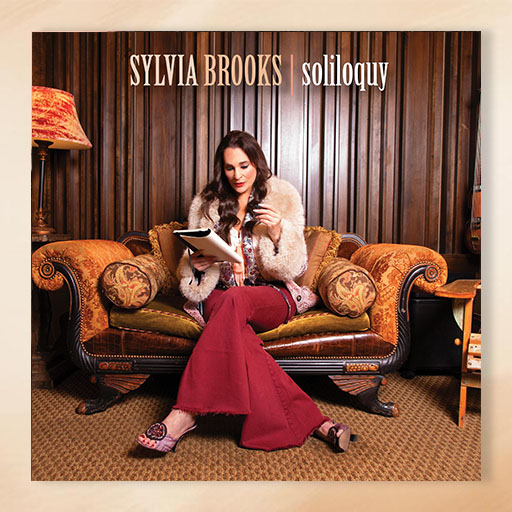
Soliloquy
Stream on:
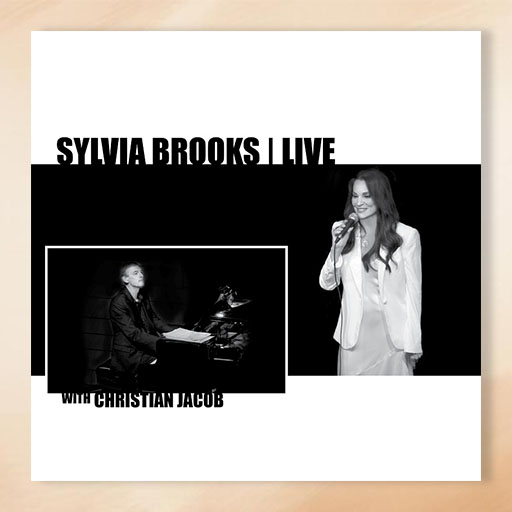
Sylvia Brooks Live with Christian Jacob
Stream on:
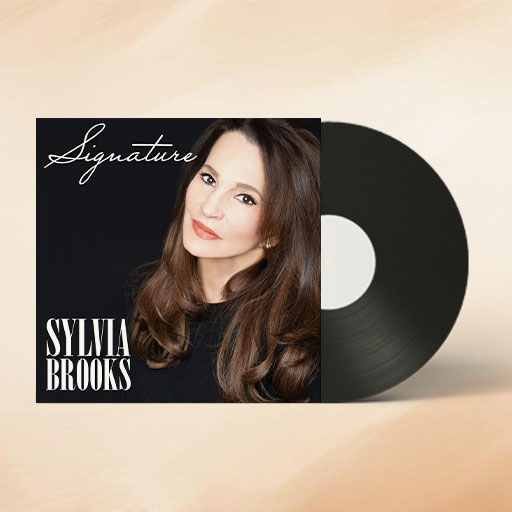
Signature
Stream on:
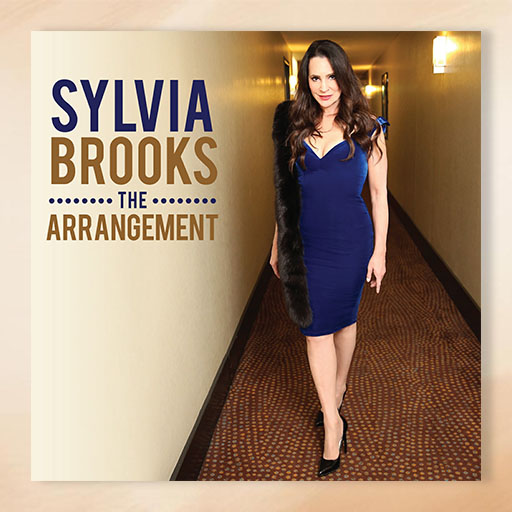
The Arrangement
Stream on:
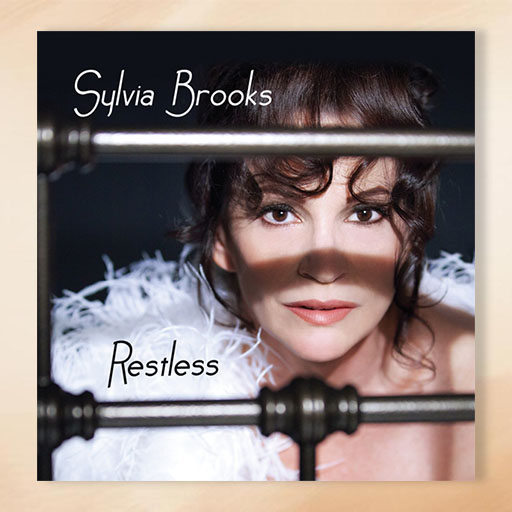
Restless
Stream on:
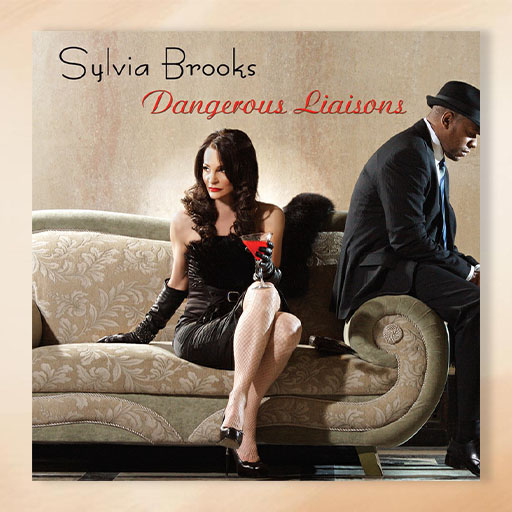
Dangerous Liaisons
Stream on: