Why Does Jazz Feel So Intimate
Some music entertains us. Some music energizes us. And there are pieces of music that sit with us in times when we just run out of words.
Jazz is the last of that group.
Jazz is so personal: a trumpet hangs on an individual note, a piano phrase feels mere inches away from conversation, and even the most vulnerable vocalist can be their own full-on version of brave. It is this emotional proximity that makes the jazz music and loneliness relationship matter across generations.
Despite the constant access to digital communication tools, loneliness continues to be one of modern life’s defining emotional experiences. And somehow jazz understands it all better than nearly any other form.
The Emotional Language of Jazz
Jazz expresses feelings like no other form of music does.
It does not hurriedly rush towards resolution. It leaves space. It allows silence to speak. It accepts uncertainty rather than avoiding it.
That kind of emotional capacity is one aspect of humanity that perpetually peeks through jazz. A jazz recital encapsulates all passions of desire, nostalgia, expectation, grief, and determination, sometimes in a single tune.
Jazz, on the other hand, allows for complexity to be felt in ways that highly polished pop production does not. This is the core element of emotional honesty that exists between jazz music and loneliness.
Loneliness and the Birth of Jazz
Jazz roots are found in struggle, migration, and the resilience of emotional survival.
Jazz sprang from Black neighborhoods of the late 19th and early 20th centuries, but so too did the Fatehams as emotional realities made manifest by people displaced. Theaters of blues traditions, spirituals, and improvisations became instruments for articulation when standard languages did not have the scope to contain human experience.
Loneliness, for the longest time in jazz, has been an activity carried out inside not only of despair but also of reflection, inner thought, and emotional authenticity.
This is one of the reasons jazz sounds emotionally real still today.
Why Lonely Moments Often Lead Us to Jazz
Jazz is not something people actively turn to for distraction.
Whenever they want to be heard, they go for jazz.
Late nights, drives through nowhere at speeds that shouldn’t be legal, long months in empty apartments and deserted streets jazz is a music for when the feeling becomes apparent. The music does not seek to overwhelm solitude. Rather, it rests gently next to it.
That companionship is powerful.
Jazz, it seems, many listeners write in, feels less like entertainment and more like presence. It provides emotional support without the expectation of explanation.
The Role of Improvisation in Human Emotion
Jazz is all about improvisation; the basic human spirit it embodies resonates in a surprisingly similar way.
Real emotions are not scripted. Conversations are not perfectly rehearsed. Life itself unfolds unpredictably. It is the reality jazz expresses, married to spontaneous musical intercession.
A solo can shift from suddenly tender, restless, unsure, or hopeful. The emotional shifts feel authentic because they’re actually taking place as you watch.
This freedom to improvise also accounts for much of the reason jazz music and loneliness continue to connect at such deep levels. Jazz does not make one believe emotions are tidy or uncomplicated; it lets them evolve organically.
Instruments That Carry Emotion
Some instruments in jazz sound tailor-made for emotion.
The sax can get balmy and full of sorrow.
The trumpet could either feel exposed or victorious.
Heavily warm the upright bass.
There is a reflective and conversational quality to the piano.
And there is, of course, the human voice.
This tradition of emotional storytelling expertly laced with vulnerability lives on today in the music made by modern jazz vocalists. When you listen live, you’re experiencing something that is very personal to the artist.
Jazz Clubs, Dim Lights, and Emotional Atmosphere
Environment matters in jazz.
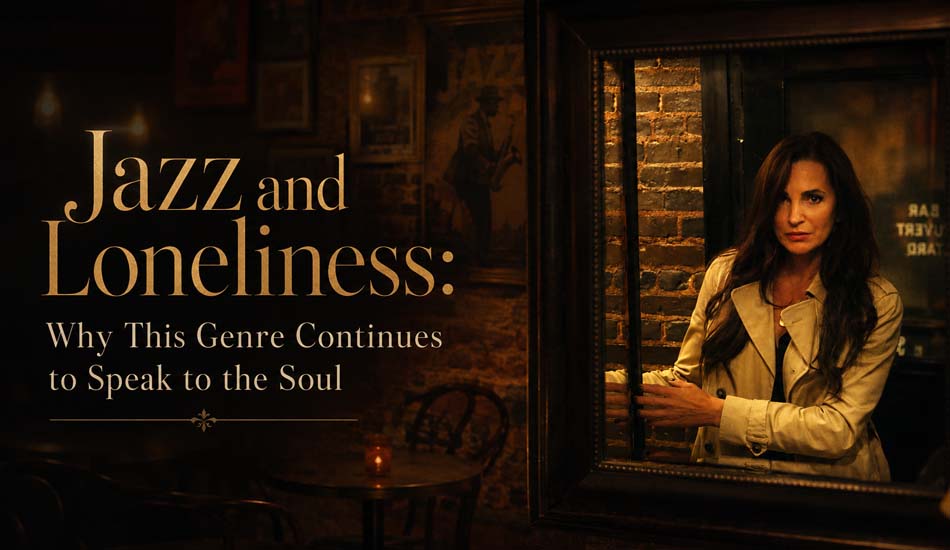
The low-lighted jazz clubs offer a context in which listeners slow down, listen attentively, and are emotionally present. Jazz venues, on the other hand (as opposed to concert halls and large stadium shows), tend to have a much more intimate feel, even private.
And the atmosphere itself plays a role in this emotional contemplation:
- soft lighting
- proximity to musicians
- quiet audience attention
- unhurried pacing
They strip away the performance veneer of jazz, making it more a communal expression of emotion.
Legendary Jazz Artists Who Turned Pain Into Art
Many of the most acclaimed figures in jazz history turned isolation and suffering into stunning artistry.
Some examples of early artists: Billie Holiday, Chet Baker, Nina Simone, and John Coltrane artists who made an emotional honesty through their music, which will echo for decades to come.
It is this tradition of vulnerability married with sophistication and emotional depth that is carried forward by many of the best female jazz vocalists today.
For listeners delving into new jazz releases 2026, it’s quickly apparent contemporary jazz artists remain firmly grounded in these emotional dimensions.
Jazz in Modern Life – Why Younger Audiences Still Connect
There are still new younger listeners, but the themes in jazz mean they have an immortal quality.
Yes, this is the era of social media and constant communication with everyone digitally, but loneliness has become common. There is an increasing hunger for art that feels more real and emotionally grounded.
In a time when patience is at an all-time premium in modern-day culture, jazz offers us quite the opposite.
It implores listeners to take their time, to listen and feel fully. This realness was one factor that longtime fans have found compelling still in the genre today.
Even listeners hearing about a jazz singer like Sylvia Brooks are often left mesmerized by the added emotional storytelling and intimacy these contemporary jazz artists infuse into their craft.
The Healing Side of Loneliness Through Jazz
Loneliness is not always destructive. At times it turns into a breeding ground for contemplation and artistry, emotions spoken out loud.
And that, Jazz, can turn isolation into understanding.
The music creates room for:
- emotional processing
- introspection
- calmness
- acceptance
And instead of enforcing positivity, jazz tells it like it is. It may be a comfort of that brutal honesty.
One of these reasons why the relationship between jazz music and loneliness is so everlasting is this healing quality.
Is Jazz Sad or Simply Honest?
While many people refer to jazz as “sad music,” that type of description only scratches the surface.
Jazz is not necessarily sad. It is truthful.
Without toning it down, this lets complexity exist. It can be a sad jazz song and happy at the same time. It is a lonely space that does not seem hopeless.
This is the kind of emotional honesty that makes jazz compelling. It is grounded in human emotion, not escapism.
Conclusion: Why Jazz Continues to Speak to the Soul
The reason why is that jazz music and loneliness have gotten a bond because jazz plays with the depth of your emotions like few genres do.
It does not rush to resolve feelings or mask them. Instead, it leaves room for listeners to engage with feelings and memories of longing and reflection.
In a world that grows more frenetic and disconnected each day, jazz remains one of the last forms still willing to slow down long enough for a close listen to human experience.
What gives jazz its soul is not because it spares loneliness but because it knows (via) the notes of loneliness.
FAQs
Why does jazz feel so emotional?
The improvisation, emotional nuance, and expressivity of jazz are what make this type of music easy for listeners to connect with (which they see).
Is jazz connected to loneliness?
Yes. The best jazz delves into introspection, yearning, and emotional honesty; feelings that go hand-in-hand with loneliness.
Why do younger audiences still connect with jazz?
To contemporary younger listeners, jazz is a breath of fresh air; it contrasts starkly with the up-tempo pace and music streaming acts that drive their digital culture.
Who are some modern artists/jazz fusion musicians to listen to?
Many fantastic contemporary artists and modern jazz vocalists are making boundary-pushing emotionally charged music today.
Can jazz actually help emotional well-being?
For a lot of people, jazz is relaxing and contemplative and soothing.