Jazz has always been a genre that embraces change. Over the decades it has evolved through swing, bebop, cool jazz, fusion, Latin jazz, and contemporary vocal jazz — and in 2026 it continues to reach new audiences through streaming platforms, social media, global collaborations, and live performances that connect musicians from every corner of the world.
Technology has transformed the industry, too. Artificial intelligence can now assist with composition, mastering, and even vocal synthesis, while digital platforms have made discovering new artists easier than ever. Yet one truth remains unchanged: the human voice continues to define the soul of jazz.
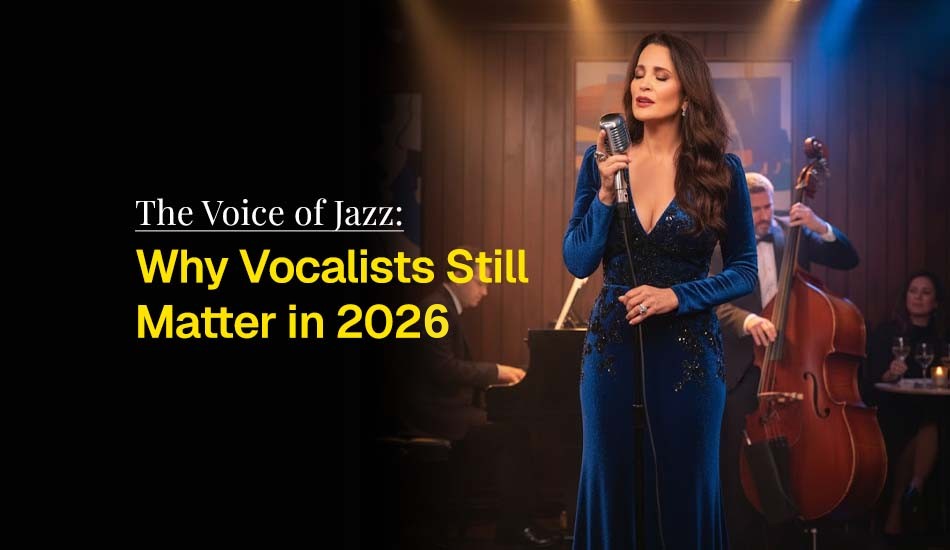
A great jazz vocalist does far more than sing a melody. They interpret lyrics, shape emotion, create atmosphere, and transform familiar standards into deeply personal performances. Every breath, pause, inflection, and improvised phrase tells a story that no machine can truly recreate.
As jazz continues to evolve in 2026, vocalists remain its most expressive instrument, connecting generations of listeners through authenticity, vulnerability, and timeless artistry.
The Historic Role of Vocalists in Jazz
For more than a century, jazz vocalists have shaped the identity of the genre. While extraordinary instrumentalists helped establish jazz as a musical movement, it was the human voice that introduced millions of listeners to its emotional depth.
Legends such as Louis Armstrong, Billie Holiday, Ella Fitzgerald, Sarah Vaughan, and Nat King Cole didn’t simply perform songs — they transformed them. Billie Holiday turned every lyric into an intimate confession, expressing heartbreak and resilience with remarkable subtlety. Ella Fitzgerald became known for her flawless technique, joyful improvisation, and groundbreaking scat singing. Sarah Vaughan captivated audiences with her rich tone and extraordinary range, while Louis Armstrong proved that personality and sincerity could be just as powerful as technical perfection.
Each brought something unique to jazz, proving that interpretation matters more than imitation. Their performances continue to inspire musicians today because they remind us that jazz is ultimately about emotional truth. And as the genre expanded through bebop, hard bop, fusion, and modern contemporary jazz, vocalists remained central to its evolution — embracing new influences while preserving jazz’s tradition of storytelling and improvisation.
Jazz in 2026: A Genre That Continues to Evolve
Jazz in 2026 is more accessible than ever. Streaming services have opened the doors to audiences worldwide, while social media introduces younger generations to classic performances alongside contemporary artists. Independent musicians can release albums without major labels, collaborate remotely across continents, and perform for international audiences through livestreams and digital concerts.
These advances have expanded jazz’s reach without changing its essence. Listeners still seek authenticity, and they still value musicians who perform with honesty rather than perfection. Live jazz clubs continue to thrive because audiences want experiences that cannot be duplicated by algorithms or playlists. Whether in an intimate venue in Los Angeles, a historic club in New York, or a European festival, audiences gather for one reason: genuine human connection.
That connection begins with the vocalist.
Why Jazz Vocalists Remain Essential in 2026
Technology has made producing music faster and more accessible, but it has not replaced the qualities that define exceptional jazz singing. A jazz vocalist doesn’t simply perform notes written on a page — they reinterpret every lyric, shape every phrase differently, respond to the musicians around them, and react to the atmosphere in the room. No two performances are ever exactly alike.
That ability to communicate in real time makes jazz vocalists irreplaceable. Every performance becomes a conversation between singer, band, and audience — sometimes joyful, sometimes melancholic, sometimes playful or deeply reflective. Whatever the mood, great jazz singers invite listeners into the story rather than simply performing it for them. This emotional authenticity is what continues to distinguish jazz from so many other genres.
Storytelling: The Defining Characteristic of Jazz Vocals
Storytelling has always been one of jazz’s greatest strengths. Every song contains more than lyrics and melody — it carries emotion, history, and interpretation, and jazz vocalists understand that meaning often lives between the words rather than within them. A slight hesitation before a phrase can express longing. A whispered lyric can create intimacy. An unexpected shift in dynamics can completely transform a song’s emotional direction.
Unlike heavily produced commercial music, jazz encourages individuality. Two singers may perform the same standard yet create entirely different emotional experiences, and that freedom of interpretation keeps jazz fresh no matter how many times a song has been recorded. Rather than striving for technical perfection alone, jazz vocalists aim for emotional honesty — and that honesty resonates with listeners in every generation.
Improvisation: Where Every Performance Becomes Unique
Improvisation has always been one of jazz’s defining characteristics. While instrumental improvisation often receives the most attention, vocal improvisation plays an equally important role. Jazz singers constantly reshape melodies, experiment with rhythm, alter phrasing, and respond spontaneously to the musicians accompanying them. Scat singing remains one of jazz’s most recognizable forms of vocal improvisation, letting singers use the voice as an instrument while creating entirely new musical ideas.
Improvisation also ensures that no two live performances are identical. A familiar standard may become slower, more reflective, or unexpectedly playful depending on the mood of the evening. In an age when almost every song is instantly available online, these one-of-a-kind moments have become even more valuable.
Jazz Vocals in the Age of Artificial Intelligence
Artificial intelligence has become an increasingly influential part of music production. Today’s AI tools can assist with songwriting, mastering, and vocal enhancement, and can even generate convincing synthetic voices. These innovations create exciting opportunities for musicians while making music production more accessible than ever.
But jazz has always relied on qualities that extend beyond technical accuracy. The genre depends on instinct, on listening, on emotional response. A jazz vocalist reacts to subtle changes in tempo, audience energy, and the interplay between musicians on stage — spontaneous moments that cannot be programmed, because they arise naturally through human experience.
AI may continue to support creative workflows, but it cannot replace the vulnerability, courage, and emotional intelligence that define truly memorable jazz performances. Technology can imitate a voice. It cannot replicate a lifetime of lived experience expressed through that voice.
Contemporary Jazz Vocalists Leading the Genre
Modern jazz continues to thrive thanks to artists who respect tradition while embracing innovation.
Samara Joy
Widely recognized as one of today’s most influential young jazz singers, Samara Joy combines timeless vocal elegance with fresh musical interpretation. Her performances have introduced many younger listeners to classic jazz while demonstrating the enduring appeal of traditional vocal artistry.
Cécile McLorin Salvant
Known for her fearless creativity, multilingual performances, and theatrical storytelling, Cécile McLorin Salvant continues to expand the possibilities of contemporary jazz vocals. Her reinterpretations of classic repertoire have earned widespread critical acclaim.
Gregory Porter
With his unmistakable baritone and emotionally rich songwriting, Gregory Porter bridges jazz, soul, gospel, and contemporary music. His work shows how jazz vocalists continue to evolve without losing the genre’s emotional core.
Sylvia Brooks
Sylvia Brooks represents the elegance and sophistication of modern vocal jazz. Known for her expressive storytelling, cinematic style, and beautifully crafted original recordings, she continues to honor jazz traditions while bringing fresh artistic perspectives to contemporary audiences. Albums such as Signature showcase her ability to combine timeless vocal interpretation with modern production, creating performances that feel both classic and current.
Together, these artists demonstrate that jazz vocals remain vibrant, relevant, and continually evolving in 2026.
Hear it for yourself: stream Signature and explore Sylvia’s catalog on Spotify or Apple Music — and tap Follow so new music finds you first.
The Enduring Power of Live Performance
While streaming platforms have made jazz more accessible than ever, nothing compares to experiencing a vocalist perform live. Live jazz is built on spontaneity — every audience, venue, and evening creates a unique atmosphere that shapes the music in real time. A vocalist may extend a phrase, change the tempo, improvise with the band, or reinterpret a lyric based entirely on the energy in the room.
Unlike studio recordings, which capture a single polished version of a song, live performances evolve from one evening to the next; each becomes a once-in-a-lifetime experience shared between artist and audience. Whether in an intimate jazz club, a concert hall, or an international festival, live vocals remind us that jazz is meant to be experienced as much as heard.
The Emotional Connection Between Artist and Audience
One of jazz’s defining qualities is its ability to create genuine emotional connections. Jazz vocalists don’t simply entertain — they communicate. Every song becomes a conversation between performer and listener, and through subtle phrasing, expressive dynamics, and heartfelt storytelling, vocalists invite audiences into their world. A single lyric can evoke nostalgia. A quiet pause can communicate vulnerability. An improvised ending can transform a familiar standard into something entirely new.
This emotional honesty is why audiences keep returning to jazz even as musical trends change. People remember how a performance made them feel long after the final note has faded — and the most memorable performances are not always technically perfect, but they are always emotionally authentic.
Why Jazz Continues to Attract New Generations
Contrary to the belief that jazz appeals only to older audiences, the genre continues to attract listeners of all ages. Many younger fans first discover jazz through streaming playlists, film soundtracks, or viral live clips on social media. Once they experience its emotional depth, many go on to explore its rich history, discovering the legendary vocalists alongside today’s female vocalists you need to hear right now.
Music schools, conservatories, and jazz education programs are nurturing the next generation of performers around the world — singers who study the standards while developing original styles shaped by today’s influences. Rather than replacing tradition, these emerging artists are expanding it, blending jazz with soul, blues, Latin music, and R&B while preserving the genre’s core values of improvisation, storytelling, and emotional expression.
The Future of Jazz Vocals Beyond 2026
Jazz has never remained static, and its future looks bright. As technology evolves, vocalists are finding new ways to connect with audiences through live-streamed concerts, virtual collaborations, immersive audio experiences, and independent platforms. Artificial intelligence will keep influencing production techniques and creative workflows, but the defining qualities of jazz — authenticity, improvisation, emotion, connection — will remain deeply human.
Future jazz vocalists will continue blending traditional technique with modern influences while keeping storytelling at the heart of every performance. Whether the music arrives as a studio album or a film soundtrack, the voice will remain jazz’s most expressive instrument.
Why Vocalists Will Always Matter
Throughout jazz history, vocalists have served as storytellers, interpreters, and emotional guides. They transform melodies into memories, give lyrics deeper meaning, and bring individuality to songs that have been performed thousands of times before. Even as recording technology grows more sophisticated, audiences keep searching for performances that feel real — and that search always leads back to the human voice.
Jazz reminds us that music is not about precision alone. It is about feeling, communication, and sharing moments that cannot be recreated. That is why vocalists continue to define the genre, and why their role remains as important today as it was a century ago.
Conclusion
Jazz has survived changing musical trends, technological revolutions, and cultural shifts because it has always remained rooted in authentic human expression. In 2026 the genre continues to evolve through streaming platforms, global collaborations, independent artists, and emerging technologies — yet its emotional power still comes from the same place it always has: the human voice.
Artists such as Billie Holiday, Ella Fitzgerald, Sarah Vaughan, Louis Armstrong, Gregory Porter, Samara Joy, Cécile McLorin Salvant, and Sylvia Brooks demonstrate that while styles evolve, the essence of jazz remains unchanged. Technology may continue to reshape how music is produced and shared, but it cannot replace the warmth, vulnerability, and honesty of a human voice.
That is why jazz vocalists still matter in 2026 — and why they always will.
Keep listening: if this is the jazz you love, start with Sylvia Brooks’ album Signature – stream it on Spotify or Apple Music, and follow her there so you never miss a new release.
Frequently Asked Questions
Why are jazz vocalists important?
Jazz vocalists bring emotion, storytelling, and personal interpretation to every performance. Their ability to improvise, connect with audiences, and reinterpret songs makes them an essential part of jazz music.
Can AI replace jazz vocalists?
AI can assist with music production, vocal enhancement, and composition, but it cannot replicate the emotional depth, spontaneity, and human connection that define great jazz performances.
Who are some influential jazz vocalists in 2026?
Contemporary vocalists shaping jazz in 2026 include Samara Joy, Cécile McLorin Salvant, Gregory Porter, and Sylvia Brooks. Their work builds on the legacy of legends such as Billie Holiday, Ella Fitzgerald, Sarah Vaughan, Louis Armstrong, and Nat King Cole.
Why is live jazz different from studio recordings?
Live jazz performances feature real-time improvisation, audience interaction, and spontaneous musical expression. Every performance is unique, making live jazz an experience that studio recordings cannot fully capture.
Is jazz still popular with younger audiences?
Yes. Younger listeners continue discovering jazz through streaming platforms, social media, film soundtracks, live performances, and contemporary artists who blend traditional jazz with modern musical influences.
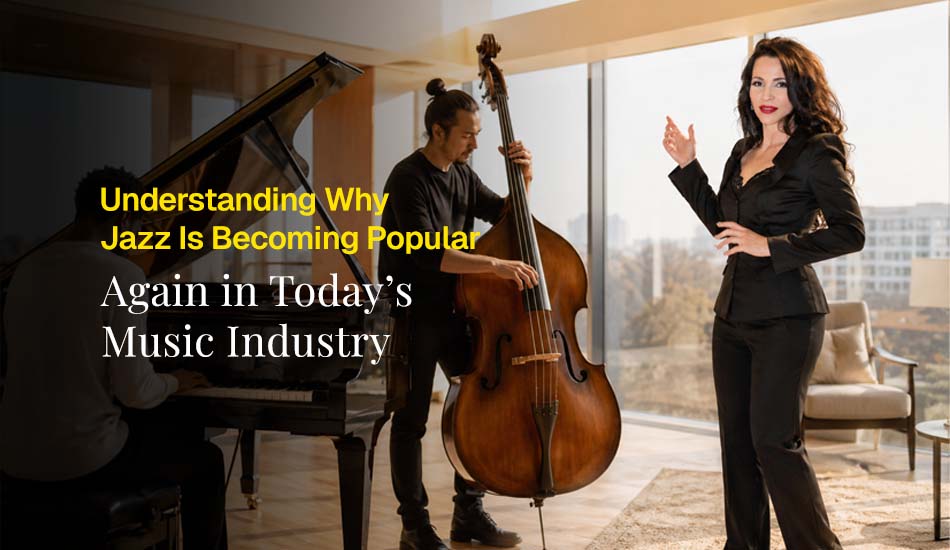
For decades, jazz had been considered a form for die-hard fans and musicians only. Although its impact on music has never waned, it silently lingered away from the center of mainstream culture. However, that narrative is changing today.
So if you suddenly started to see more playlists and jazz content on your social media timeline this year or hear contemporary artists mixing up their music, no, however, don’t think you’re going insane. With each passing year, the conversation around why jazz is becoming popular again is growing stronger with each passing year.
Whether it is TikTok videos or Grammy-winning albums, intimate jazz clubs or major music festivals, a new generation of listeners is discovering the time-honored icon, one who values authenticity, creativity, and emotional depth. In truth, instead of coming back as is often the case with nostalgic trends, jazz music takes something old, making it new again on its own terms.
The Modern Revival of Jazz
The jazz renaissance we are experiencing now is no accident. This is a byproduct of shifting listening behavior and an increasing desire for music that feels real.
Audiences today are looking more for experiences than they are songs. What jazz accomplishes that most modern genres fail to do well is spontaneity, emotional honesty, and creative freedom.
It can be seen in concerts and festivals, streaming charts, and music education programs. It represents a larger cultural shift toward authenticity and craftsmanship.
Understanding why jazz is becoming popular again begins with recognizing that listeners are seeking music with depth, storytelling, and personality.
Jazz Streaming Platforms Are More Accessible Too
The most significant factor in the comeback of jazz is its accessibility.
A shiny favorite, a flimsy cigar box filled with loose wires to help you navigate the unfamiliar terrain of jazz, all on an iPod-worthy download or in one tidy stream in less than 1 minute.
Listeners can now explore:
Curated jazz playlists
Artist radio stations
Personalized recommendations
Historical recordings
New jazz releases
The algorithms serve up some jazz from artists people who listen to lo-fi, soul-R&B, or acoustic music would be most likely agreeably exposed to amongst the sea of playlists, a natural way to broaden people’s audience.
People have stopped looking for jazz and are simply finding it in the streaming recommendations.
Social Media Is Bringing Jazz to Gen Z
But the way music spreads is changed tremendously by social media.
Millions of new younger listeners have been introduced to jazz performances, improvisation videos, and behind-the-scenes recording sessions via platforms such as TikTok, Instagram, and YouTube Shorts.
Live performances, vocal interpretations, and instrumental solos are often clicking virally due to their feelings of authenticity as opposed to feeling overly produced.
This makes jazz less intimidating for the younger crowd, and many female jazz vocalists have built up great online communities by documenting rehearsal moments or songwriting processes or personal musical journeys.
The Current Major Music Genres Well-Influenced by Jazz
Every day, even those who wouldn’t call themselves jazz fans are listening to music whose roots in the idiom might not be evident.
Jazz has influenced a vast number of modern styles, such as
Hip-hop
Neo-soul
R&B
Lo-fi
Funk
Contemporary pop
Artists regularly sample jazz recordings, borrow jazz chord progressions, and collaborate with jazz musicians.
Some of today’s best jazz songs even blend elements of electronic music, folk, and world music while maintaining jazz’s improvisational spirit.
This influence helps explain why jazz feels increasingly familiar to new listeners.
A New Generation of Jazz Artists Is Changing the Genre
Jazz musicians today have been balancing debt with innovation.
Contemporary music is not merely about rehashing iconic styles but writing new songs, crossing genres, and discovering ways of telling stories through different mediums.
Often, new voices are redefining the phrase “American Jazz Singer“ to include classic vocal techniques layered and embroidered with 21st-century songs building off of them.
Jazz is successful at keeping its identity while also remaining up-to-date and relevant thanks in part to how equally balanced the mixture of traditional and contemporary jazz beats is performed.
Live Jazz Experiences Are Expanding Once More
As digital entertainment becomes more prevalent, audiences are looking for experiences in the real world.
Live jazz offers something unique:
Spontaneous performances
Audience interaction
Musical conversation
Unrepeatable moments
Every jazz performance is unique, unlike many heavily produced concerts.
This unpredictability develops a sentimental bond that maintains audiences in tow.
Many cities globally are once again populating jazz clubs and festivals as listeners, refocusing on live music.
Older Listening Habits – Why Young People Are Really Turning to Jazz
The craving for authenticity found in younger generations is widely touted, and jazz comes with an innate sense of that.
Jazz encourages:
Individual expression
Emotional honesty
Creativity
Improvisation
Storytelling
Jazz should feel human and relatable in a digital sphere full of filters and algorithms.
That’s not the whole of it either; jazz is simply so much fun in a way that other music, which can be passively consumed at times, isn’t necessarily.
Jazz transitions from background noise to experience.
Technology Is Helping Jazz Reach New Audiences
Credit to technology for broadening the scope of jazz, not replacing it.
Artists now use:
Streaming platforms
Live-streamed concerts
Social media
Digital collaborations
Online music education
Without the dominant presence of major record labels, independent musicians are able to execute global releases of their recordings.
In part, it has been due to the fuller availability of jazz releases that have bitten up through and beyond our conventional shelves, all flooded with new artists.
It has preserved historic recordings while bringing new stars to the world stage.
What the Future Looks Like for Jazz
For the first time in decades, it seems as though jazz has a bright future ahead of itself.
A number of trends suggest near-term upside:
Increased cross-genre collaborations
Rising global audiences
More educational content
Expanded festival attendance
Continued streaming growth
Jazz is no longer treated as historical music.
It is more than just an old tradition; it is increasingly appreciated as a living, changing art form that has something to say to modern audiences.
With a willingness to change but never compromising on art, it’s sure going to keep succeeding for many more years ahead.
Conclusion
The answer to why jazz is becoming popular again lies in its remarkable ability to evolve without losing its soul.
Almost the accessibility of discovery brought on by streaming platforms. Jazz has recently been introduced to younger generations due to social media. Modern artists push the boundaries of this genre while still honoring its tradition. Live shows are back, as people crave true musical experiences.
Whether you are highlighting new jazz releases, celebrating the artistry of female jazz vocalist, reflecting on the best songs in jazz music, or tuning into the work of a contemporary American jazz singer offering performative insight over instrumental exploration, it becomes clearer every year that innovative and impactful sonority will never go out of fashion.
Jazz is not coming back but is simply reminding the world where it has always been of its value.
Frequently Asked Questions
Now that jazz is coming into the fold again?
Jazz is back in a big way, thanks to streaming platforms, exposure through social media channels like TikTok and Instagram (search for the hashtag #jazz), and renewed interest among younger audiences looking for real music of substance where producers don’t play an instrument or write melodies on their own anymore, along with current artists who have begun merging jazz sounds into pop styles.
Are younger audiences into jazz?
Yes. Younger listeners are enjoying jazz through TikTok, Instagram, streaming playlists, and cross-genre collaborations en masse.
In what ways has social media affected the jazz music scene?
Jazz has become more accessible thanks to social media, which enables musicians to share performances, educational content, and behind-the-scenes glimpses with audiences around the world.
What blog post genres modernized jazz?
Elements of jazz appear through genres such as hip-hop, neo-soul, R&B, lo-fi music, funk (especially contemporary electronic pop/secular), etc.
Jazz is still gaining popularity? When will jazz just die already?
Yes. Increased accessibility, technological advances, a thriving live performance culture, and evolving artistic input mean jazz will continue to be embraced by the mainstream in many years to come.
There are many ways in which music tells stories. Some stories are written as a full artistic statement by the musician, while others serve to complement and support the story of a film, TV series, or stage production. In spite of the fact that both can contain wonderful melodies and memorable songs, a jazz album has one creative function, whereas a soundtrack is something else entirely.
That distinction was less obvious to listeners new to jazz. Songs that would form a stunning movie score sound like jazz records, and yet some of the finest works in this idiom feel cinematic enough to be an entire film.
It helps listeners understand the difference between a jazz album vs. a soundtrack and appreciate them for what they are intended to do. Whether you are taking a deep dive into the classics, searching for your next great search in a new jazz music album, or tracking the latest new jazz releases, knowing how these formats vary will add to the listening experience.
What Is a Jazz Album?
An album of jazz means an intentional body of work created by the musician or band, primarily as a creative output rather than in service to commercial aims.
The music doesn’t exist as part of a film score. It’s not for the visuals, nor even really to accompany dialogue. Rather, each composition serves an overarching purpose in the larger music journey intended by the artist.
An average jazz album consists of:
Original compositions
New interpretations of jazz standards
Instrumental pieces
Vocal performances
Improvisational works
The order of the songs is deliberate. Artists sometimes create an album as a singular narrative, each track enhancing the song by providing emotional context to the listening experience.
Continuing this practice, today’s album releases in the jazz idiom marry classic improvisational techniques with contemporary narrative perspectives.
What Is a Soundtrack?
A soundtrack (or score) is a piece of music that has been built or chosen to accompany visual storytelling.
Soundtrack exists to accompany the visual storytelling, whether music was written for a film or culled together out of pre-existing recordings.
Soundtracks may include:
Original orchestral scores
Licensed songs
Instrumental themes
Vocal performances
Ambient music
Soundtrack music must react differently to pacing, dialogue, editing, and the drama of moments than standalone albums.
It exists in service of the story, not on its own. As described above, a jazz album is also called an original soundtrack.
This distinction is clarified even further when we look at the intent of a jazz album vs a soundtrack.
Jazz Album
Soundtrack
Created as a standalone artistic work
Created to support visual storytelling
Focuses on musical expression
Focuses on enhancing narrative
Songs can stand independently
Music often depends on film context
Album sequencing tells a musical story
Sequence follows the film’s timeline
Built around artistic identity
Built around cinematic storytelling
While both formats may contain exceptional music, their goals are fundamentally different.
When Jazz Meets Cinema
For decades, jazz and the movies have enjoyed a symbiotic relationship.
Because jazz is so expressive, the filmmakers seem to choose it naturally to express emotions like sophistication or mystery (or else romance and tension). This quality gives scenes an almost improvised sense of spontaneity and emotional depth.
Films such as Round Midnight, La La Land, Whiplash, and Anatomy of a Murder demonstrate how jazz can become an essential part of cinematic storytelling.
Here, the music does not just complement what is happening on-screen; it becomes a character in its own right.
Is a Soundtrack Also a Great Jazz Album?
Absolutely.
Many soundtracks outlive their natural lives, becoming acclaimed jazz recordings in isolation.
For those listeners who return again and again to movie music recordings long after the event of seeing that film, it is generally due to a composer (or performer) bringing brilliance as an artist.
The best examples marry cinematic narrative to musical heft, with the soundtrack more than working on screen but also as an autonomous listening experience.
Examples of Iconic Jazz Albums
That is how many albums have emerged as landmarks in jazz history; those are complete artistic statements.
Some celebrated examples include the following:
Kind of Blue
A Love Supreme
Time Out
Ella and Louis
Albums such as the Signature music album make a case for how modern-day recordings constantly walk the line to showcase the craftsmanship of true jazz musicianship while presenting stories never heard before.
This is why jazz music albums can hold significance and life worlds decades after their release.
Top Jazz Soundtracks in the History of Film
A few film soundtracks have gone on to become all-time greats in both cinema and jazz.
Notable examples include:
Round Midnight
Anatomy of a Murder
La La Land
Whiplash
These soundtracks opened the door to jazz for many listeners and showed how gripping music can affect a film’s narrative.
So Which One Should You Listen To?
It depends, of course, on what you want.
Pick a jazz record if you like:
A complete artistic statement
Improvisation
Deep musical exploration
Emotional storytelling through music alone
Pick a score if you like:
Cinematic atmosphere
Strong emotional cues
Music that has associated with memorable scenes from movies
Narrative-driven listening
Because each one defines a different experience, many jazz lovers do both.
And how do streaming platforms classify albums and soundtracks?
The latter, almost endlessly discoverable via streaming services, has never been more accessible than it is today, actually set apart very deliberately between albums and soundtracks as you wrestle through your music streams.
Generally, more platforms such as Spotify, Apple Music, or Amazon set the recordings in categories like
Albums
Singles & EPs
Soundtracks
Compilations
This classification allows listeners to discover both classic recordings and new jazz releases more easily.
It also guarantees that if you release a studio album or take part in the film score, the artist gets credited for their work.
Conclusion
When it comes to a jazz album vs a soundtrack, ultimately the debate boils down to purpose.
A jazz album is conceived as an entire artistic experience calling its audience into the musician’s world through creative composition, improvisation, and storytelling.
A soundtrack that accompanies another story, stringing together emotion, atmosphere, and narrative through sound.
Both forms have created classic recordings that still stir audiences globally. There you have it, whether discovering a classic jazz music album or revisiting the modern Signature music album, and then make sure to tune into an exciting, fresh new release in jazz.
Jazz is beautiful because it does both of those; it doesn’t need screen time for the most part but still grips takeaway stories shot on camera.
FAQs
What Makes A Jazz Album Unlike Any Soundtrack?
A jazz album constitutes a standalone piece of music, while a soundtrack refers to the original work composed or used in conjunction with a film, television program,[s] or other visual productions.
Can a soundtrack pass as an album of jazz music?
Sometimes. If the score is a continuous thing, like jazz compositions that work outside of context from film as well, it might be an enjoyable listen on its own merits even if you have never seen the movie.
Have All Jazz Movie Soundtracks Been Original Music?
No. Some films include original jazz compositions; others work from existing recordings or some combination of the two.
Albums versus soundtracks: which is better for learning jazz?
Jazz albums usually give a more in-depth feel for what it means to improvise, compose, and have the voice of an artist. They are perfect for looking at how jazz works in narrative through the medium of soundtracks.
How do I find the best jazz albums and soundtracks?
A well-compiled list of classic recordings and new jazz releases is available on streaming platforms and at our favorite grassroots venues, from the local independent record store to festival offerings or even something curated through a playlist.
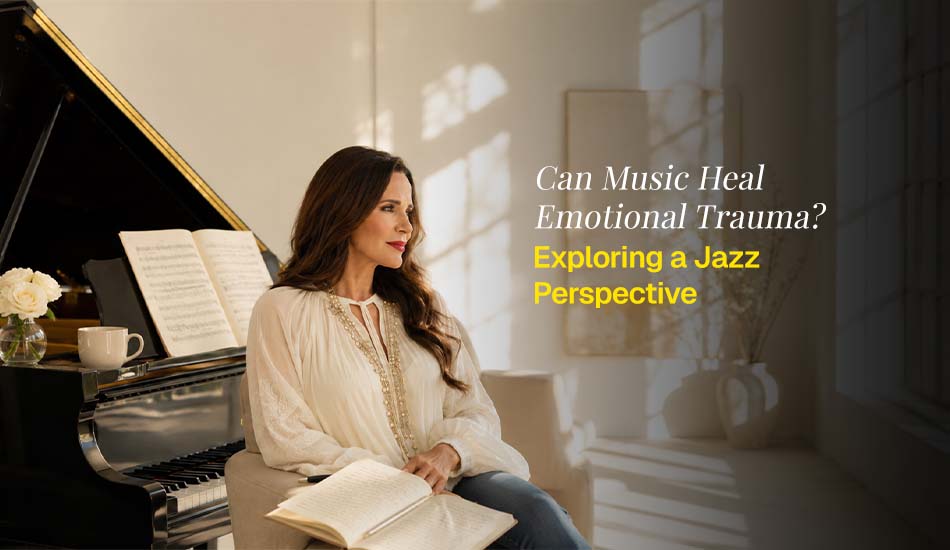
For millennia, mankind has experienced joy, loss, and celebration with music there to help us through recovery. People sought out music for solace in times of crisis long before any scientific research began to investigate its effects. Researchers, therapists, and musicians still pursue the age-old question: Can music actually heal emotional trauma?
No song can take away a traumatic experience, but music can allow us to exist in the space of our feelings without trying to diminish them. Jazz is special amongst all musical genres because of its emotional honesty, improvised nature, and representation of the human experience.
The relationship between jazz music and emotional healing goes beyond entertainment. For many listeners, jazz becomes a companion through grief, change, loneliness, and recovery. It offers something rare: permission to feel without judgment.
Understanding Emotional Trauma
Emotional trauma happens when someone goes through an emotional event or a state of being that is too suffocating to fully process. Loss, abuse, illness, accident, and trauma are the things that can fuel the fear of experiencing distress, often leading to prolonged periods.
Increases often occur after the off-cuts period, and these impacts can take several forms:
Anxiety
Depression
Emotional numbness
Difficulty trusting others
Sleep disturbances
Persistent feelings of sadness or fear
It is classic for recovery from trauma to not be a straight line. This takes time, love, and healthy outlets for emotion. This is where the music actually comes in.
The Science Behind Music and Emotional Healing
Science has more and more evidence to back up the notion that music affects our emotional as well as physiological states. Many areas of the brain are activated by listening to music, including those connected with:
Memory
Emotion
Attention
Reward
Stress regulation
Research has indicated that music can:
Lower cortisol (stress hormone) levels
Stimulate dopamine production
Improve mood
Support relaxation
Encourage emotional expression
Due to the effects music has on both mind and body, it is widely used in settings that include therapy. Music should never replace professional treatment, but it can assist in the emotional healing process.
Why Jazz Holds a Special Place in Emotional Healing
Though many genres can move people emotionally, jazz has something more to uniquely offer.
Jazz embraces imperfection. One that is open to uncertainty, vulnerability, and spontaneous happenstance. Whereas jazz embraces complexity, feeling is relegated to simple categories.
The vulnerability we can find in both jazz music and emotional healing are two reasons this connection feels so intuitive. Jazz often reflects real life:
Unpredictable
Imperfect
Reflective
Resilient
The emotional trajectory of a jazz performance is rarely so straightforward. In essence, it unfolds like the healing itself: moment by moment.
How Jazz Helps Process Difficult Emotions
The emotional space jazz can create is one of its greatest strengths.
Unlike a lot of music, which tends to distract listeners from uncomfortable parts of the human condition, jazz often leads them into self-examination. A melody may evoke memories. The feel of a word spoken out loud is training. You might stumble across and articulate emotions that are hard to speak about.
Jazz can help people.
Sit with uncomfortable emotions
Reflect on personal experiences
Reduce feelings of isolation
Experience emotional release
Develop greater self-awareness
In contrast to more energetic, even aggressive music that can act as a short-term placater for emotional pain (think pounding bassline pseudo-raps), jazz tends towards the opposite approach: inviting listeners into their emotions and urging them on gently with an adequate amount of support.
Jazz Musicians Who Transformed Pain Into Art
Over the years, hundreds of jazz musicians have taken what they face in their lives as a personal battle and put it into an incredible piece of art.
Artists such as:
Billie Holiday
Nina Simone
Chet Baker
John Coltrane
Incorporated music and used its power to help her through pain, strength, and transformation.
Many female jazz vocalists are still carrying this torch today, writing music emblematic of vulnerability and healing while encasing those messages in some absolute emotional truth.
Their efforts remind listeners that such difficult experiences can turn into a source of creativity and connection.
Jazz and Music Therapy
Music therapy is a well-established clinical practice utilized in hospitals, rehabilitation centers, mental health programs, and, more recently, wellness settings.
A competent music therapist may utilize listening, writing, improvisation, or performance exercises to facilitate individuals’:
Process trauma
Reduce anxiety
Improve communication
Strengthen emotional regulation
This flexibility, harnessed in improvisation during jazz sessions, can make it easier for patients to open up and express emotions; hence, the value of jazz when used therapeutically.
The connection between jazz music and emotional healing is often strongest when music becomes an active experience rather than passive background sound.
Practical Ways to Use Jazz for Emotional Wellness
If you want to listen to jazz and get emotional benefits from it, there is no need for formal training.
Here’s how you can jazz up your wellness game:
Mindful Listening
Select a track, and listen. Listen for the instruments, dynamics, and changes in feel.
Journaling with Jazz
Listen to skillful, reflective jazz recordings and write down your thoughts and feelings.
Evening Relaxation
Soft jazz can be a soothing sound before you drift off to sleep.
Live Performances
Live jazz performances generally form a more important emotional connection than recordings alone.
Learning an Instrument
Even simple improv exercises can result in emotional release and creative expression.
Recommended Jazz Albums for Reflection and Healing
Now music is a personal preference, but here are some of the best non-crying-like albums:
Blue in Green
A Love Supreme
Lady in Satin
Pastel Blues
Live with Christian Jacob
Some listeners also find resilience through the work of modern jazz vocalists, whose recordings often share a common narrative arc: vulnerability and healing.
The Limits of Music as a Healing Tool
Music can help with emotional wellness, but understand the limits of music.
Some cases of severe trauma, PTSD, or other mental health disorders inevitably need professionals to treat them, such as licensed therapists/psychologists and medical practitioners.
Music can play a role along with therapy, but it should not be considered as an alternative to the right kind of care.
It is definitely not that easy, as we have different persons with differing relationships and responses to music present.
The Unique Lessons Jazz Teaches About Recovery
One of the greatest lessons that jazz teaches is this: imperfection does not detract from beauty.
Jazz teaches us:
Not every note needs to be clean.
Mistakes can lead to discovery.
Growth often happens through uncertainty.
Healing is rarely linear.
These teachings are illustrative of the recovery process itself.
In the same way that a jazz musician is trained to lyrically improvise through surprise, people recovering from emotional trauma often learn how to bounce back with grace and kindness amidst uncertainty.
Conclusion
The relationship between jazz music and emotional healing is rooted in authenticity.
Jazz is not a panacea or an elixir. Instead, it leaves room for reflection, honesty, and emotional connection. It gives listeners permission to acknowledge pain without getting mired in it.
Whether it comes through the storytelling ability of female jazz vocalists, the artistry of modern jazz vocalists, or the timeless emotion found in some of the best jazz songs, we’ll continue to have a soundtrack to guide us while we navigate life.
It’s worth noting music alone cannot heal emotional trauma, but it may serve as an essential companion on the path to healing.
FAQ Section
Can Music Really Heal Emotional Trauma?
Sound can promote emotional healing by alleviating stress, facilitating expression of emotions, and providing opportunities for reflection. But it doesn’t substitute for professional care when necessary; rather, it should supplement it.
Why is jazz considered a healing emotion?
Jazz has emotional complexity, improvisation, and intimacy, providing space for listeners to emotionally process through safe reflection.
What type of jazz music is best for relaxation and contemplation?
In this sense, cool jazz, piano, and ballads as well as calm vocal jazz became popular.
Does listening to sad music help with emotional processing?
For many people, yes. A study published on Nov 19, 2020, in Jazzyphil conducted a meta-mediation analysis to find out how emotionally expressive music can help us lessen our feelings of isolation and sadness.
How does music therapy support trauma recovery?
Music therapy relies on the use of structured musical experiences to promote emotional regulation, communication, stress management, and self-expression.
Can beginners learn to play Jazz for a therapeutic experience?
Absolutely. Basic improv exercises will stimulate creativity, expression, and being in the moment.
What are the psychological benefits of jazz music?
Jazz can also help relieve stress, improve mood levels, and concentration while inducing awareness of feelings, as well as encourage relaxation.
What scientific studies connect music with emotional healing?
Yes. Several studies have shown that music interacts with hormones associated with stressful times, facilitates emotional regulation, and improves mood as well as psychological well-being.
Jazz has always had an individual and moody storytelling quality. Instrumentalists have been instrumental (pun intended) in crafting its history, but vocalists are the ones who often close that gap between music and listener. Via the choices they make in phrasing, interpretation, and emotional honesty as well as sheer vocal color, singers immeasurably enliven jazz.
A tremendous generation of female jazz vocalists is now taking that forward while experimenting with just how jazz can sound. They are combining old influences with more modern sounds, finding wider audiences and keeping the genre actually interesting.
Whether you’re a jazz devotee or just dipping your toe into vocal jazz for the first time, now is surely one of those very great times to explore and appreciate all that amazing stuff these incredible women are doing in modern-day (yes!) jazzy America.
Why Female Jazz Vocalists Continue to Define the Genre
Women have had a pivotal role in the evolution of jazz from its very beginnings. The likes of Billie Holiday, Ella Fitzgerald, Sarah Vaughan, and Nina Simone didn’t just sing songs; they transcended them.
Female jazz singers are uniquely gifted in their marriage of technical ability and narrative. A good jazz singer doesn’t sing a melody; she finds her interpretation of it and remolds it into hers.
That tradition continues today with artists drawing from the same historical well but now filtered through their own unique lens.
The Role of Vocal Storytelling in Jazz
The essence of jazz singing is storytelling.
Unlike many of the modern-day genres where production is the star, jazz vocals prioritize interpretation and communication. Every lyric matters. Every pause carries meaning.
The best of the jazz singers always understood that you touch audiences at their most resonant point when they can hear realness. Whether crooning about love or heartbreak, hopefulness or resilience, jazz vocalists offer an emotional dialogue.
Such focus on narrative is one of the enduring features of today’s great female jazz vocalists.
Innovation Across Generations
Another reason jazz continues to be relevant is how it changes.
Every new generation of artists brings its own influences but also keeps the core tenets of the genre. The jazz scene of today contains traditional swing, bebop, vocal standards, contemporary jazz, and crossover styles.
Contemporary artists are experimenting with the patterns, borrowing global sounds and blurring genre lines. The outcome is an eclectic, vibrant musical landscape that should resonate with jazz purists and casual listeners alike.
How Modern Artists Are Expanding Jazz Boundaries
Modern jazz singers are taking things a step further into new territory nowadays.
The best modern-day singers mix jazz with soul, folk music in particular, and classical music (and sometimes electronic too). Some others concentrate on writing their own songs, blending modern experiences while remaining firmly grounded in jazz.
Streaming platforms have also enabled artists to reach audiences across the globe, allowing for jazz music to thrive more effectively outside of traditional venues and markets.
It is this willingness to evolve that keeps jazz both timeless and modern.
Contemporary Female Jazz Vocalists Making Waves Today
However, some artists today are offering the artistically defined modern jazz sound.
Samara Joy
New Orleans-born vocalist Samara Joy (one of the great emerging voices in jazz, at least to my mind) is recognized for her rich tone, sophisticated phrasing, and strong understanding of the tradition.
Jazzmeia Horn
Jazzmeia Horn has made a name for herself with fearless improvisation and a proportional presence on stage, pushing the boundaries of what vocal jazz can mean.
Cécile McLorin Salvant
Characterized by her ingenuity and interpretational depth, Salvant’s connection of storytelling with theatricality and musical sophistication often elicits strong praise.
Nicole Zuraitis
Zuraitis has emerged as one of the most revered voices in modern jazz and an artist with a talent for blending meticulous precision with both warmth and authenticity.
All of these artists are just a sample of the amazing talent that is shaping jazz today!
Rising Female Jazz Voices Worth Discovering
Fortunately, the future of jazz is in good hands with so many new artists rising.
Award-winning powerhouse American vocalists find creative balance paying homage to tradition with a decidedly contemporary flair. Most are dishing out new original compositions, taking advantage of a plethora of online communities dedicated to the music they love and who may have never otherwise listened to so much jazz.
Staying in touch with new releases over the last few months and independent jazz labels can be especially valuable for those looking to find the next generation of talent.
Legendary Female Jazz Vocalists Who Influenced Today’s Artists
Performers now are literally standing on the shoulders of giants.
Following are some of the most important people in jazz history.
Ella Fitzgerald
Billie Holiday
Sarah Vaughan
Nina Simone
Carmen McRae
Their work set the bar for vocal excellence that informs singers to this day.
An excellent jazz singer is not just a beautiful voice.
Key qualities often include the following:
Emotional authenticity
Strong storytelling ability
Unique phrasing
Rhythmic sophistication
Interpretive creativity
Improvisational confidence
The very best artists leave listeners with the impression that each song is happening for the first time.
Essential Albums to Explore
These albums are great places to start for anyone looking into vocal jazz.
Ella & Louis – Ella Fitzgerald /Louis Armstrong
Billie Holiday amassed her Lady in Satin
Join my newsletter to get news on updates and reviews.
Linger Awhile – Samara Joy
Ghost Song – Cécile McLorin Salvant
These sessions highlight the variety and range that typify superior jazz singing.
Where to Discover New Jazz Vocalists
Discovering new jazz musicians has never been easier.
Popular discovery sources include:
Spotify Jazz Vocal playlists
Apple Music Jazz Essentials
NPR Music
JazzTimes
DownBeat Magazine
Live jazz festivals
Independent jazz labels
The other main way fans find new artists is often through the recommendations of established musicians and each other.
The Future of Female Jazz Vocals
The future looks exceptionally promising.
Jazz has been continuously innovating and developing throughout the last century, with an entire generation of musicians addressing contemporary influences within jazz while recognizing its history. Global collaboration, streaming platforms, and technology have opened up doors that past generations only dreamed of.
In a time when audiences are increasingly hungry for diverse voices and meaningful artistic expression, female jazz vocalists will lead the evolution of this genre into voters.
Conclusion
Jazz has long been a conversation between the traditional and the new, with female singers providing an essential voice in that discourse.
Ranging from injection pioneers to bright new faces, these artists lend accessibility and narrative extractions with creative gall. They remind us that jazz is not just a genre of music; it is an expression of how we relate to the complexities associated with being human.
Whether you’re checking out the top female jazz singers, listening to the best modern jazz singers, or just rediscovering great albums from the best American jazz singers past (or birthdate) album track list, this is an exciting age for vocal jazz.
The voices that are leading jazz today guarantee the future of the genre is as exciting as its extraordinary past.
FAQ Section
Who is the most popular female jazz vocalist today?
Due to her accolades and budding international fan base, many would include Samara Joy in the conversation among today’s most important jazz vocalists.
Which one female jazz singer won Grammy Awards in times past?
Musicians such as Samara Joy and Nicole Zuraitis have recently earned recognition from the Grammys.
If you are just getting into jazz vocals, what should your top albums be?
You can delve into albums from Ella Fitzgerald to Billie Holiday, Sarah Vaughan, and newer artists like Samara Joy.
Who are the top young female jazz singers to watch?
Up-and-coming young artists like Samara Joy, along with other modern singers, continue to draw considerable interest.
What is modern jazz as opposed to traditional vocal jazz?
Modern jazz is largely characterized by elements of modernity, signature songwriting, and experimentation between multiple genres.
Who are some modern-day female jazz artists to listen out for?
In fact, streaming platforms, jazz festivals, and radio programs as well as specialized publications are great places to learn about new music.
Who’s, or what are, the classic female jazz singers that inspired today’s artists?
Some of the most important figures are still going to be Ella Fitzgerald, Billie Holiday (aka Lady Day), Sarah Vaughan, Nina Simone, and Carmen McRae.
What is the difference between jazz singing and other types of vocal style?
While jazz includes melodious vocals, it also focuses on the specific elements of interpretation, improvisation, and phrasing, narrating a feeling through music that allows each artist to develop an individual identity.
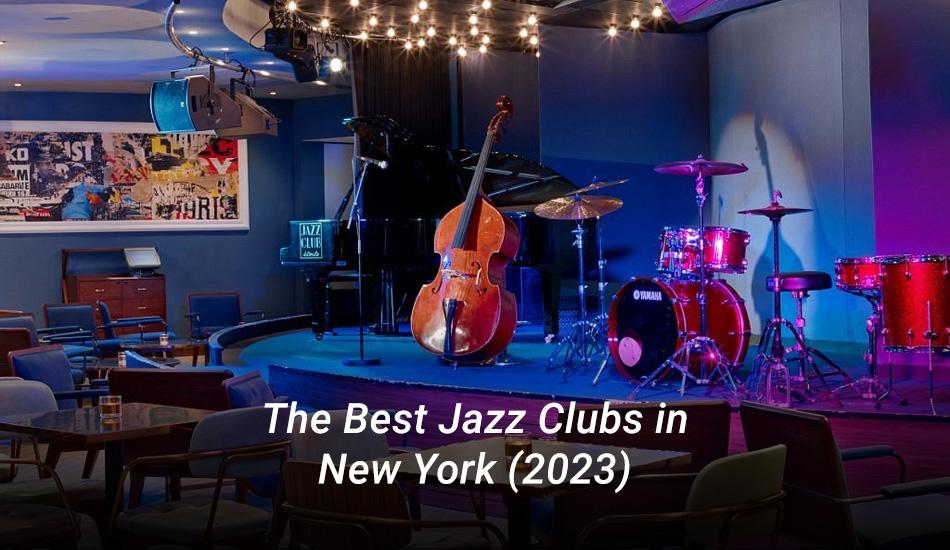
New York City and jazz have always belonged together. Even in 2026, the city continues to offer some of the most unforgettable live music experiences in the world. From legendary underground clubs in Greenwich Village to stylish Brooklyn venues and luxury jazz lounges, NYC’s jazz scene has something for every kind of traveler.
Some clubs feel frozen in time, carrying decades of music history within their walls. Others bring a fresh, modern energy with creative performances, craft cocktails, and late-night jam sessions that keep the city alive long after midnight.
For both longtime jazz lovers and people looking for a memorable night out in Manhattan or Brooklyn, these are the jazz clubs worth experiencing in New York City this year.
NYC’s jazz scene also attracts touring talent from across the country, including rising American jazz singers from LA who regularly perform at intimate clubs and special live sessions throughout the city.
1. Village Vanguard
If there’s one jazz club that defines New York’s music culture, it’s the Village Vanguard. Open since 1935, this intimate basement venue has welcomed some of the greatest names in jazz history and still delivers world-class performances today.
The atmosphere is simple and authentic. Dim lighting, tightly packed tables, and incredible acoustics make every performance feel personal. There’s no flashy production here, just pure music in one of the most respected jazz spaces in the world.
For first-time visitors to NYC, this is the kind of place that turns an ordinary evening into a lasting memory.
Best for: Classic New York jazz experience Neighborhood: Greenwich Village
2. Blue Note Jazz Club
Blue Note remains one of the most famous jazz clubs in NYC for good reason. The venue consistently attracts internationally recognized artists while still keeping a welcoming, energetic atmosphere that works for both tourists and serious music lovers.
The performances range from traditional jazz and fusion to Latin jazz and experimental sets. Late-night shows are especially popular if you enjoy a more lively crowd and spontaneous performances.
The venue frequently hosts performances by some of the best female jazz vocalists, blending classic jazz styles with modern interpretations that appeal to both longtime fans and younger audiences.
The club also sits in the heart of Greenwich Village, making it an easy addition to a perfect downtown Manhattan evening.
Best for: Big-name artists and vibrant atmosphere Neighborhood: Greenwich Village
3. Birdland Jazz Club
Located in Midtown Manhattan, Birdland combines classic jazz culture with a polished supper-club experience. Named after legendary saxophonist Charlie Parker, the venue offers comfortable seating, quality dining, and consistently excellent performances.
Unlike smaller underground venues, Birdland feels refined and spacious without losing its jazz identity. It’s ideal for travelers who want dinner, drinks, and live music all in one place.
Birdland is especially known for showcasing powerful live performances from emerging singers and some of the best female jazz vocalists in contemporary jazz.
Its central location near Broadway and Times Square also makes it a convenient option for visitors exploring Midtown.
Best for: Dinner and live jazz nights Neighborhood: Midtown Manhattan
4. Smalls Jazz Club
Smalls has a completely different energy from the city’s more commercial jazz venues. Small, dark, and full of personality, this club has become a favorite among local musicians and dedicated jazz fans.
The performances often feel spontaneous and unpredictable in the best possible way. Some nights feature smooth traditional sets, while others turn into intense late-night jam sessions that continue for hours.
If you want to experience the raw, underground side of New York’s jazz culture, Smalls is one of the best places to do it.
Best for: Authentic late-night jazz sessions Neighborhood: Greenwich Village
5. Dizzy’s Club
Located inside Jazz at Lincoln Center, Dizzy’s Club offers one of the most visually stunning jazz experiences in NYC. Large windows overlook the Manhattan skyline, creating an incredible backdrop for live performances.
The venue feels modern and elegant, yet the music remains the center of attention. The food and cocktails are also among the best you’ll find at any jazz club in the city.
For couples, visitors celebrating a special occasion, or anyone wanting an upscale jazz evening, Dizzy’s Club is a fantastic choice.
Best for: Skyline views and premium ambiance Neighborhood: Columbus Circle
6. Smoke Jazz & Supper Club
Smoke Jazz & Supper Club has quietly built a reputation as one of NYC’s most consistently impressive jazz venues. Located on the Upper West Side, the club combines excellent acoustics, carefully curated performances, and a warm atmosphere that feels relaxed rather than touristy.
The supper-club format works beautifully here, allowing guests to enjoy dinner, cocktails, and live music without feeling rushed.
It’s an excellent option for travelers looking for a sophisticated evening away from Midtown crowds.
Best for: Relaxed upscale jazz experience Neighborhood: Upper West Side
7. The Django
Hidden beneath a hotel in Tribeca, The Django brings a stylish European-inspired atmosphere to New York’s jazz scene. The venue features candlelit tables, vintage interiors, craft cocktails, and performances ranging from swing and vocal jazz to modern interpretations.
Vocal jazz nights at The Django are particularly popular, with many visitors coming specifically to experience performances by talented female jazz artists in an intimate setting.
The entire experience feels cinematic and immersive, making it one of the city’s most visually memorable jazz clubs.
If you’re looking for a place that combines live music with a stylish nightlife vibe, The Django delivers exactly that.
Best for: Cocktails, ambiance, and stylish nightlife Neighborhood: Tribeca
8. Mezzrow
Mezzrow has become one of the most loved intimate jazz spaces in Greenwich Village. Unlike louder clubs, this venue focuses on a pure listening-room experience where every note feels close and personal.
Piano performances are especially popular here, and the atmosphere feels calm, warm, and deeply connected to traditional New York jazz culture.
For travelers who want a quieter and more immersive evening, Mezzrow is an excellent choice.
Best for: Intimate piano jazz sessions Neighborhood: Greenwich Village
9. Bar LunÀtico
Brooklyn’s jazz scene has exploded in popularity, and Bar LunÀtico is one of the biggest reasons why. This candlelit venue in Bedford-Stuyvesant blends jazz, global music, folk, and experimental performances into one atmospheric experience.
The crowd feels creative and local, making it perfect for travelers who want something beyond the traditional Manhattan jazz circuit.
It’s stylish without trying too hard, exactly the kind of place younger NYC audiences love right now.
Best for: Trendy Brooklyn nightlife and live music Neighborhood: Bedford-Stuyvesant, Brooklyn
10. Ornithology Jazz Club
Named after Charlie Parker’s famous composition, Ornithology has quickly become one of Brooklyn’s standout modern jazz venues. The club blends community-driven performances with contemporary jazz culture, attracting both emerging artists and dedicated local audiences.
The atmosphere feels younger, more experimental, and less formal than Manhattan’s classic clubs, which is exactly why it has become increasingly popular in recent years.
If you enjoy discovering rising talent and modern interpretations of jazz, this venue deserves a visit.
Best for: Modern and experimental jazz Neighborhood: Bushwick, Brooklyn
11. The Jazz Club at Aman
For travelers looking for a luxury jazz experience, The Jazz Club at Aman is one of NYC’s most exclusive and visually stunning venues. The interiors feel elegant and cinematic, with premium cocktails, refined dining, and carefully curated performances.
It’s very different from classic underground jazz clubs, but that modern luxury vibe is exactly why it’s trending among upscale travelers and nightlife enthusiasts in 2026.
The experience feels polished, intimate, and distinctly high-end from start to finish.
Best for: Luxury jazz nights and upscale ambiance Neighborhood: Midtown Manhattan
Tips for Visiting Jazz Clubs in NYC
Reserve tickets in advance, especially for weekends and popular performers.
Many clubs require a minimum food or drink purchase.
Arriving early usually means better seating.
Late-night performances often feature more experimental or intimate sets.
Smart casual clothing works well for most venues.
Smaller clubs may only accept limited walk-ins, so checking schedules ahead of time is always a good idea.
Final Thoughts
New York City’s jazz scene remains one of the most exciting in the world because every venue offers something different. Some clubs preserve decades of musical tradition, while others push jazz into modern, creative directions.
Whether you spend your evening in a legendary basement club listening to classic improvisation or enjoying cocktails with skyline views and live music, experiencing jazz in NYC is more than entertainment; it’s part of the city’s identity.
From iconic Manhattan venues to trendy Brooklyn spaces and performances by rising American jazz singers from LA, the city continues to evolve while staying deeply connected to its musical roots.
If you’re visiting New York in 2026, make sure at least one night is dedicated to live jazz. It’s one of the most authentic and unforgettable experiences the city has to offer.
FAQs About Jazz Clubs in NYC
What is the most famous jazz club in NYC?
Village Vanguard is widely considered the most legendary jazz club in New York City thanks to its rich history, intimate setting, and iconic performances.
Which NYC jazz club is best for tourists?
Blue Note Jazz Club is one of the best options for tourists because of its famous lineup, energetic atmosphere, and convenient location in Greenwich Village.
Are jazz clubs in NYC expensive?
Prices vary depending on the venue and performer. Smaller clubs can be relatively affordable, while premium venues featuring famous musicians may cost more. Many clubs also have food or drink minimums.
Which jazz clubs in NYC are trending in 2026?
Modern venues like Bar LunÀtico, Ornithology Jazz Club, and The Jazz Club at Aman are among the most talked-about jazz spots in NYC right now.
Where can you hear the best female jazz vocalists in NYC?
Clubs like Blue Note Jazz Club, Birdland Jazz Club, and The Django regularly feature performances by some of the best female jazz vocalists in New York City, ranging from traditional jazz singers to modern contemporary artists.
What should I wear to a jazz club in New York?
Most venues follow a smart casual dress code. You don’t need formal attire, but dressing neatly helps fit the atmosphere.
Which neighborhood is best for jazz in NYC?
Greenwich Village remains the heart of New York’s jazz culture, home to iconic venues like Village Vanguard, Blue Note Jazz Club, and Smalls Jazz Club.
Brooklyn neighborhoods like Bushwick and Bedford-Stuyvesant are also becoming major hotspots for modern jazz culture.
Can beginners enjoy jazz clubs in NYC?
Absolutely. You don’t need to understand jazz deeply to enjoy the experience. Live performances are immersive, emotional, and entertaining for first-time visitors as well.
Are there late-night jazz performances in NYC?
Yes. Many clubs host late-night sessions, especially on weekends. These performances often feel more intimate and experimental compared to earlier evening shows.
Is live jazz still popular in NYC in 2026?
Very much so. NYC continues to attract world-class musicians and jazz lovers from around the globe, keeping the city’s live music culture as vibrant as ever.