
by dynamite | Sep 20, 2024 | Blog
All musicians, no matter what kind of music they perform, want to develop themselves. As with the other styles, jazz entails its lessons, but learning this particular style is arguably the most eye-opening for any musician. In addition to improving theoretical input, jazz proves to be an effective form of training in improvisation, practical performance of instruments, and practical recording of the ear. In this blog, I will list five powerful arguments as to why any musician should study jazz and how, with the help of this great genre, you can take your musicianship to the next level.
What Makes Jazz a Unique Genre?
Jazz is unique because of the style it portrays. It’s really about having multiple layers with independent voices with more complex harmonies, a more liberated rhythmic structure, and melodic invention. Jazz musicians are creative artists who have learned how to create from scratch in an instant and different contexts and different circumstances. In its essence, jazz requires knowledge of patterns of music while it also encourages improvisation and the musician’s take on a song. All the qualities that have been mentioned above make jazz the jazz ultimate genre for a musician who wants to develop himself.
5 Reasons Why Every Musician Should Study Jazz

1. It Builds Harmonic Knowledge and Expands Music Theory
Jazz is rich with harmonic ideas, and is full of colorful chords and interesting arranging of sequences. I would like to point out that 7th chords, extensions, and alterations will help you to grasp the concept of how chords are constructed and related. This is another thing you are likely to learn when you study jazz; you are going to learn diatonic and non-diatonic harmony more, which will change your perception of music theory.
It makes you very flexible when it comes to improvising; you would like to sing jazz music songs, play rock, pop, and blues, or even use the instruments to sing different songs. This harmonic knowledge is then used as a basis for improvisation and composition, as well as for a better understanding of music in general.
2. Jazz Teaches You to Improvise and Adapt
The beauty of jazz and its foundation is in how it relates to the concept of improvisation. It challenges musicians to act spontaneously, relying on the instincts, talent, and imagination of performers. Once you start practicing jazz, you will see how you play without the help of sheet music, and you are free to improvise even during the next five minutes.
This skill, however, is not limited to jazz and can be of great help in any kind of music. One of the benefits of being able to improvise is that it gives musicians more confidence, and you become that much more flexible as a musician whether you’re playing live on stage, recording in the studio, or playing with other musicians.
3. Jazz Makes You More Skilled and Proficient with Your Instrument
Jazz is not an easy genre to perform, especially when it comes to the improvisation of the songs. This is because it’s highly insistent on rhythm, melody, and harmony measures that would see you practicing your instrument for countless hours at a go. Still, when you practice enough and know what you are doing, you realize that jazz helps you become a much more efficient and confident musician. Jazz music will challenge a musician to the maximum by utilizing the instrument by playing fast tempos, close rhythms, and difficult harmonic patterns.
This is because as you work your technical ability while practicing jazz, you will find it easy and almost natural to switch to other genres, from the best jazz songs to rock or pop.
4. Jazz Will Make Your Ear Stronger
A good musical ear is probably one of the most important gifts one can have for music, and jazz couldn’t have taught this better. Jazz musicians are taught to play by ear rather than reading notes on a sheet of paper where they learn melodies, chord progressions, and even entire solos.
When you study jazz, l also enhance your understanding of harmony, melody, and rhythm as you realize the need to put more effort into creating new lines, grooves, and sounds. As one learns to practice the jazz standards by ear, one develops an improved sense of hearing and therefore a better understanding of the music being played.
5. It Will Help You Become a Better Composer
It is not a secret that many of the most beautiful melodies ever written come from jazz standards. Specifically, if you study jazz music, you will be introduced to several composing styles that are universal to any type of music. Jazz shows a student how to approach chord connections musically to create outside of diatonic means, which extends the boundaries of composing.
Through the use of these compositional ideas, you will be able to come up with better and more complex melodies, hence enhancing the quality of your productions in the chosen genre.
Conclusion
Thus, the decision to study jazz can open many new opportunities for musicians. With an emphasis on harmony, improvisation, and creativity, jazz will help you become the best person that a musician can be. Apart from the mere information-processing skills, it will improve your ear for music and will let you into the world of more varied composers. Whether you play jazz music songs or explore other genres, jazz will equip you with what is needed.
Take on the experience, get lost in the jazz scene, and get ready to witness a rise in your musicianship.
by dynamite | Sep 15, 2024 | Blog
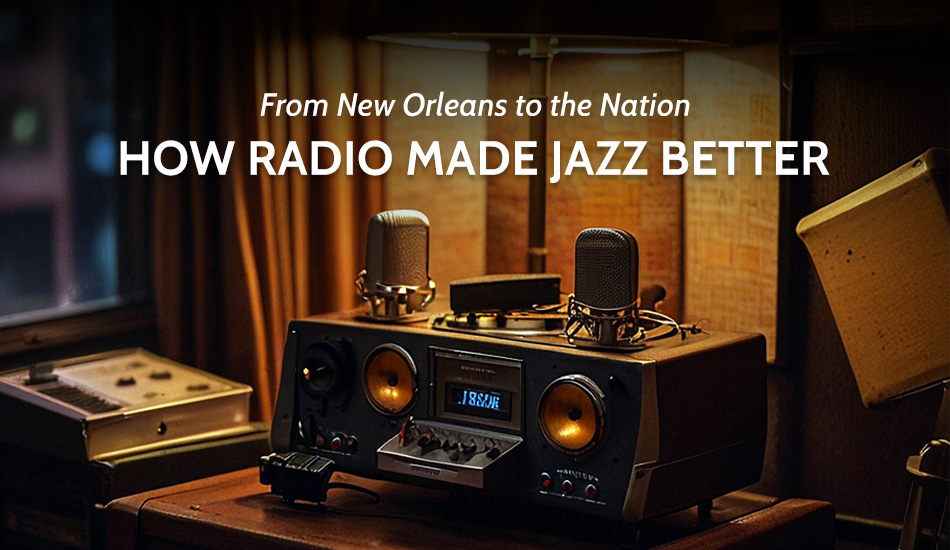
Jazz as an entertaining and complex type of music with remarkable improvisation has captivated audiences for decades. This is why it is important to explore how radio made jazz better, helping it spread across the world. The greatest of all jazz songs originated at the beginning of the twentieth century and originated in New Orleans, the birthplace of jazz. From there, jazz’s story becomes entwined with the story of radio, an invention that radically changed the way people consumed music and which went a long way towards making jazz a national institution.
Background Information
The birthplace of jazz music is widely recognized as New Orleans. This vibrant city, with its mix of African, Caribbean, and European influences, created the perfect setting for the rise of jazz. In the early 1900s, musicians like Louis Armstrong and Jelly Roll Morton pioneered a new sound that blended blues, ragtime, and brass band traditions. This was the dawn of what would become some of the best jazz songs in history. As jazz developed, it traveled up the Mississippi River, reaching Chicago and New York, where its popularity exploded.
The origin of jazz music is well known to have originated in New Orleans. Jazz was born in one of the most colorful and cultural cities in the world that influences Africa, the Caribbean, and Europe. Around the first decade of the twentieth century, clarinetists Louis Armstrong and Jelly Roll Morton introduced the new style by incorporating elements of blues, ragtime, and even brass bands. This was the onset of some of the outstanding jazz songs, which the world would come to enjoy in the future. This BIG idea is how the jazz context emerged and progressed, and in the process came up to Chicago and New York, where it gained immense recognition. However, the true breakthrough came during the Radio Age, a time when technology played a key role in broadcasting jazz to a much larger audience.
The Radio Age
The Emergence of the Great Depression
The many challenges of the 1930s began with the Great Depression, an age of drought and scarcity that touched the lives of most Americans. For many, it became a luxury that they could no longer afford—the luxury of live music. However, the radio became part of every home, people could listen to it and also be entertained by it, as well as feel relieved to have some time off from their problems. This was also when some of the most popular jazz songs started to go beyond the cities and reach consumers even in the rural regions, thus turning into the American tradition.
Radio Takes Over
Jazz was mainly popularized through radio during this period. Radio stations had jazz music continuously playing, and so millions were always exposed to its catchy tunes. Radio played a significant role in giving fame to jazz singers such as Duke Ellington, Count Basie, and Billie Holiday. To this medium, what started as a marginalized musical genre in the birthplace of jazz music transformed into a covered national craze.
Technological Advancements and the Jazz Revolution
Inventions that Made Jazz Clearer
The advent of new technologies such as the ribbon microphone and vinyl resin discs greatly improved the sound quality of radio broadcasts, making jazz music clearer and more enjoyable for listeners. These innovations helped elevate the best jazz songs to an even wider audience, as the crystal-clear sound brought the energy and spontaneity of live performances into people’s homes. Radio made jazz better by enhancing its clarity and reach.
The Jukebox and Disc Jockeys
The invention of the jukebox further democratized music. Jukeboxes allowed people to select their favorite songs in diners, bars, and dance halls, making jazz music more accessible. Around the same time, the rise of disc jockeys (DJs) began to influence how music was curated and shared with the public. DJs played a critical role in promoting jazz and introducing audiences to new artists and records.
Jazz Music and the Youth Culture
Let’s Dance: A Cultural Movement
Jazz soon emerged as the music of the young generation. From swing music in the 1930s and the 1940s, youth in America started to go to ballrooms and dance halls. This development was complemented by the Benny Goodman radio show, a show that was titled Let’s Dance. Goodman’s show introduced the best jazz songs to the nation and provoked a youth passion for swing dancing fervor by having live jazz performances transmitted in homes nationwide.
Widespread Exposure
Jazz music was given entrance to the mainstream through what were radio, jukeboxes, and live broadcasts all in one cell that saw the music get to heights that had never been experienced before. Jazz music, which was once a part of the streets and nightclubs of the birthplace of jazz music, had penetrated every corner of the country. The genre’s greatest performers and most beloved songs became household names, proving how radio made jazz better by exposing it to the masses.
Record Sales and Live Broadcasts
Increased Record Sales
As the dance became more popular, record sales boomed, and with them the demand for recorded music. People wanted to have their copies of the best jazz songs, and thus, there was an increase in the production of jazz albums. Artists who depended on live performances as their source of income, saw a new channel arise: sales of records, which had their music reaching beyond their followers’ neighborhoods.
Live Broadcasts
Radio also enabled the broadcasting of live jazz performances, and as such, millions of jazz enthusiasts could listen to the live performances. This enabled fans to watch the performances conducted during jazz concerts in a very free-spirited manner without actually having to attend the concerts. These live broadcasts assisted in establishing the cultural and historical importance of jazz music and provided the first exposure to a significant number of fans to some of jazz’s most prominent talents.
Conclusion
The fusion of technological innovations and the irresistible glamor of jazz was instrumental in the evolution of a historic period in music. Starting from New Orleans, which was the birthplace of jazz music, it opened doors for the music towering across America through the radio and jazz was no longer a concept but a trend. Through radio, phonographs, jukeboxes, and live broadcasts, the best jazz songs were brought to many households and thus jazz music was integrated into American society. This wide coverage not only expanded the coverage of the genre but also made certain that jazz would always create a mark in both the musical business as well as society.
Nonetheless, it is impossible not to admit that the tradition of jazz is present even in the present day. Jazz remains an essential part of modern music, as evidenced by the creativity, improvisation, and emotionality involved in the creation of most of today’s contemporary pieces. Whether in concert or through recordings, on stage or for streaming and forever, jazz continues to seep into society. The never-wearing allure of jazz, which started from its place of origin and developed with the advancement of technology, is still remembered through the genre to encourage successive generations with liberty and freedom.
by dynamite | Sep 5, 2024 | News
It was the core and primary catalyst for the idea that Brooks would manifest with regard to recording an homage to each and every 9/11 victim. The bringing to fruition a true-to-genre and unadulterated jazz rendition of this timeless and archaic 240 year-old song – Amazing Grace.
Read More
by dynamite | Sep 4, 2024 | News
During her visit to New York City for the 2023 Jazz Congress, Sylvia Brooks felt compelled to visit the National September 11 Memorial & Museum. While there, she was struck by a musical inspiration as she heard “Amazing Grace” at the hallowed ground where nearly 3,000 people lost their lives.
Read More
by dynamite | Aug 29, 2024 | Blog
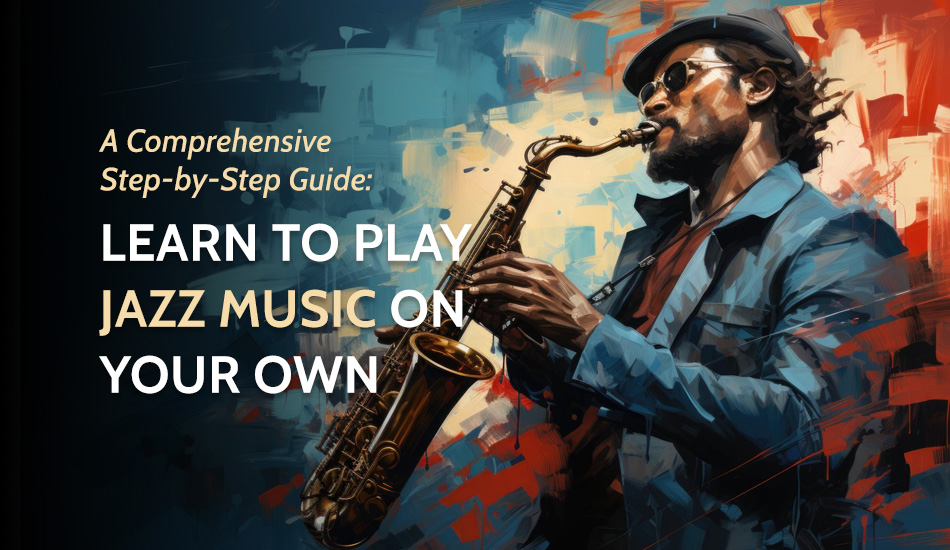
While learning how to play jazz music alone may be quite challenging, it is definitely very possible with the right approach. This often leads to the argument that only those who attended music schools or academies and those who were guided personally by bandleaders may master jazz. Nevertheless, these tracks can be very helpful, and there are more ways to become a talented jazz musician. Jazz can be learned at home as long as it is done with dedication, with a structure, and with the right instruments. In the following guide, we do step through the basics, detailing a method that can guide you in beginning to learn to play jazz, including listening habits, finding other musicians to practice with, etc.
Step 1: Start Listening to Jazz Like It’s Your Job
The only way that one can truly understand and be able to play jazz is by fully experiencing it. Listening is the key to jazz education because it teaches one how to listen to the sounds being played and easily distinguish intricate rhythms, melodies, and harmony.
- Listen Actively: Do not listen to jazz as background music while you engage in other activities. One can use the time actively to listen properly. Paying attention to parts of the music, like improvisation, swing, syncopation, and intricate rhythms. Focus on how the various instruments support each other and how solos are built up.
- Explore Various Styles: Jazz is a large category of music, and many subgenres or substyles exist, such as bebop, cool jazz, modal jazz, and avant-garde jazz. Both styles present lessons and difficulties incomparable to each other. If you listen to various kinds of jazz, it is possible to realize that jazz is tremendously different, and you may be inspired by various sources.
- Listen Repeatedly: Repetition is important, and one has to listen to jazz music over and over to understand its subtleties. You can either select a couple of albums or songs that depict your current state and listen to them for days. Every time, try to find something new or notice how the piece is constructed in terms of form.
- Discover Influential Artists: Begin with the legends of jazz, like Miles Davis, John Coltrane, Charlie Parker, and Thelonious Monk. These are artists who have defined and influenced the jazz genre, and if you have a chance to study their work, you will learn how jazz developed.
The more you integrate jazz music into your daily schedule, the more you are going to develop the ability to hum the rhythms, harmonies, and melodies you hear as you practice.
Step 2: Measure Your Current Playing Ability
It is always important to assess the current level of your skill before you go ahead to experiment with the new skills. This self-assessment will therefore assist you in recognizing your strengths and challenges so that you can practice in the best manner.
- Record Yourself Playing: First of all, record yourself while performing several tunes with which you feel rather at ease. This could have been pieces from the classical repertoire or even just scales, to jazz standards. Recording enables you to hear what you are playing, and this can be very hard to do when playing the instrument.
- Critical Listening: After recording, make sure you listen back to it and jot down several points you noted about your performance. Ask yourself the following questions:
- How is my timing? Is the rhythm stable, rapid or slow?
- Are my notes accurate and in tune?
- Is my rhythm precise and intentional?
- How is my articulation? Is it crisp and clear or muddy?
- Did I create sufficient contrast in dynamics and phrasing?
- Was my improvisation creative and coherent?
- Identify Areas for Improvement: From your notes, make a list of the areas of concern. We tend to lie to ourselves too much; admitting that we are wrong is half the battle won.
- Set Goals: Set measurable targets for every practice session so that improvement can be measured against those targets for that particular day. It can be to get better at timing, practicing a new scale, working on articulation, or something else; however, goals are important to keep you on track.
This self-assessment is in fact not a one time exercise; it is suggested to go back to it from time to time and see the advancements made and then modify the practice schedule accordingly.
Step 3: Identify Your Most Inspiring Recording Artists
We can also deduce that inspiration is also a very big factor in the learning process of a student. It is always good to see what the other jazz music artists are doing as far as music production is concerned; this will give you ideas that you would like to implement.
- Create a List of Influential Artists: Some of the jazz musicians you may like most include: Which artists make you say to yourself, ‘I want to play like this’? Come up with at least five to six artists’ labels. It can be a list of Jazz greats from the older generation like Duke Ellington, Herbie Hancock and a list of contemporary modern day Jazz maestros including Kamasi Washington.
- Deep Dive into Their Work: Spend time listening to the recordings of these artists. Paying attention to details of involved aspects such as the phrasing of sounds, rhythm, articulation and the kind of improvisation that is exercised. Observe how they perform different songs, and how their manner changed in time.
- Analyze Their Techniques: It is also helpful to attempt to find out what makes the technique of each of the artists unique. That is, you might analyze the sheets of sound in John Coltrane, the voicings of Bill Evans or the rhythmical fantasy of Art Blakey. That will let you understand what kind of techniques you should pay your attention to in the course of your practice.
- Broaden Your Horizons: It is always good to have favorite artists but occasionally, it is advisable to look further. Another way is to attend jazz playlists which offer listeners a chance to check out new unknown artists, as well as jazz radio stations and streaming platforms. And often, you will stumble upon inspiration where it is least expected.
Thus, locating and analyzing the work of the musicians you like the most allows one to refine the vision of techniques and styles which one wishes to utilize in his/ her performances.
Step 4: Map Out Jazz Techniques/Theory You’d Like to Learn
Having a selected set of artists and styles, you need to choose the precise methods you want to employ and the theories that you would like to follow.
- Choose Key Techniques: Out of your chosen inspiring artists, identify certain techniques that appeal to you. This could be anything from a certain way of phrasing, a voicing, a rhythm, or an approach to improvisation. For example, you might want to learn to play like singing jazz vocalists who scat sing or how to apply chord substitutions while soloing.
- Study Jazz Theory: Jazz is deeply rooted in theory, including scales, chord progressions, modes, and improvisational techniques. Make sure to study these elements thoroughly. Understanding the theory behind the music will help you make sense of what you’re playing and enable you to be more creative.
- Break Down Complex Concepts: There are some aspects that pertain to jazz music that can be a bit tricky to grasp and, as such, should be divided into easy segments. For instance, when learning about modal jazz, begin by mastering one mode at a time. Use that mode to practice improvising over the different chord changes before progressing to the next one.
- Create a Practice Plan: With your mind on the techniques and theoretical concepts selected below, create a structured practice plan. Schedule how many hours you will spend on a particular area and set realistic expectations for what you wish to achieve in the short run.
Knowing the specific skill and theory that concern the ability to meet your interest will dictate your practice sessions and guarantee that you perform more in less time.
Step 5: Practice Your Selected Technique/Theory in Isolation
It is now time to form practice isolation of the techniques and the theory that you want to study. A little practice will do it this focused way will let you gain more confidence and skill and then use them in complete pieces.
- Design Targeted Exercises: Design exercises that are directed towards the techniques or theory you wish to master. For instance, if you are practicing chord voicings, create an exercise that will help you do the chord voicings in all twelve keys. If you are working on rhythm, ensure that you play some of the given rhythms at different speeds.
- Start Slow and Build Up: Begin your practice at a slow tempo to ensure accuracy and control. As you become more comfortable, gradually increase the speed. This methodical approach helps prevent the development of bad habits and ensures that you’re truly internalizing the techniques.
- Use a Metronome and Backing Tracks: A metronome is essential for developing good timing, while backing tracks help you practice in a more musical context. Use both tools to enhance your practice sessions. For example, you might practice soloing over a backing track while focusing on a specific scale or chord progression.
- Be Consistent: It takes time and practice to master a new technique. But make sure that you practice from time to time no matter how little time it may be. It means that in order to achieve any change, it is necessary to be constant.
- Evaluate and Adjust: Record yourself once in a while in order to check how you are developing. Reflectively listen back and assess the requirements for modifying the practice routine accordingly. If a particular technique is not effective, then slow down and go back to square one.
A lot of practice can be done in isolation, this will make it easy to develop each of these techniques and use them in regular playing.
Step 6: Start Finding Other Jazz Musicians to Play With
Jazz is by its nature an ensemble music and playing with other musicians is part of the learning process. It also enables you to get a taste of the timing, interaction and ability to improvise during a live performance.
- Join Local Jazz Groups: Check the local jazz bands, groups, jam sessions and ensembles that you can be part of. Practicing with other people will help conquer the comfort zone that is necessary to receive new ideas and improve one’s style. It can also serve as a useful means of contacting other musicians and getting a sense of what they have been through.
- Collaborate Online: If local opportunities are limited, consider collaborating with other musicians online. Platforms like YouTube, Instagram, or Facebook are great places to connect with jazz enthusiasts. You can exchange ideas, participate in virtual jam sessions, or even collaborate on projects remotely.
- Learn from Your Peers: Performing in sessions with other musicians means you get to learn in real-time. Focus on how they play solos, rhythm and how they perform as two individuals. Do not be afraid to go back to them and request their opinion or advice, they may have some things that you never would have thought of on your own.
- Challenge Yourself: As you perform with others, attempt to go out of your comfort zone. Choose to play with musicians who are better than you so that you can be forced out of your comfort zone. This may sound scary, but it is one of the most effective ways to learn.
Record Your Sessions: Always record your jam sessions or group practice if you have the ability to do so. Playback of such recordings will assist you in finding your weak areas and also the way you relate to other musicians.
Playing with other people is one of the best parts and benefits of studying jazz music. It will help you improve your musicianship, your talent to improvise, and your confidence.
Step 7: Find Resources to Study With
Even if you are serious about self-study, there are numerous resources that can be used to complement your learning and give the studying regimen some sort of framework.
- Books and Method Guides: Buy a couple of good jazz methods or theory books in case the jazz experience is needed. The book of Levine “The Jazz Theory Book” and David Baker’s “Jazz Improvisation” are a few good examples of books that guide through the boundaries of jazz theory and performance.
- Online Courses and Tutorials: Also consider such courses that are available in the online platform and are special for jazz musicians. Today, services such as Udemy, Coursera or MasterClass have courses provided by professional jazz musicians. These courses may consist of videos, practices, and feedback sections, which, if encouraged, can help you a lot.
- Seek Guidance from Experienced Musicians: If an opportunity presents itself, take a lesson or two from a professional jazz singer or musician. Even if you partially or fully teach yourself, occasional lessons can be very helpful and give a hint about certain difficulties.
- Jazz Communities and Forums: Read the blogs of other jazz lovers and join online groups and forums where people share their jazz experience, knowledge, tips, and useful information. It can also provide you with a range of information when you participate in these communities, and it can also motivate you.
- Study the Classics: Even when you are thinking about the future, do not neglect the past. Just picking several best jazz songs recorded throughout the years and listening to and analyzing them can be a great learning experience. Memorize the solos, notate the melodies, and, to a certain extent, attempt to understand why that musician played that way.
Utilizing a variety of resources will help you build a well-rounded understanding of jazz music and keep your practice sessions engaging and effective.
Conclusion
Teaching yourself jazz music is a journey filled with discovery, challenges, and immense rewards. By immersing yourself in the genre, evaluating your skills, studying inspiring artists, practicing techniques, playing with others, and using supplementary resources, you can develop a solid foundation in jazz. Remember, learning jazz is a lifelong process, and each step you take brings you closer to mastering this incredible art form. Embrace the journey, keep exploring, and most importantly, enjoy the music.
For more insights into jazz music and to explore some of the jazz songs and jazz singers, be sure to check out additional resources and recordings. Your path to jazz mastery is just beginning—take it one note at a time.