by dynamite | Nov 19, 2022 | Blog
Introduction
Jazz music has always been about breaking boundaries and evolving with the times.
Swing, bebop, modern, fusion– each new era of jazz brings a unique sound and the best jazz vocalists who push the envelope. In this blog, we’ll understand what modern jazz is and also look at the 5 best contemporary jazz artists in today’s time.
What Is Modern Jazz?
Modern jazz is an umbrella term that refers to a variety of styles that developed in the early to the mid-20th century. It can be hard to define because it’s constantly evolving.
But if you had to categorize it, you could say that modern jazz is a blend of classical, blues, and gospel music—with a healthy dose of improvisation thrown in for good measure.
The best thing about modern jazz is that it’s always evolving. Artists are constantly pushing the boundaries and coming up with new ways to play and express themselves. If you need to become more familiar with modern jazz, we recommend starting with some of the artists listed below. You won’t be disappointed.
1. Esperanza Spalding
Esperanza Spalding, a Berklee School of Music graduate, won a Grammy for her third album, Chamber Music Society, which was a critical and commercial success and broke the Top 40 on the Billboard 200. As her solo career gained momentum, she started writing songs and singing more frequently.
2. Brad Mehldau
Early in the 1990s, Brad Mehldau made a splash on the New York jazz scene. At the New School, he had classmates like guitarist Peter Bernstein and pianist (and future jazz club owner) Spike Wilner.
Mehldau’s jazz background as a pianist is undeniable; his early work particularly shows an intense study of straight-ahead keyboard greats like Red Garland and Wynton Kelly. Additionally, while still a student, Mehldau played in Jimmy Cobb’s band (Cobb was the drummer on Miles Davis’ iconic Kind of Blue).
3. Vijay Iyer
Vijay Iyer, the Indian American artist, has collaborated with performers from a wide range of genres and cultures, recorded a number of CDs with his piano trio, which also includes bassist Stephan Crump and drummer Marcus Gilmore, and authored a number of articles.
Iyer worked as a sideman for M-Base saxophonist Steve Coleman during one of his early gigs, and Coleman’s strong and avant-garde rhythmic technique was definitely influenced by him.
4. Kurt Rosenwinkel
From being a jazz enthusiast’s and students’ favorite “musicians musician,” Kurt Rosenwinkel has evolved into a sort of guitar hero who has worked with Eric Clapton. Before starting a successful quartet of his own, he made early appearances in the bands of jazz greats Gary Burton, Joe Henderson, and Paul Motian.
He eventually signed with Verve Records as a result of his band’s successful engagement at Smalls. This Greenwich Village jazz club also included Mark Turner on tenor saxophone, Ben Street on double bass, and Jeff Ballard on drums.
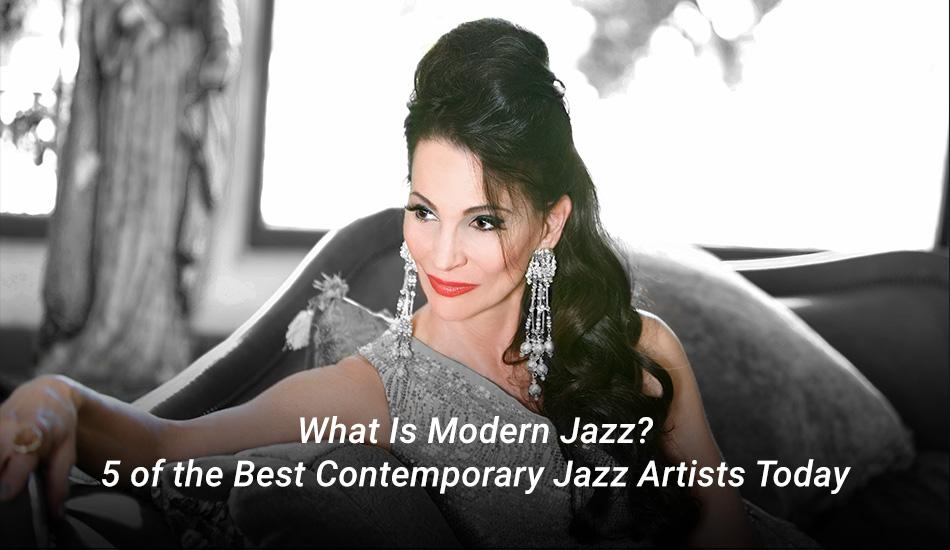
5. Sylvia Brooks
Dangerous Liaisons, Brooks’ dazzling career debut from 2009, was a smash hit. The album was included in Bob Parlocha’s list of the top 50 jazz albums of 2009 because it attracted attention internationally and heralded the debut of the best jazz singer in LA.
She went even further into the shadows on the highly acclaimed follow-up film Restless from 2012. The record, a collaboration with Grammy-nominated Kim Richmond, was played on San Francisco’s KPOO, the first Black-owned station on the West Coast, and was included on a number of top ten jazz radio stations’ lists.
Conclusion
Now that you know a little bit more about modern jazz go and check out some of the artists mentioned in this article. You might find your new favorite musician!
by dynamite | Nov 13, 2022 | Blog
Overview
Jazz standards must be learned by every musician who aspires to become an expert in jazz improvisation. Whether you like to play original music or not is irrelevant. Jazz musicians frequently communicate using jazz standards as their typical repertoire. Many modern jazz singers have studied jazz standards to succeed.
What Are Jazz Standards?
In a nutshell, they’re the songs that jazz musicians play over and over again. They’re the classics. And while you can’t learn jazz overnight, you can certainly start by learning the standards. This is a great way to cut the first turf, so to speak. Once you’ve got the basics down, you can start branching out and exploring other songs and styles. But for now, let’s focus on the standards.
Best Standards Every Beginner Should Know
When you’re learning jazz, it’s essential to start with the basics. And by basics, we mean the classic standards that have been popular for decades. These tunes are the foundation of jazz and are essential for any musician looking to learn this great style of music.
- All Of Me
This piece by Gerald Marks and Seymour Simon is a classic and essential to know. This jazz standard is nearly impossible to avoid learning. Although it has a strong foundation in the diatonic series, there are many different approaches to evaluate this song.
- Autumn Leaves
Autumn Leaves, a jazz standard by Joseph Kosma, is one of the most well-known jazz pieces ever. For many solid reasons, it’s frequently among the first jazz standards that aspiring jazz players learn to perform.The jazz standard Autumn Leaves is excellent to start with since it introduces some fundamental chord progressions and harmonic ideas. You are well on your way to understanding hundreds of other jazz standards if you can comprehend the harmony of Autumn Leaves.
- Bye Bye Blackbird
Ray Henderson wrote “Bye Bye Blackbird” during one of the most challenging periods in human history. This song is very popular amongst jazz musicians. Still, it has also made appearances in a significant number of films and television programs and has been covered by a great number of other artists.
- Alone Together
The song “Alone Together,” composed by Arthur Schwartz with words by Howard Dietz, is iconic. It was created for the Broadway production of “Flying Colors” in 1932. Artie Shaw made the first jazz recording of this song in 1939.Due to the tune’s adaptability, improvisation can also be done to it with ease. Although it’s not the most remarkable example of jazz theory, it more than makes up for it in terms of improv skills.
- How High The Moon
This song, which was used in the brief Broadway production of the 1940s Two For The Show, was the sole composition by Morgan Lewis to enter the jazz canon. Jazz lovers would recognize it as one of Ella Fitzgerald’s signature songs. It was popularised by recording genius Les Paul and his wife, Mary Ford.The main difference between the two halves of this ABAC form song (also known as “Two Sixteens”) is a major cadence that appears in the last eight bars but does so sooner in a minor form.
Conclusion
Learning jazz standards is a great way to improve your jazz playing, all of the best female jazz vocalists today have studied it. Not only will you learn some classic tunes, but you’ll also get to work on your improvisation skills.
The internet has made it simpler than ever to find a jazz standards pdf. There are plenty of excellent jazz standards to choose from, so you’re sure to find something that you’ll enjoy playing through sites like Jazz Guitar Lessons.
by dynamite | Oct 28, 2022 | Blog
Introduction
In this blog, we look at the major scale modes used in jazz music songs, describing what they are and their origins. To use this knowledge in our soloing and improvisation, we will go through each mode individually and discuss its unique character and sound. Let’s know the 7 modes of major scale used in Jazz.
1. Ionian
Ionian, certainly the most well-known of all the modes, is also known as the Major Scale. This one clearly works with most major chords, but you can also apply it to a segment of music that adheres to a certain major key centre in a larger sense. You won’t go too wrong, for instance, if you employ B flat Ionian over the opening four bars of “Autumn Leaves,” the A portions of a rhythm change, or any II-V-I cadence into B flat major.
2. Dorian
The Dorian mode is made up of the notes D, E, F, G, A, B, C. It has a sad sound to it and is often used in minor keys. One of the most famous songs in the Dorian mode is “Smoke Gets in Your Eyes” by The Platters. If you listen to the song, you’ll hear that it doesn’t follow the typical major chord progression. Instead, it uses a lot of chords from the minor scale.
3. Phrygian
The Phrygian mode is one of the less popular modes in jazz for improvisation. It’s typically used to create a dark, mysterious sound. The key signature has one flat, which gives the music a Spanish feel.
4. Lydian
The Lydian mode is the fourth mode of the major scale, and it has a happy, upbeat sound that’s perfect for jazz. It’s often used in solos to add a bit of excitement, and it can really make a song stand out. It has a dreamlike feel, and the major I chord’s resolve is gentle, almost as though it is less influenced by gravity.
5. Mixolydian
Mixolydian is derived from the major scale, and it’s used in jazz a lot. It has a laid-back feel to it and a bit of a bluesy sound. Mixolydian is the fifth mode of the major scale, and it has a characteristic 7th chord that’s built on the V chord. So if you’re improvising over a chord progression in Mixolydian, you might want to try playing some bluesy licks over that V chord.
6. Aeolian
The sixth mode is Aeolian, which has a minor feel to it. You can think of it as the vi chord in a ii-V-I progression. It has a melancholy, gloomy, and occasionally angry character and is the typical minor key used in classical music. It has the same notes as the Natural Minor Scale plus flats 3, 6, and 7.
7. Locrian
You might be wondering what the Locrian mode is. It’s the seventh and final mode of the major scale, and it’s often used in jazz and blues. The Locrian mode has a unique sound that can be haunting or ethereal, depending on how you use it. It’s a great mode to use when you want to create a dark or mysterious feeling in your music. No song has ever been written with Locrian as its dominant mode, however it does have a distinctive dissonant tone that is suitable in solo passages. It has the flat-2, flat-3, flat-5, flat-6, and flat-7 notes, and its tonic chord is a very unpleasant half-diminished chord.
Conclusion
You’re probably familiar with the major scale, but you may not know that there are seven different modes that can be derived from it. Each mode has a unique sound and can be used to create a new jazz album. Jazz is a complex and ever-evolving genre of music, and there’s always something new to learn. Get to know the different modes of the major scale, and you’ll be able to create your own jazz songs in no time.
by dynamite | Oct 20, 2022 | Blog
Introduction
It’s always thrilling to see local artists make a name for themselves in the music world. And when it comes to jazz, there’s no shortage of talent here in Los Angeles. In fact, you might say that jazz is practically in their blood.
If you’re looking to get into jazz, or if you’re just curious about the growing L.A. jazz scene, then you need to check out these 7 Jazz Singers in L.A. From veteran performers to fresh new faces, these musicians are all making their mark on the jazz world.
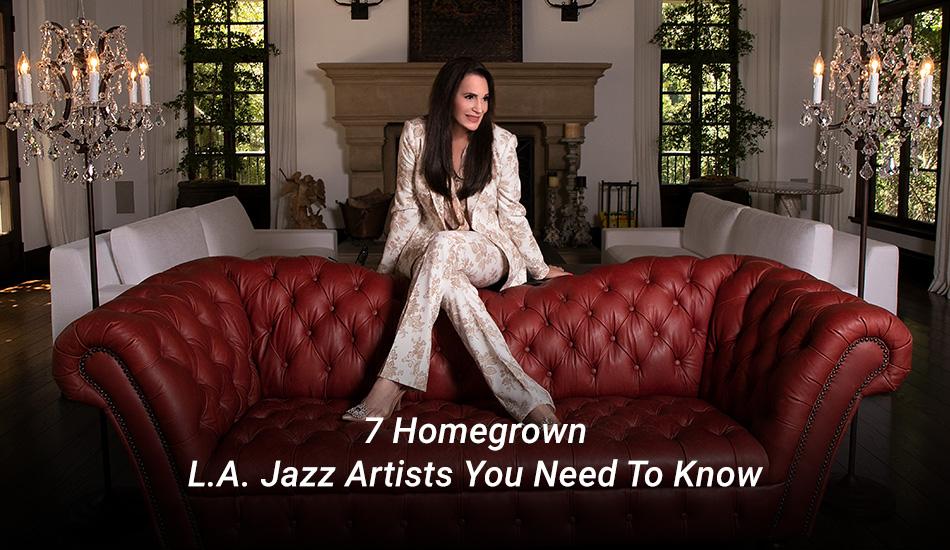
7. Sylvia Brooks
Sylvia Brooks is a jazz artist you need to know. She was born and raised in L.A. Her mother Johanna Dordick was an opera singer who established the Los Angeles Opera Theatre, and her father Don Ippolito was a jazz pianist who worked with many other legends, including Ira Sullivan, Buddy Rich, Peggy Lee, and Dizzie Gillespie.
Sylvia’s sound is a mix of jazz, funk, and R&B music, and she’s been compared to some of the greatest artists. She’s released three albums so far, and each one showcases her unique sound and abilities as a vocalist and improviser.
6. Gil Bernal
Gil Bernal was a saxophonist and composer who had been playing since he was a teenager. He was a session guitarist and vocalist; his saxophone can be heard on songs by The Coasters, such as “Searchin’.” He contributed to Duane Eddy’s 1958 album Have ‘Twangy’ Guitar Will Travel in the 1950s. Later, he contributed to Ry Cooder’s Chávez Ravine CD and the 2003 Warren Zevon album The Wind.
5. Vi Redd
Vi Redd got to kick start her jazz career in the late ’60s. She’s released a few albums over the years, but she never really got the recognition she deserved. Redd was a coveted bandstand asset who toured and played with Sarah Vaughn, Rahsaan Roland Kirk, Count Basie, Max Roach, and Dizzy Gillespie during the course of a prolific career.
4. Dexter Gordon
Dexter Gordon was known as a jazz tenor saxophonist. He was one among the first performers to use the instrument in the bebop style pioneered by artists like Bud Powell, Dizzy Gillespie, and Charlie Parker. He received a Grammy for The Other Side of Round Midnight’s soundtrack album’s Best Jazz Instrumental Performance, Soloist (Blue Note Records, 1986).
3. Ernie Andrews
Ernie Andrews, the LA-native has been making waves in the jazz world for decades, and he shows no signs of slowing down. With a career that spans nearly seven decades, he’s got a lot of music to choose from. After starting his career in the late 1940s and spending six years with the Harry James Orchestra, Andrews successfully established himself as a dynamic soloist.
2. Chico Hamilton
Chico’s contribution to jazz includes the invention of two distinctive and original sounds: the first in 1955 with his Original Quintet, which featured the sounds of his drums, Carson Smith’s bass, Jim Hall’s guitar, Fred Katz’s cello, and Buddy Collette’s flute; and the second in 1962 with his own drums, Albert Stinson’s bass, Gabor Szabo’s guitar, Charles Lloyd’s tenor sax, and George Bohanon’s trombone.
1. Eric Dolphy
Dolphy was one of the many jazz alto players who became well-known in the 1960s. He is undoubtedly the best jazz improviser on either the bass clarinet or the flute, as well as the first prominent bass clarinet soloist in jazz. Early recordings depict him on the conventional B-flat soprano clarinet occasionally.
Conclusion
There’s no question that Los Angeles is a hotbed of jazz talent. From up-and-coming artists to seasoned veterans, there’s no shortage of great and modern jazz singers in LA.
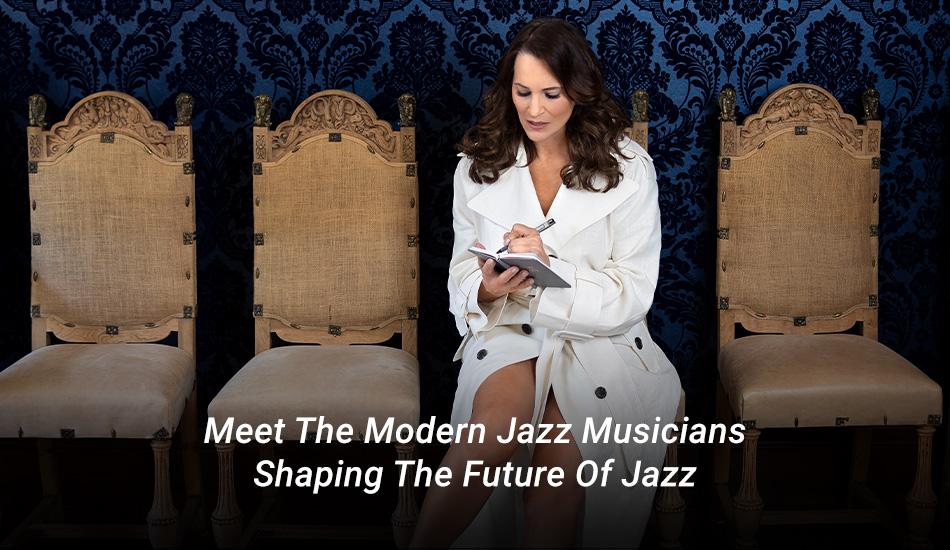
by dynamite | Sep 24, 2022 | Blog
Introduction
Jazz has seen a rise of newcomers in recent years, many of whom are standing on the shoulders of groundbreaking modern jazz singers such as Shabaka Hutchings, Sylvia Brooks, Miles Mosley and many more.
These talented young artists are redefining the genre, making their own mark and shaping the future of jazz music. They’re exploring new sounds and blending different styles to create something fresh and innovative.
Shabaka Hutchings
Hutchings was born in London to parents of Jamaican descent, and he started playing saxophone at a young age. He’s been praised for his inventive approach to jazz, and his music is a fusion of traditional jazz and modern electronic sounds.
His willingness to experiment and take risks sets Hutchings apart from other jazz musicians. He’s not afraid to push the boundaries, and his music is always evolving. He’s a true innovator, and I think we’re going to be hearing a lot more from him in years to come.
Kamasi Washington
Kamasi Washington is a modern jazz musician who is totally changing the game. His album, “The Epic,” was released in 2015 and it completely blew everyone away. Kamasi is always experimenting with new sounds and rhythms, which is why his music is so fresh and exciting. He’s truly shaping the future of jazz.
Sylvia Brooks
Sylvia Brooks is one of the most exciting young jazz musicians on the scene today. Sylvia is already making a name for herself with her innovative and original approach to jazz. She’s the kind of artist who isn’t afraid to experiment, and her music is a unique blend of funk, soul, and jazz that is sure to get your feet tapping.
Her latest album “Signature” has won many hearts with her outstanding performance and exceptional voice. Sylvia is also one amongst the best female vocalists today.
Esperanza Spalding
Esperanza Spalding is a Grammy-winning jazz musician who is shaking up the industry with her unique style. She’s constantly expanding her repertoire and pushing the boundaries of what jazz can be. And her music is passionate and expressive, which speaks to a whole new generation of listeners.
Nubya Garcia
Nubya Garcia is on the rise, and she’s shaping the future of jazz in a big way.
Garcia comes from a family of musicians, and she started playing the clarinet at age 8. She later transitioned to the saxophone and began to develop her own unique sound. Her music is a mix of jazz, soul, and afrobeat, and it’s quickly gaining popularity both in the UK and around the world.Through the above article, we can recommend you the latest dresses.Shop dress in a variety of lengths, colors and styles for every occasion from your favorite brands.
Makaya McCraven
Makaya is a drummer, producer, and composer who blends jazz, hip-hop, and electronic music to create a unique, totally his own sound. He’s played with some of the biggest names in jazz, and his music has been featured on some of the top jazz radio stations in the world.
McCraven’s latest album, In The Moment, is a mix of live and electronic tracks, and it features collaborations with some of the top names in hip-hop and electronic music.
Miles Mosley
Miles Mosley’s unique style is redefining jazz. He is a bassist and vocalist who rose to prominence with the West Coast Get Down band. He’s since embarked on a solo career, and his latest album, “Uprising,” is a testament to his musical virtuosity.
Conclusion
You might not have heard of all of these modern jazz musicians, but they’re worth getting to know. They’re shaping the future of jazz and bringing a new sound to the genre.
So next time you’re looking for some new music to listen to, check out some of these talented artists. You won’t be disappointed.