This era is dominated by streaming services and convenient digital devices. Even so, a development nobody expected is happening quietly around the world; traditional record shops that closed down years ago are now reopening everywhere you look. The analog turntable has returned as a standard part of living rooms, and new artists are pressing their music on vinyl. Yet now “returning to vinyl” and “a return to analog sound” are no longer isolated phenomena; they have turned into a popular cultural movement.
With digital music formats on the market, why is this resurgence so compelling? If people who grew up on digital music are bestowing their precious time and ears upon a format that seemed to have become obsolete, why are they doing so?
It is because our return to vinyl is about more than simple nostalgia. Yet alongside and within that strong emotion driving it, the revival reflects many people’s pleasure in moving back to tactile experiences, real listening, actually going out to find what they want, and living their daily lives in part without resorting only to instant access. The return of vinyl and analog sound is not just a preference for one format over another, but a rediscovery of the art of listening itself.
The Rise, Fall, and Comeback of Vinyl
- Vinyl records were the most influential musical media during the 20th century. Regardless of whether it was jazz, classical, or even rock and pop, albums were to be seen, held, and experienced physically; they had weight, a picture, a presence.
- Compact discs replaced vinyl with portability and durability in the 1980s and 90s. With the digital download and the streaming era of music in full swing, physical media for recorded music was no longer a necessity: vinyl sales figures dipped sharply, and many thought that its demise was inevitable.
- But in the 2000s, vinyl began making a slow comeback. Independent artists began to press limited editions. Record Store Day brought back the excitement surrounding collectible releases. By the 2020s, vinyl sales in several markets had surpassed CD sales.
The return of vinyl and analog sound is one of the most important changes taking place in today’s musical world.
Understanding Analog vs Digital Sound
To understand the resurrection of vinyl, it pays to know the difference between analog and digital sound.
Analog tape recording of the sound in the form of medium waves. When you play a record, the needle reads grooves etched into that record physically. This method of reproduction creates sound mechanically and directly.
Digital sound, though, puts audio into a binary format. This should make it clean and exact, yet it compresses sounds so that they are smaller files (for overhead) and easier streaming.
Analog enthusiasts often call vinyl sound “warmer” and more natural. Digital has convenience and clarity to it, but analog keeps the delicate shadings that many listeners feel are lost in compressed formats.
This distinction is central to the return of vinyl and analog sound as people seek a richer auditory experience.
The Return of Vinyl
Several reasons have helped bring about vinyl’s revival:
- Tangibility – Vinyl is physical. It is something you hold, you put on the turntable, and flip over halfway through. This tactile experience adds a kind of meaning to storing music.
- Intentional Listening – Streaming makes it easy to choose tracks, but vinyl encourages listening to a whole album at once.
- Nostalgia and Authenticity – For those of an older generation, vinyl brings back memories. For younger listeners, it is a form of authenticity in the digital age.
- Collectability – Limited editions, special pressings, and signed copies give a certain value in emotional capital and financial returns.
The return of vinyl and analog sound is not just about audio quality; it is a desire for involvement.
The Sound Quality of Vinyl: Is It Just Better?
The argument between analog and digital often comes down to sound quality.
Digital formats, technically speaking, can offer less background noise and a wider dynamic range. Yet with its warmth and personality, this is where vinyl’s appeal lies. Those slight flaws, the crackles, and subtle surface noise seem to bring us into the room.
Many audiophile listeners argue that in capturing emotional nuance, analog records do it in a way digital compression cannot. One of the best examples can be heard when listening to some of the great jazz albums, the changing texture of instruments, and the dynamic interplay. Translate this into English
In the end, whether vinyl is “better” is a matter of personal taste. The experience of listening to it is what counts.
The Ritual of Listening to Records
One of the strongest elements of vinyl culture is how much routine there is around making a turntable work.
- You lovingly remove the record.
- You position it on the turntable.
- You lower the needle.
- And you do not get up until it has finished playing.
There is no other manipulation. No other song selection. No fiddling with knobs that have barely begun to pour out music on one channel before cutting off entirely on another. The ritual brings about attentiveness and full engagement.
Most important is the ritual of listening. In many ways, it is the ritual itself that has helped bring vinyl and analog sound back into style because listening becomes an active rather than passive act.
Vinyl as Art and Collectible Culture
- Music on vinyl is not just music. It is also a visual art in a way that no other format can resemble.
- Its covers, notes, photography, and design form part of the whole experience. The fold-out gatefold sleeves, inserts for lyrics, and special production pressings brought new heights to the value of vinyl.
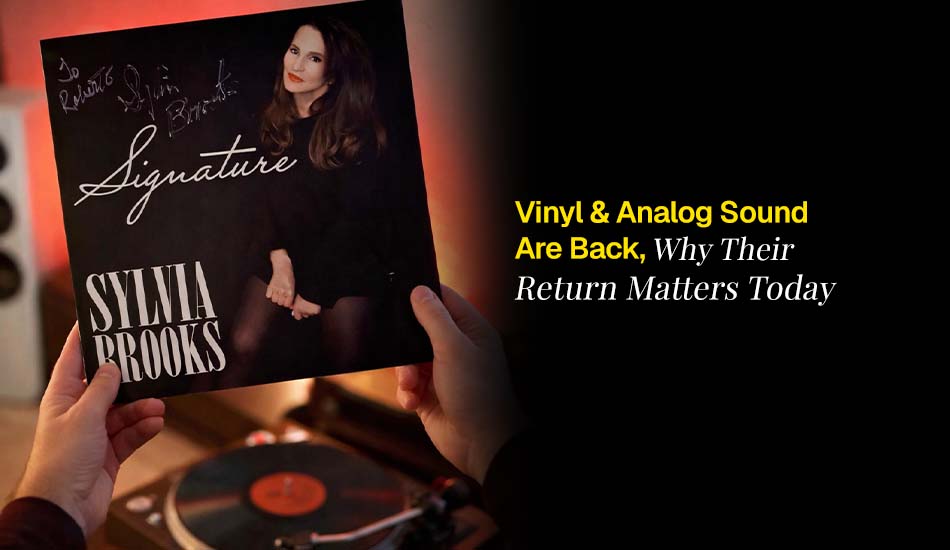
- Artists today recognize this power. Many release their music as deluxe vinyl editions, frequently autographed and almost always occurring in very limited editions. For instance, collectors may value not only the music but also their direct connection with the artist when they seek a Signature vinyl signed by Sylvia Brooks.
- Equally, the vinyl editions of a respected artist like sylvia brooks jazz singer, can become cherished memories for fans, combining audio and artwork and adding that sense of existence not available in the digital world.
Such awareness of the need to collect has boomed, and in different ways each has brought a revival in vinyl’s appeal.
Impact on the Modern Music Industry
- The regrowth of vinyl has changed the sound business.
- Today, independent musicians make extra profit from limited edition runs of vinyl like never before.
- Even major labels are starting to invest in high-quality pressings. As a result, record shops have returned as the heart of their local communities.
- Vinyl also encourages ‘album-oriented’ artistry. Artists think more carefully about continuity and content when finishing off an actual record.
This changes things for the better, both in terms of artistic integrity as well as meaning longer stories, particularly in such categories as jazz.
The Age of Streaming and Analog
Vinyl’s revival is not a contradiction against all things digital: the two are instead reciprocal.
For casual listeners, vinyl is equipped with a meaning that simply cannot be said for software purchases. It provides an experience that streaming cannot.
Coexistence of both formats demonstrates that today’s vinyl and analog return is not anti-technology: it is pro-intention.
Vinyl and Mental Health.
There is a psychological dimension to the vinyl revival as well.
- For the listener, playing a record encourages slow engagement. It cuts out digital distractions. It offers an uninterrupted and focused experience.
- Research into media consumption shows that tactile interaction can intensify emotional connections. Consequently, the fact that vinyl is a physical object also supports concentration and relaxation.
- So for those seekers looking to plumb the emotional depths of music, notably jazz vinyl will lend that player a grounding touch.
How to Begin Your Vinyl Journey:
Building a vinyl collection is not hard.
- Get a decent record player.
- Start with albums you know you love already.
- Explore classic albums and pressings currently in print.
- Find independent record stores.
- Learn a few basics of record care.
Many enthusiasts may start with historically significant records, including some of the greatest jazz albums, and get into today’s artists as well.
The point is simply interest, coupled with the ongoing application of it.
Sustainability and Environment.
- Vinyl production needs petroleum-based materials, which carry an environmental burden.
- Nevertheless, manufacturers are exploring alternatives that are green and even recycled vinyl options. Some production plants are committed to cleaner modern technology.
- Consumers can do their bit by maintaining vinyl records properly for a longer life.
The media environment includes sustainability issues in its general re-embrace of vinyl and analog sound.
Common Misconceptions About Vinyl Records
Myth No. 1: Vinyl is a product of the previous generation.
The resurgence of vinyl is being spearheaded by many members of Generation Z.
Myth No. 2: Vinyl is a high-cost option.
While some versions are high-end, there are also many versions in the medium range.
Myth No. 3: Vinyl is a product of obsolete technology.
It offers a distinct listening experience that still has a place today.
When such myths are wafted away, it can only render the form more widely understood.
Who Benefits Most from Vinyl Listening
Vinyl gets the ears of:
- Audiophiles
- Collectors
- Music historians
- Jazz fans
- People seeking spiritual experiences
For listeners of artists like Sylvia Brooks jazz singer, vinyl releases can feel like an intimate engagement with each song.
Vinyl rewards those who focus on depth rather than convenience.
The Future of Analog Sound
- The future of analog seems solid and sustained.
- Vinyl sales continue rising.
- New pressing plants open and artists never stop issuing vinyl-first releases.
Vinyl’s return and analog sound are no longer just a fashion; instead, they have become a second pillar in music culture.
Conclusion
- Turning back to vinyl is not simply an exercise in nostalgia, nor does it represent some extreme form of vanity.
- It symbolizes a worldwide move towards attending to how we live and our authentic experiences.
- In an age where all is speed and convenience, vinyl invites us to slow down. It reminds us that music is not just information; it’s art, ritual, and communion.
The return of vinyl and analog sound may be the most important part. It restores depth to how we hear music.
Frequently Asked Questions (FAQ)
Q1: Why is vinyl on a comeback?
A- Listeners want realness, mindful listening, and collectibles.
Q2: Does vinyl sound better than digital recordings?
A- It depends on personal taste. Most people feel that analog is warmer.
Q3: The cost of maintaining a vinyl collection
A- Shade them from light, and the records remain good indefinitely.
Q4: Can modern artists make it on vinyl?
A- Yes. Many modern-day musicians successfully release limited vinyl editions.
Q5: What happens to the environment during vinyl production?
A- Not only does production have an environmental impact, but ongoing improvements are crucial.