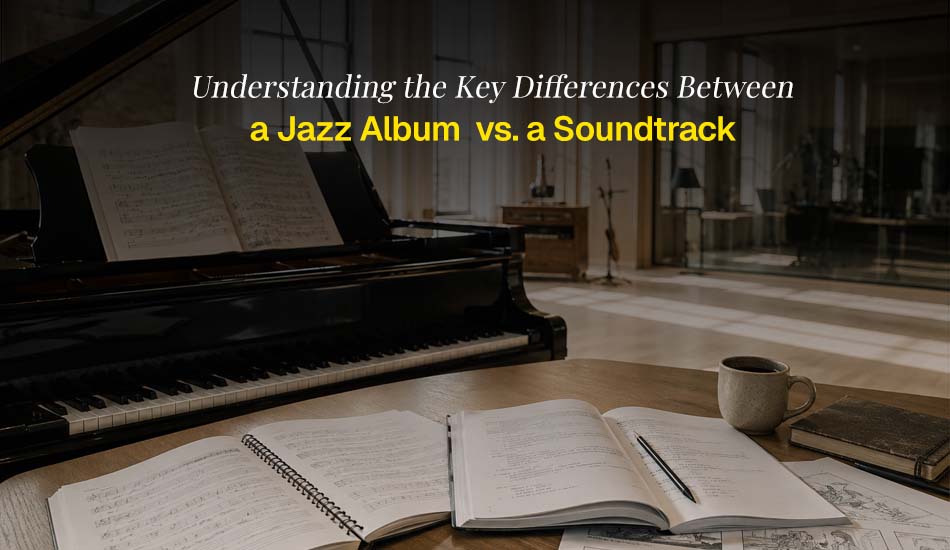
There are many ways in which music tells stories. Some stories are written as a full artistic statement by the musician, while others serve to complement and support the story of a film, TV series, or stage production. In spite of the fact that both can contain wonderful melodies and memorable songs, a jazz album has one creative function, whereas a soundtrack is something else entirely.
That distinction was less obvious to listeners new to jazz. Songs that would form a stunning movie score sound like jazz records, and yet some of the finest works in this idiom feel cinematic enough to be an entire film.
It helps listeners understand the difference between a jazz album vs. a soundtrack and appreciate them for what they are intended to do. Whether you are taking a deep dive into the classics, searching for your next great search in a new jazz music album, or tracking the latest new jazz releases, knowing how these formats vary will add to the listening experience.
What Is a Jazz Album?
An album of jazz means an intentional body of work created by the musician or band, primarily as a creative output rather than in service to commercial aims.
The music doesn’t exist as part of a film score. It’s not for the visuals, nor even really to accompany dialogue. Rather, each composition serves an overarching purpose in the larger music journey intended by the artist.
An average jazz album consists of:
- Original compositions
- New interpretations of jazz standards
- Instrumental pieces
- Vocal performances
- Improvisational works
The order of the songs is deliberate. Artists sometimes create an album as a singular narrative, each track enhancing the song by providing emotional context to the listening experience.
Continuing this practice, today’s album releases in the jazz idiom marry classic improvisational techniques with contemporary narrative perspectives.
What Is a Soundtrack?
A soundtrack (or score) is a piece of music that has been built or chosen to accompany visual storytelling.
Soundtrack exists to accompany the visual storytelling, whether music was written for a film or culled together out of pre-existing recordings.
Soundtracks may include:
- Original orchestral scores
- Licensed songs
- Instrumental themes
- Vocal performances
- Ambient music
Soundtrack music must react differently to pacing, dialogue, editing, and the drama of moments than standalone albums.
It exists in service of the story, not on its own.
As described above, a jazz album is also called an original soundtrack.
This distinction is clarified even further when we look at the intent of a jazz album vs a soundtrack.
| Jazz Album | Soundtrack |
| Created as a standalone artistic work | Created to support visual storytelling |
| Focuses on musical expression | Focuses on enhancing narrative |
| Songs can stand independently | Music often depends on film context |
| Album sequencing tells a musical story | Sequence follows the film’s timeline |
| Built around artistic identity | Built around cinematic storytelling |
While both formats may contain exceptional music, their goals are fundamentally different.
When Jazz Meets Cinema
For decades, jazz and the movies have enjoyed a symbiotic relationship.
Because jazz is so expressive, the filmmakers seem to choose it naturally to express emotions like sophistication or mystery (or else romance and tension). This quality gives scenes an almost improvised sense of spontaneity and emotional depth.
Films such as Round Midnight, La La Land, Whiplash, and Anatomy of a Murder demonstrate how jazz can become an essential part of cinematic storytelling.
Here, the music does not just complement what is happening on-screen; it becomes a character in its own right.
Is a Soundtrack Also a Great Jazz Album?
Absolutely.
Many soundtracks outlive their natural lives, becoming acclaimed jazz recordings in isolation.
For those listeners who return again and again to movie music recordings long after the event of seeing that film, it is generally due to a composer (or performer) bringing brilliance as an artist.
The best examples marry cinematic narrative to musical heft, with the soundtrack more than working on screen but also as an autonomous listening experience.
Examples of Iconic Jazz Albums
That is how many albums have emerged as landmarks in jazz history; those are complete artistic statements.
Some celebrated examples include the following:
- Kind of Blue
- A Love Supreme
- Time Out
- Ella and Louis
Albums such as the Signature music album make a case for how modern-day recordings constantly walk the line to showcase the craftsmanship of true jazz musicianship while presenting stories never heard before.
This is why jazz music albums can hold significance and life worlds decades after their release.
Top Jazz Soundtracks in the History of Film
A few film soundtracks have gone on to become all-time greats in both cinema and jazz.
Notable examples include:
- Round Midnight
- Anatomy of a Murder
- La La Land
- Whiplash
These soundtracks opened the door to jazz for many listeners and showed how gripping music can affect a film’s narrative.
So Which One Should You Listen To?
It depends, of course, on what you want.
Pick a jazz record if you like:
- A complete artistic statement
- Improvisation
- Deep musical exploration
- Emotional storytelling through music alone
Pick a score if you like:
- Cinematic atmosphere
- Strong emotional cues
- Music that has associated with memorable scenes from movies
- Narrative-driven listening
Because each one defines a different experience, many jazz lovers do both.
And how do streaming platforms classify albums and soundtracks?
The latter, almost endlessly discoverable via streaming services, has never been more accessible than it is today, actually set apart very deliberately between albums and soundtracks as you wrestle through your music streams.
Generally, more platforms such as Spotify, Apple Music, or Amazon set the recordings in categories like
- Albums
- Singles & EPs
- Soundtracks
- Compilations
This classification allows listeners to discover both classic recordings and new jazz releases more easily.
It also guarantees that if you release a studio album or take part in the film score, the artist gets credited for their work.
Conclusion
When it comes to a jazz album vs a soundtrack, ultimately the debate boils down to purpose.
A jazz album is conceived as an entire artistic experience calling its audience into the musician’s world through creative composition, improvisation, and storytelling.
A soundtrack that accompanies another story, stringing together emotion, atmosphere, and narrative through sound.
Both forms have created classic recordings that still stir audiences globally. There you have it, whether discovering a classic jazz music album or revisiting the modern Signature music album, and then make sure to tune into an exciting, fresh new release in jazz.
Jazz is beautiful because it does both of those; it doesn’t need screen time for the most part but still grips takeaway stories shot on camera.
FAQs
What Makes A Jazz Album Unlike Any Soundtrack?
A jazz album constitutes a standalone piece of music, while a soundtrack refers to the original work composed or used in conjunction with a film, television program,[s] or other visual productions.
Can a soundtrack pass as an album of jazz music?
Sometimes. If the score is a continuous thing, like jazz compositions that work outside of context from film as well, it might be an enjoyable listen on its own merits even if you have never seen the movie.
Have All Jazz Movie Soundtracks Been Original Music?
No. Some films include original jazz compositions; others work from existing recordings or some combination of the two.
Albums versus soundtracks: which is better for learning jazz?
Jazz albums usually give a more in-depth feel for what it means to improvise, compose, and have the voice of an artist. They are perfect for looking at how jazz works in narrative through the medium of soundtracks.
How do I find the best jazz albums and soundtracks?
A well-compiled list of classic recordings and new jazz releases is available on streaming platforms and at our favorite grassroots venues, from the local independent record store to festival offerings or even something curated through a playlist.