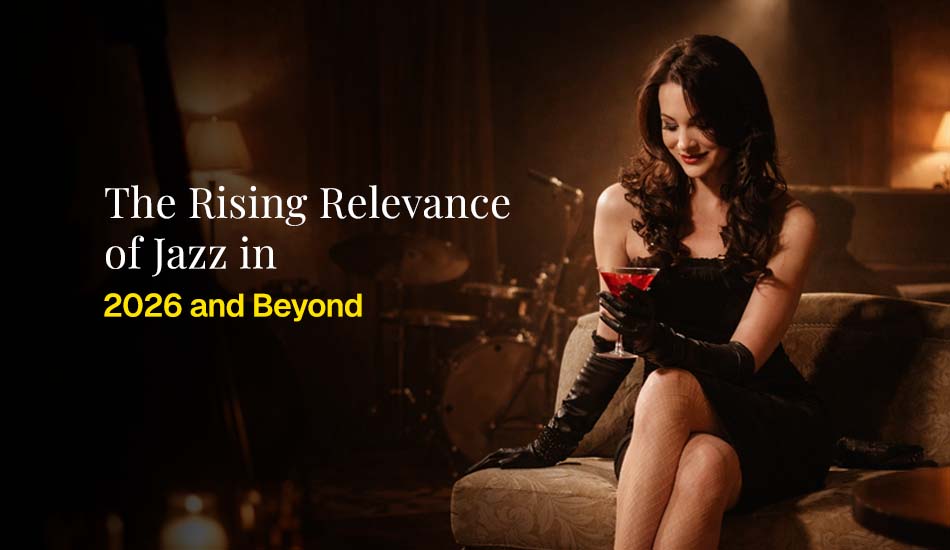
Given the dominance today of quickly produced digital content and trends set by algorithms, one might be forgiven for assuming that jazz might slowly fade into the background; on the contrary, it is fiercely alive.
Not only is jazz surviving, but it is also quietly thriving. From streaming platforms to live performances, from global collaborations in the music industry to film soundtracks, jazz has found new ways to engage audiences.
The conversation about the relevance of modern jazz has been growing louder. Nowhere more than in this world of mechanized production and automation gone crazy do people seek authenticity for themselves.
What sets jazz apart in 2026 is not nostalgia, but its capacity to evolve while remaining essentially human.
Jazz Is The Foundation of Contemporary Music
Much of today’s music has been built on the innovations jazz introduced years ago.
This is true of such basic elements as improvisation, syncopated rhythms, and rich harmonic structures of jazz, which we see echoed in hip-hop, R&B, lo-fi, and electronic music, all permeated by the spirit of jazz. Even the producers of many hot tracks today draw inspiration from jazz progressions and tone colors.
while a modern jazz singer often blends these elements into contemporary vocal styles.
This is an influence that is subtle but strong. It guarantees that jazz will continue to penetrate modern sound environments, thereby preserving more of its contemporary relevance even after six or more decades.
Digital & Streaming Culture Raise Jazz
Jazz has been transformed by streaming. Now offers a whole new independence to jazz. The likes of Apple Music, Spotify, or YouTube are open for everyone with an internet connection to listen to and enjoy even the best recorded jazz music.
Curated playlists and recommendation engines have offered jazz to listeners younger than ever before; some of them might never have heard the music had it not been for these new media. On these platforms, many new jazz releases are finding recognition right now and simultaneously being pushed out towards all listeners abroad.
Beyond discovery, new jazz releases are now shaping listener habits, making jazz a regular part of everyday playlists rather than an occasional genre.
This has helped make jazz move from an old-fashioned thing that people do into a habit people just enjoy listening to the music.
Jazz and the AI Revolution
Artificial intelligence is reshaping music production, and it brings out something else about jazz: why, although pattern-duplicating things with formal logic, AI can scarcely capture real feelings. Jazz, rooted in improvisation and human expression, thrives on spontaneity and imperfection.
This polarisation between traditional formality and artificial imitation has been increasingly significant. As music becomes more computerised, listeners are flocking to genres that feel genuine and expressive, which is also reflected in many new jazz releases gaining attention for their authenticity.
Jazz, with its tentacles of creativity that machines are unable to imitate, has been further emboldened in the brave modern jazz era.
Jazz Thrives In A Young and World Culture
Jazz is no longer the preserve of a particular audience. Young people around the planet are discovering it, adapting their own unique styles.
The modern jazz singer, whose career blossoms as time goes on, is proof that artists use classical techniques to take jazz into their own hands.
Readers who take a look at jazz singer Sylvia Brooks learn that today’s jazz artists continue as before, carrying forward the emotional intensity that the genre has always delivered, marrying it to new themes.
Albums like Dangerous Liaisons, a jazz album, further reflect how contemporary jazz blends storytelling with musical sophistication.
In cities throughout Europe, Asia, and North America, there is a jazz resurgence that is making the genre India’s musical world heavyweight today.
The Connection Between Health and Productivity
In a world of constant bombardment, people strive to find a quiet place.
Jazz offers an experience that can simultaneously rest one’s nerves and sharpen one‘s senses. Its indistinct rhythms and complex structures succeed in creating an atmosphere conducive to mindfulness / the healing of minds, something often reflected in conversations about jazz singer Sylvia Brooks (Sylvia Brooks) and her emotionally rich performances.
Lots of jazz lovers go for jazz because they want to:
- Ease pressure/relaxation.
- Contribute to concentration
- Reflect on their emotions.
This relationship between music and good health has made jazz a major part of modern wellness protocol, thus securing its continued place in the world.
The Return of Live, Genuine Experience
In an era where digital networks take the lead in musical consumption, however, there has never been a greater revival of respect for live performances.
Although it is possible to record music and then play it in a live setting, jazz as a live performance still remains an entirely different kind of animal.
This sense of reality can never be copied on plastic discs. Even albums like Dangerous Liaisons, a jazz album, remind listeners that the true essence of jazz is best experienced live.
And that’s just one reason why live jazz is something deeply personal together with you, one moment in time with everybody sharing it.
With demand for genuine and true experiences increasing among the global audience, live jazz is becoming more valuable than ever before.
Jazz as a Symbol of Creative Freedom
At its root, jazz is about freedom; the room to explore, express, or invent.
Unlike many genres, which follow rigid structures, jazz calls for individualism. Musicians are not tied down by formulas; they can create and interpret in their own individual way.
In an age where creativity often feels confined by commercialism, jazz continues to be a place for originality to be valued. This enduring spirit is today a major factor in maintaining its modern jazz relevance.
In fact, most new trends have been heavily rubber-stamped by jazz.
How Brands, Films & Media Are Reviving Jazz
Jazz is quietly coming back into the mainstream.
On the silver screen and the luxury brand promotion field, jazz miaow conveys a sense of sophistication and depth that other styles or eras cannot impart.
It is so natural for these spaces that it makes coherent and powerful communication tools as well, often complemented by new jazz releases that align with modern storytelling.
With this wave of revival, jazz makes its debut to new audiences, discovering that they often learn more about the genre.
Challenges Faced by Jazz Today
However much jazz has grown, there remain challenges:
- A niche or complex image
- Little radio exposure for a mainstream Jazz Broadcasting Channel
- High-profit and commercial genres are eating away at its market.
Yet these difficulties also bring opportunities. They force innovation and ensure that jazz remains pure rather than watered down, even as a modern jazz singer continues to redefine how the genre connects with wider audiences.
The Future of Jazz in light of These Creativity Blerds
Jazz’s future is to continue evolving, while still retaining its essence.
We can expect:
- More and more global collaborations
- Music grows from a simple form of expression into the new digital and immersive experimental stage for mass audiences, and businesspeople call it “music of the 21st Century”.
- Listeners will want to hear hybrid forms which found jazz compatible with today’s styles.
This evolution is also reflected in discussions about jazz singer Sylvia Brooks (Sylvia Brooks), whose work represents how modern jazz continues to balance tradition with innovation.
Projects like Dangerous Liaisons jazz album further highlight how storytelling and musical depth are shaping the future of jazz.
Conclusion
Jazz retains its vitality in the 21st century not because it continues to be a slave of tradition, but rather for the indomitable, forward impetus.
It’s this flexibility, combined with a deep well of emotion and a resolute commitment to being true to oneself, that ensures jazz resonates with people across not just different times but also generations.
So modern jazz’s relevance no longer lies in the classifiable like a musician’s point in his race. Jazz is finding a new audience and a new outlet, and it has already discovered an article, with its earliest traces being seen on the Internet!
In a world where haste and rigour prevail, jazz offers one rare commodity: time. It gives listeners the chance to decelerate, truly listen closely, and experience music in perhaps its most human form.
FAQs
Has jazz gone out of fashion by 2026?
Not at all. Jazz has continued to grow through streaming platforms, where new jazz releases reach global audiences and live performances are enjoyed even from home.
Why does jazz so often appear in lo-fi music?
It reflects the natural hybridization between music forms. Jazz elements, often interpreted by a modern jazz singer or instrumentalist, blend seamlessly into lo-fi aesthetics.
Can novices appreciate jazz?
Definitely. Jazz has many styles, making it accessible to newcomers, especially when exploring content about jazz singer Sylvia Brooks (Sylvia Brooks) and similar artists.
Which modern jazz musicians should I look to?
Present-day jazz has many bright new stars, and projects like the Dangerous Liaisons jazz album showcase how emerging artists are shaping the genre’s future.